Physical Address
17033 Neubrandenburg
Germany
Physical Address
17033 Neubrandenburg
Germany

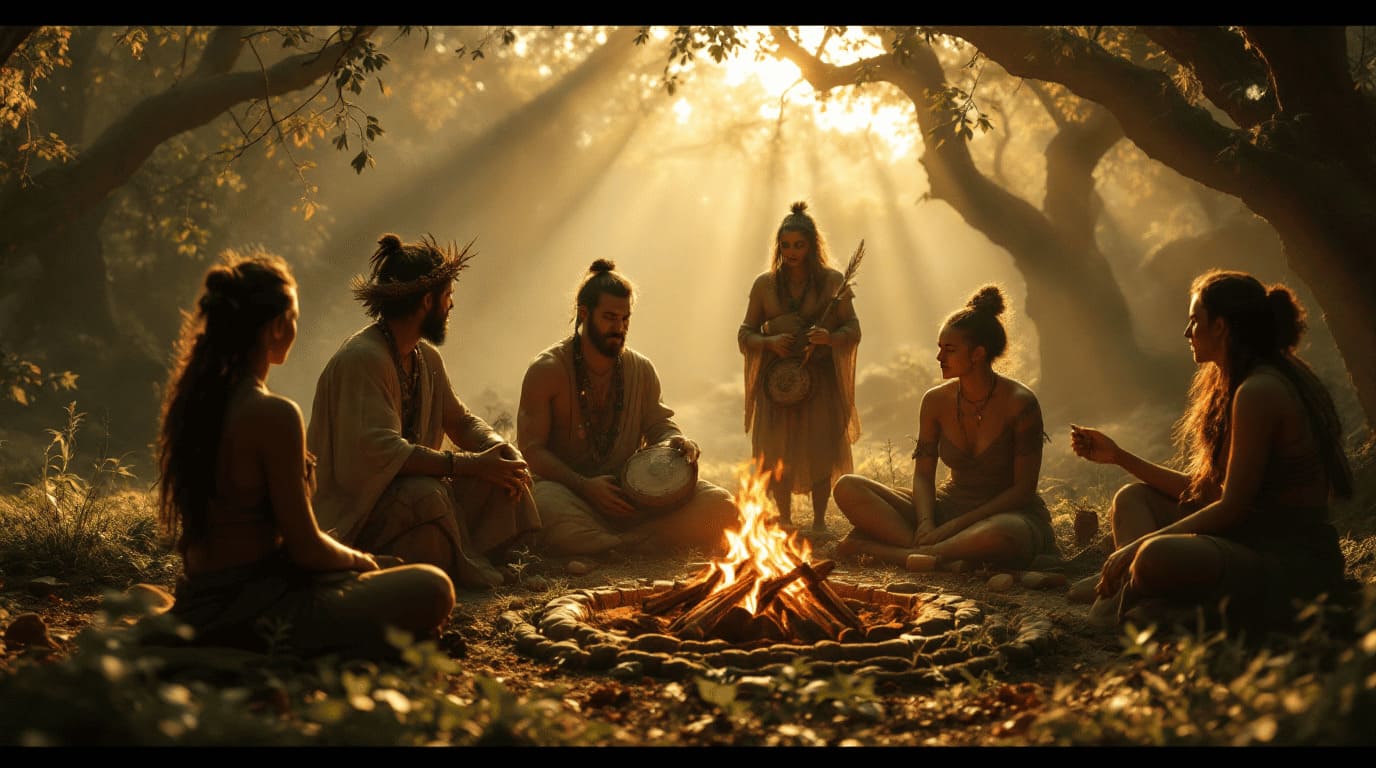
A look behind the veils of tradition, education, and personal transformation
The thought, shaman Becoming a shaman fascinates many people who are searching for spiritual depth, healing arts, or a holistic way of life. On social media, we often encounter short stories of "I became a shaman in just one year" or of "crash courses" that promise instant enlightenment.
But the reality is far more complex. Shamanism is not a profession that can be completed according to a set curriculum. It is a lifelong journey, which is strongly influenced by culture, personal experience, and one's relationship to one's own mind. In this article, we explore the question: How long does it take to become a "fully-fledged" shaman?
We will highlight:
The term originates from the Evenk word. šamán and was introduced to Western science by Russian researchers in the 17th century. Nowadays, it is used very widely – by indigenous healers in Siberia, to the Maya-Traditions of Central America up to modern New Age interpretations.
| Culture/Region | Typical training structure | Expected duration* |
|---|---|---|
| Siberian tradition (e.g. Chukotka) | long master-disciple contract, intensive ritual practice, initiation rites | 5 – 15 years |
| Andean shamanism (Quechua, Aymara) | Family tradition, learning time in the village, pilgrimages | 3 – 10 years |
| Amazonian herbal medicine (Ayahuasca schools) | Apprenticeship at a curandero, several years of experience | 4 – 12 years |
| Western Neo-Shamanism Centers | Courses, workshops, mentoring programs | 1 – 5 years (often as „basic training“, not full qualification) |
*The information refers to the time period, which is typically needed to achieve the skills, responsibility and ethical standards required in the respective tradition.
Conclusion: The duration varies greatly – from a few years to half a lifetime.
Most traditions can be divided into several overlapping phases. These phases provide a framework, but not a rigid timeline.
Duration: Weeks to months; some traditions already require an initial initiation ritual before one is officially considered a learner.
Duration: The discovery process can a few months to several years to take advantage of this because the fit between personality, energy, and cultural background is crucial.
Duration: 3–10 years These are not unusual here, as repetition, experience, and recognizing one's own limits take time.
Duration: The ritual itself can last from one to several days, but the preparation for it extends over the entire training period.
Duration: Unlimited Shamanism is a path, not a destination that one "reaches" and then abandons.
| factor | How he works | Practical example |
|---|---|---|
| Cultural affiliation | In an indigenous community, learning is often conveyed through daily life and collective memory. | AA family member can be accepted more quickly than aOutsiders. |
| Personal disposition | Sensitivity, inner peace, and the ability to dream influence progress. | Someone who frequently has visions can integrate certain techniques more quickly. |
| Mentor quality | An experienced, patient teacher can accelerate learning processes, while an overwhelming teacher can have the opposite effect. | Ae MentorA company that regularly offers personal feedback sessions shortens the learning curve. |
| Time resources | Full-time employees or parents have less time for intensive practice. | Those who can only travel one weekend a month will need more time for practical training. |
| Ethics and responsibility | Learning healing techniques requires ethical maturity, which should not be rushed. | Falling below a specified level Healing number Lack of sufficient experience can increase the risk. |
| Access to ritual substances | Some herbal medicines are not legal in certain countries, which slows down training there. | Ayahuasca is illegal in Germany, so the practice may have to take place abroad or via alternative methods. |
Summary: There is no fixed "number of hours" that one can fulfill. Rather, time is a product of... individual, cultural and structural conditions.
| tradition | Minimum duration (ideal case) | Realistic average duration | upper limit |
|---|---|---|---|
| Siberian shamanism | 3 years | 7 – 12 years | 20+ years |
| Andean shamanism | 2 years | 4-8 years | 15 years |
| Amazonian herbal medicine | 1 year (intensive course) | 5 – 10 years (Apprenticeship) | 20 years |
| Western Neo-Shamanism | 6 months (workshop series) | 1-3 years (mentoring) | 5 years (basic training only) |
Important: The numbers are no guarantees, but rather empirical data from interviews, ethnographic studies and reports from practitioners.
Q1: Is there a certificate course that will make me a shaman?
No. Shamanism is not based on formal degrees, but on a spiritual calling and one joint recognition. Certificates can be an indication of a structured learning path, but they never replace personal transformation and ethical responsibility.
Q2: How do I know if I am "eligible" to become a shaman?
A strong inner calling, recurring visions, and a need to help others are early signs. However, final confirmation usually comes through... Community feedback and a Initiation ritual.
Q3: What if I cannot participate in traditional ceremonies in my home country?
Many learners travel to authentic centers (e.g., to Peru, Siberia, or the Andes). Alternatively, one can local groups find those who work in collaboration with indigenous teachers – always taking legality and ethical responsibility into account.
Q4: Can I have a job and become a shaman at the same time?
Yes, but the training requires regular practice and often intensive rituals, which are very energy-intensive. A realistic schedule and clear boundaries between work, family, and spiritual practice are crucial.
Q5: How do I deal with doubts that arise during my training?
Doubt is part of the journey. It signals that you are examining your motivations. Use it for... Self-reflection, talk to your mentor and document your experiences in a diary.
Becoming a "fully-fledged" shaman is not a project with a fixed end date. It is a individual, culturally embedded and spiritually demanding process, which, depending on tradition, personal maturity and life circumstances, ranges from a few to many years.
The real question, therefore, is not: „"How long will it take?"“, rather „"How ready am I to walk the path in its entirety?"“
If you feel determined to embark on this path, then:
The shaman's path is a path of Healing, not just for others, but above all for yourself. And precisely these inner transformation It takes time – and that's not a sign of delay, but of genuine effort. Fullness.
| source | Brief description |
|---|---|
| „The Way of the Shaman“ – Michael Harner (1990) | A classic work on shamanic techniques for Western practitioners. |
| „Shamanic Healing Journeys“ – Sandra Ingerman (2004) | Practical instructions for travel and healing rituals. |
| „Siberian Shamanism“ – Rolf B. Zill (2007) | Ethnographic study of Siberian traditions. |
| International Society for Shamanic Studies (ISSS) | Platform for research, exchange and ethical standards. |
| „Plants of the Gods“ – Richard Evans Schultes & Albert Hofmann (1979) | Comprehensive work on psychoactive plants in shamanic contexts. |
Note: Always be aware of local laws and cultural sensitivities before participating in ritual activities.
Further links:
Thank you for reading! If you enjoyed this post, please leave a comment, share your own experiences, or ask questions – the shamanic community is always learning together.