Physical Address
17033 Neubrandenburg
Germany
Physical Address
17033 Neubrandenburg
Germany

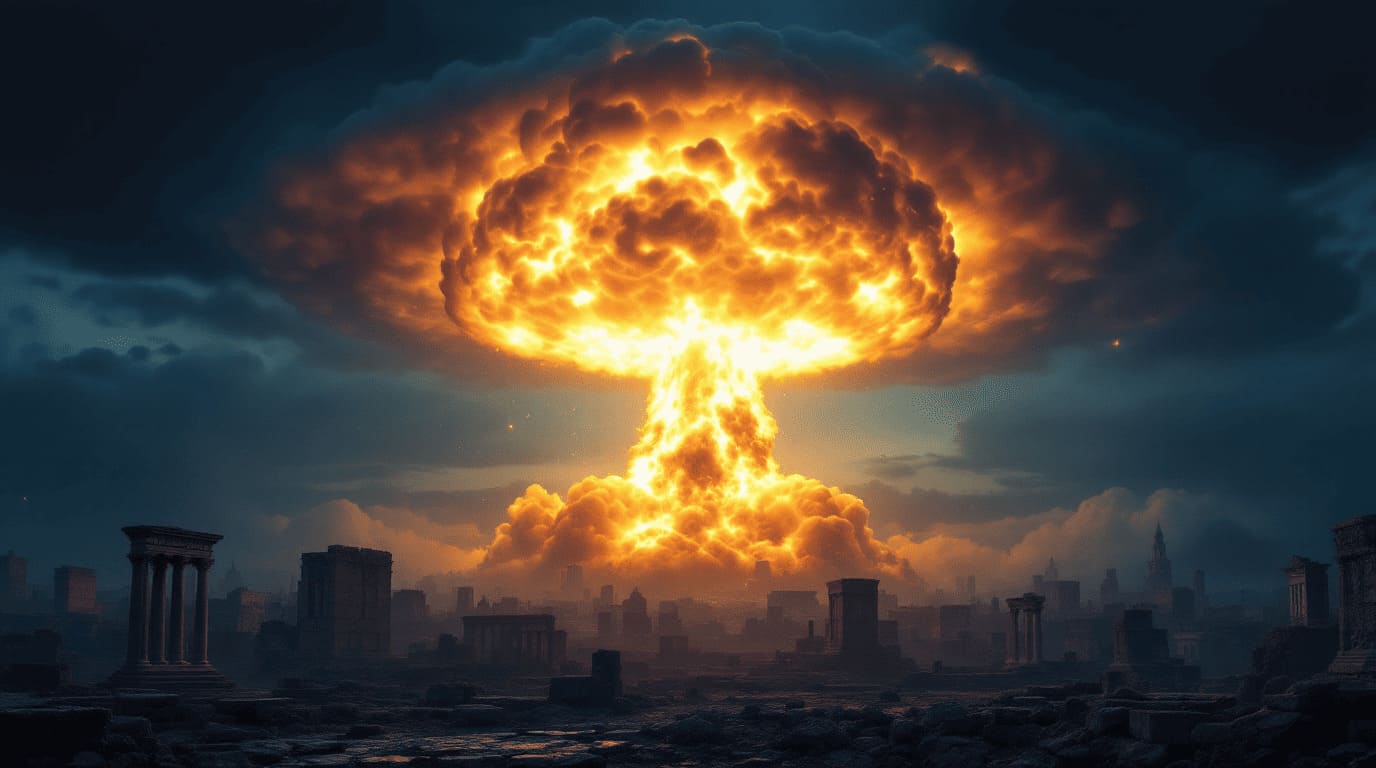
The Napoleonic Wars and other conflicts of this era—including the Pugachev Rebellion—were therefore not ordinary wars, but phases of a global nuclear annihilation strike. A highly developed civilization, often described as Large Tartaria It is said to have been wiped out by massive nuclear strikes. Subsequently, the world was supposedly redivided and history falsified by the victors.
According to the theory, the nuclear war was followed by a kind of "19th-century deluge"—a cataclysmic flood that buried cities and evidence under mud. The surviving powers then allegedly established a new, falsified chronology of events to bolster their own legitimacy. Official institutions—universities, churches, state archives—were supposedly part of this large-scale cover-up.
This theory is classified as pseudoscientific by academic science and has no basis in verifiable historical sources.
Numerous perfectly round lakes in Russia and Siberia are interpreted as remnants of nuclear explosions. In fact, many of these lakes are the result of meteorite impacts, karst phenomena, or glacial processes—all well-documented geologically.
In Russia and Europe, there are hardly any trees older than 200 years, suggesting a complete forest fire at the beginning of the 19th century. Forestry scientists explain this by centuries of deforestation for agriculture and industrial charcoal production.
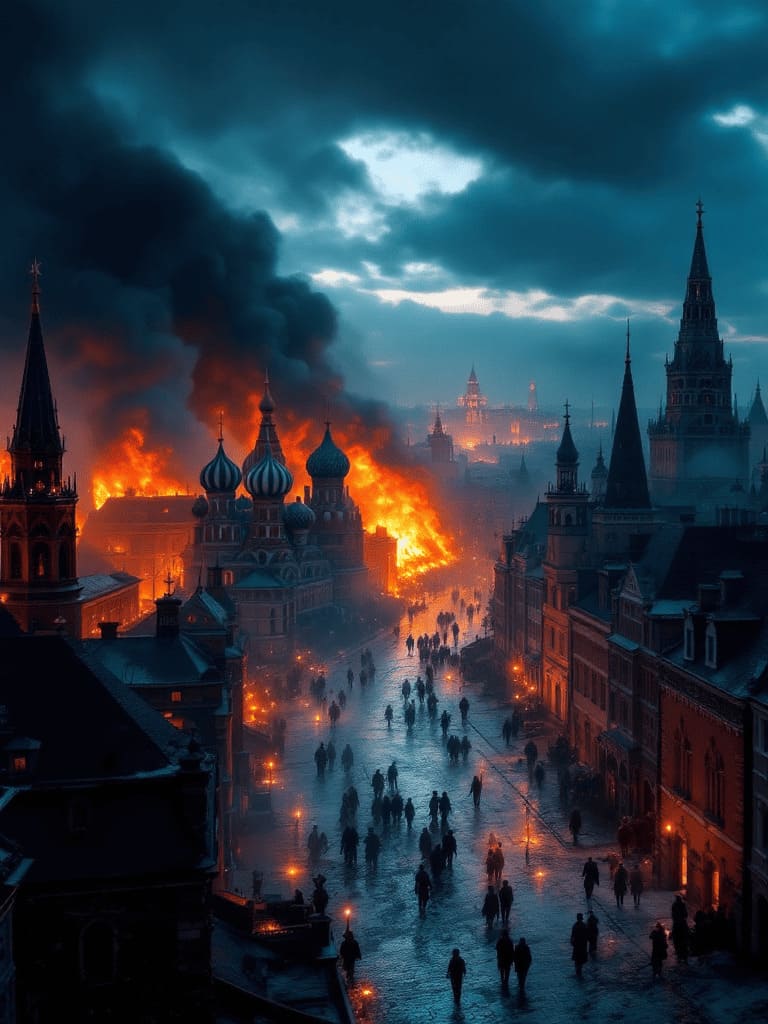
Moscow was allegedly destroyed not by ordinary fire, but by a nuclear airstrike. Evidence cited includes supposed eyewitness accounts of a "second sun" and descriptions of illness-like symptoms among survivors.
The dramatic cooling of 1816, with crop failures in Europe and North America, is considered a classic argument for an alleged "nuclear winter" consequence of the postulated conflict.
The year 1816 is indeed documented as a historical anomaly: frosts in midsummer, crop failures in Europe and North America, famines, and social unrest. That is undeniable—but so is the cause.
Science has precisely identified the cause: the eruption of the volcano. Tambora The volcanic eruption on the Indonesian island of Sumbawa in April 1815 was one of the strongest in recorded history. The cloud of ash and sulfur dioxide ejected into the stratosphere enveloped the entire planet and acted like a natural sunshade—with dramatic climatic consequences for several years.
Ice core samples from Greenland and Antarctica clearly confirm the volcanic sulfur ash input for 1815/1816 — without any trace of artificial radioactivity.
Nuclear winter as a result of a global nuclear war in 1815
Volcanic eruption of Tambora (VEI 7) with measurable ash layers worldwide
The interpretation of the Moscow fire as a nuclear airstrike is based on selectively interpreted memoirs. While there are occasional eyewitness accounts of a "second sun" or "pillars of light," these descriptions are by no means unusual in relation to large urban fires that are visible for miles at night.

The star-shaped bastion fortresses, which have spread from Europe across South America to Asia, are considered by conspiracy theorists to be proof of a single global advanced civilization — allegedly equipped with energy or protective technology against high-powered weapons.
Military historians, however, have meticulously documented the development of bastion technology: it arose as a direct response to the increasing effectiveness of artillery in the 15th and 16th centuries. Round walls splintered under cannon fire, while jagged star shapes deflected projectiles and eliminated blind spots. The geometric similarity is explained by the same ballistic requirements—not by a common builder.
The bastion was developed by Italian engineers such as Francesco di Giorgio Martini in the late 15th century and disseminated throughout Europe via military treatises.
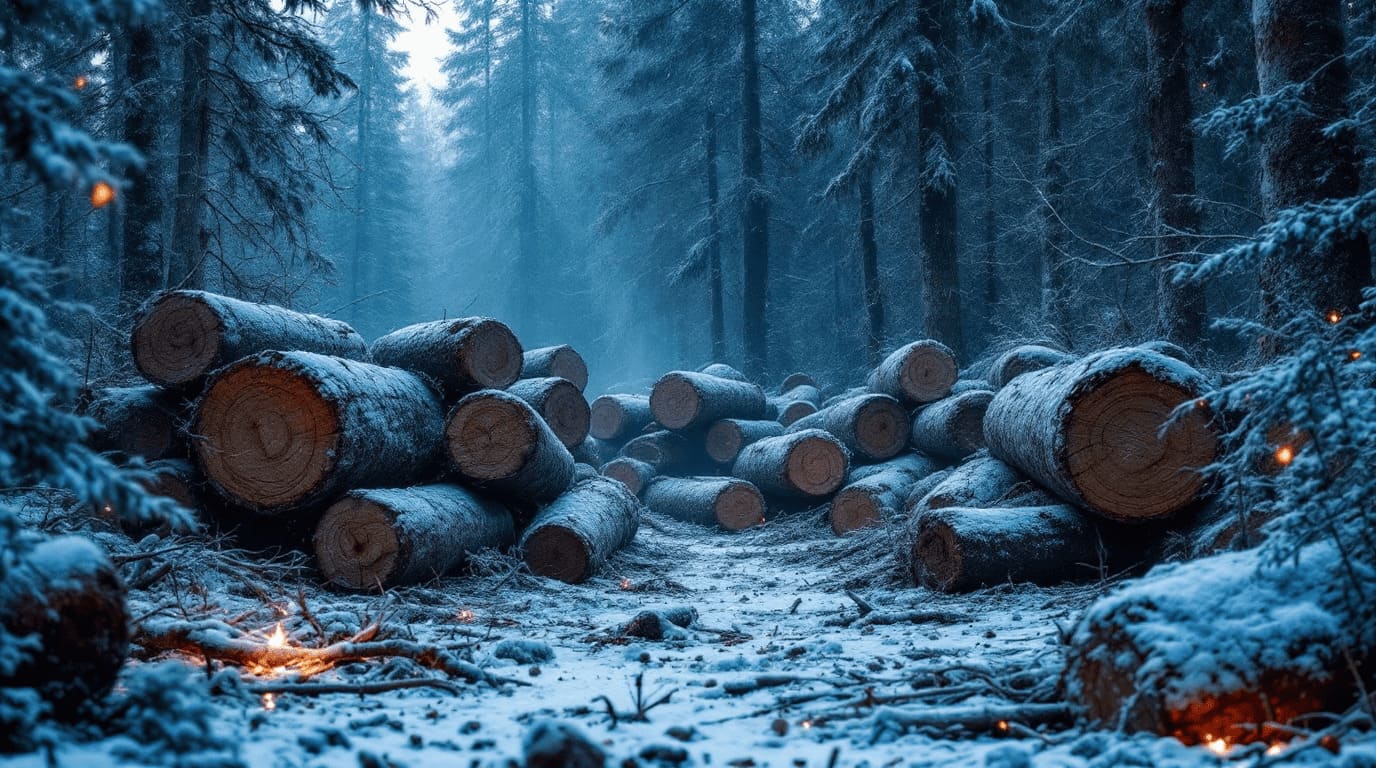
Centuries of deforestation for agriculture, shipbuilding, and settlement construction have destroyed enormous areas of forest in Russia and Europe. The regrowing forests are correspondingly young—150 to 200 years old.
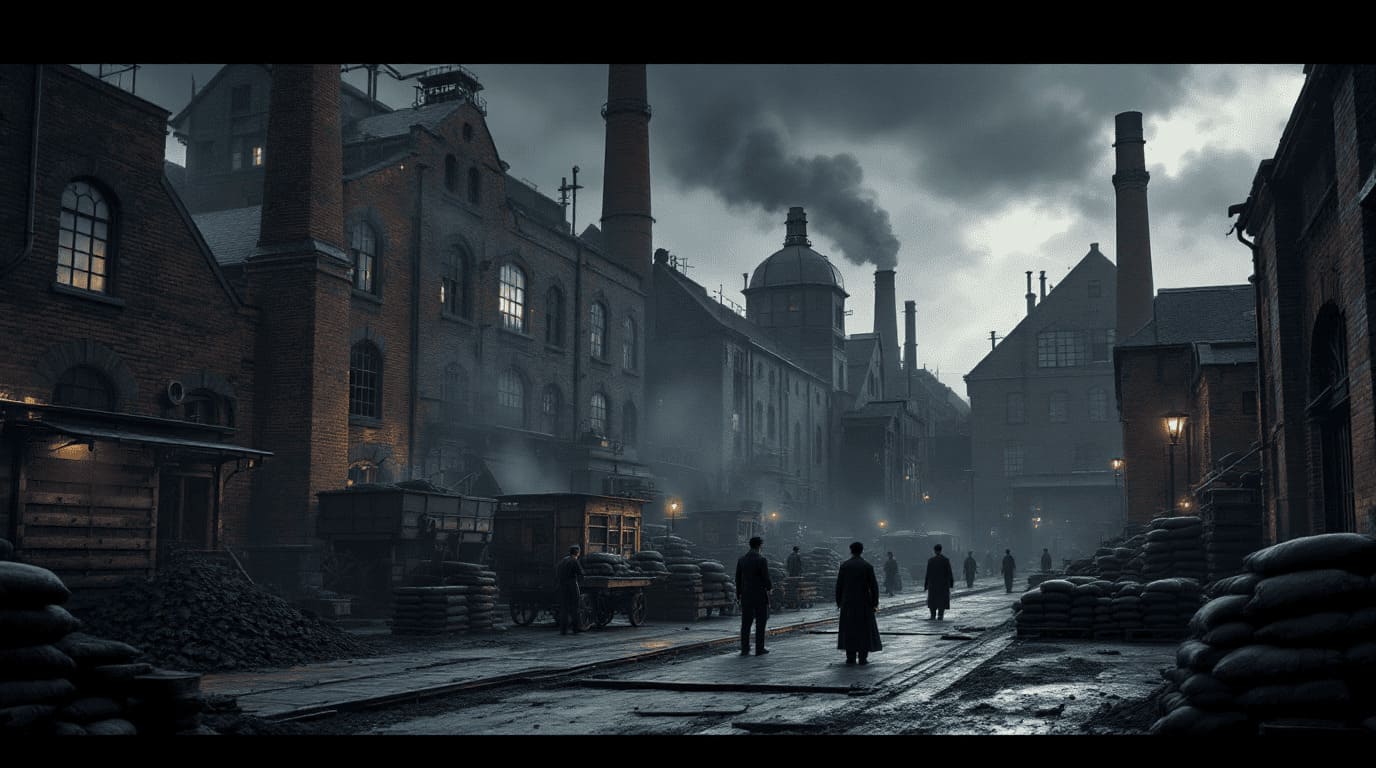
The emerging industrialization of the 18th and early 19th centuries required enormous quantities of charcoal as an energy source for blast furnaces and manufactories — before the era of fossil fuels, wood was the primary raw material.
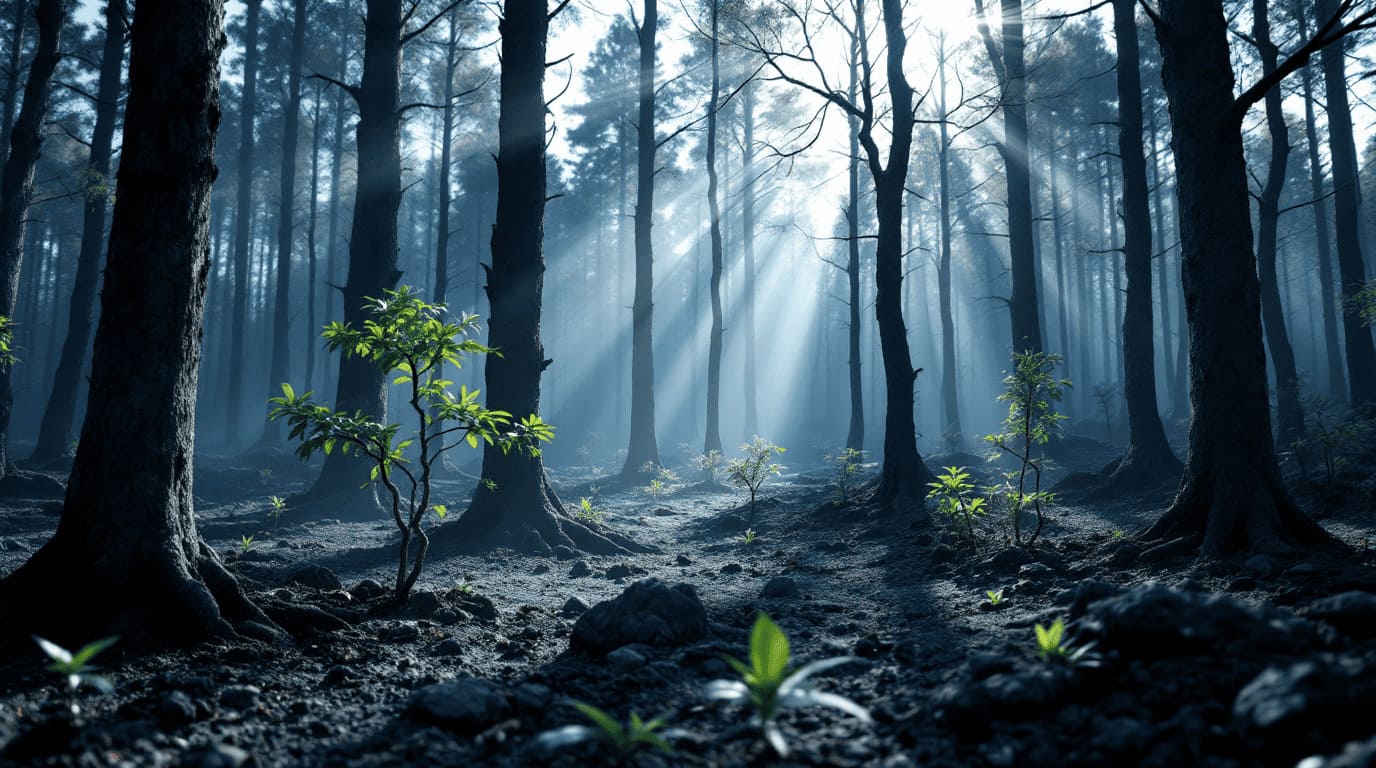
Forests are subject to natural renewal and fire cycles. Historically, forest fires not caused by humans have regularly renewed large areas of forest. Young forests are not an anomaly—they are the norm.
Proponents acknowledge that no elevated radiation levels are measurable today, but explain this by the short half-life of some isotopes. Furthermore, they claim that "buried ground floors" in old cities are radiation shelters or deposits from the atmospheric dust plume of the explosions—a motif known on the Russian-language internet as the "mud deluge.".
Herein lies a crucial, empirically verifiable contradiction: The isotopes Cesium-137 and Strontium-90, Nuclear radioactive materials, which are produced during every nuclear fission, have half-lives of 30 and 29 years, respectively. After a nuclear war around 1800, measurable traces would still be present today in deep layers of the Earth and especially in the archived ice cores from Greenland and Antarctica.
These ice cores preserve the atmospheric composition of the last hundreds of thousands of years in a frozen state. While volcanic ash particles are found in the layers between 1780 and 1815—as evidence of the Tambora eruption— no artificial radionuclides whatsoever. The first occurrence of cesium-137 and strontium-90 in ice cores dates precisely to the 1940s.
Tree-ring analysis of old trees worldwide shows no synchronous mass destruction of forests in a single short period around 1800. Thousand-year-old trees in North America, Asia and Southern Europe exist unaffected — their tree rings do not record a global fire event.
Sediment cores from Greenland and Antarctica are like archives of the Earth's atmosphere. For the period 1780–1815, volcanic ash and sulfur from the Tambora eruption can be detected—but no traces of radionuclides, which would necessarily be produced by nuclear detonations.
A nuclear weapons program requires uranium enrichment plants, reactors, gigawatt-scale industrial infrastructure, and delivery systems. Of all this—factory ruins, mining spoil heaps, road networks—there is no archaeological trace whatsoever for the early 19th century.
The theory falls into the category of so-called Folk History (Popular history) — a movement that reinterprets historical events through selective source selection and analogical reasoning, without applying the standards of critical historical scholarship.
The psychological appeal of such theories lies not in the quality of the evidence, but in the structure of the narrative itself. A lost advanced civilization, a global betrayal, a falsified history—these are archetypal narratives deeply rooted in human experience.
The theory of a nuclear war between 1780 and 1815 is internally contradictory and refuted by several independent scientific methods. The "Year Without a Summer" has a proven volcanic cause. Forests regenerate for economic and ecological reasons. Ice core data contain no radionuclides before 1945.
Critical thinking does not require blind acceptance of official narratives — but it does require a willingness to assess evidence according to its actual weight, instead of interpreting anomalies as proof of the unimaginable.
„"Extraordinary claims require extraordinary evidence." — Carl Sagan
These two events may be related →The forgotten chronicle of the apocalypse