Physical Address
17033 Neubrandenburg
Germany
Physical Address
17033 Neubrandenburg
Germany

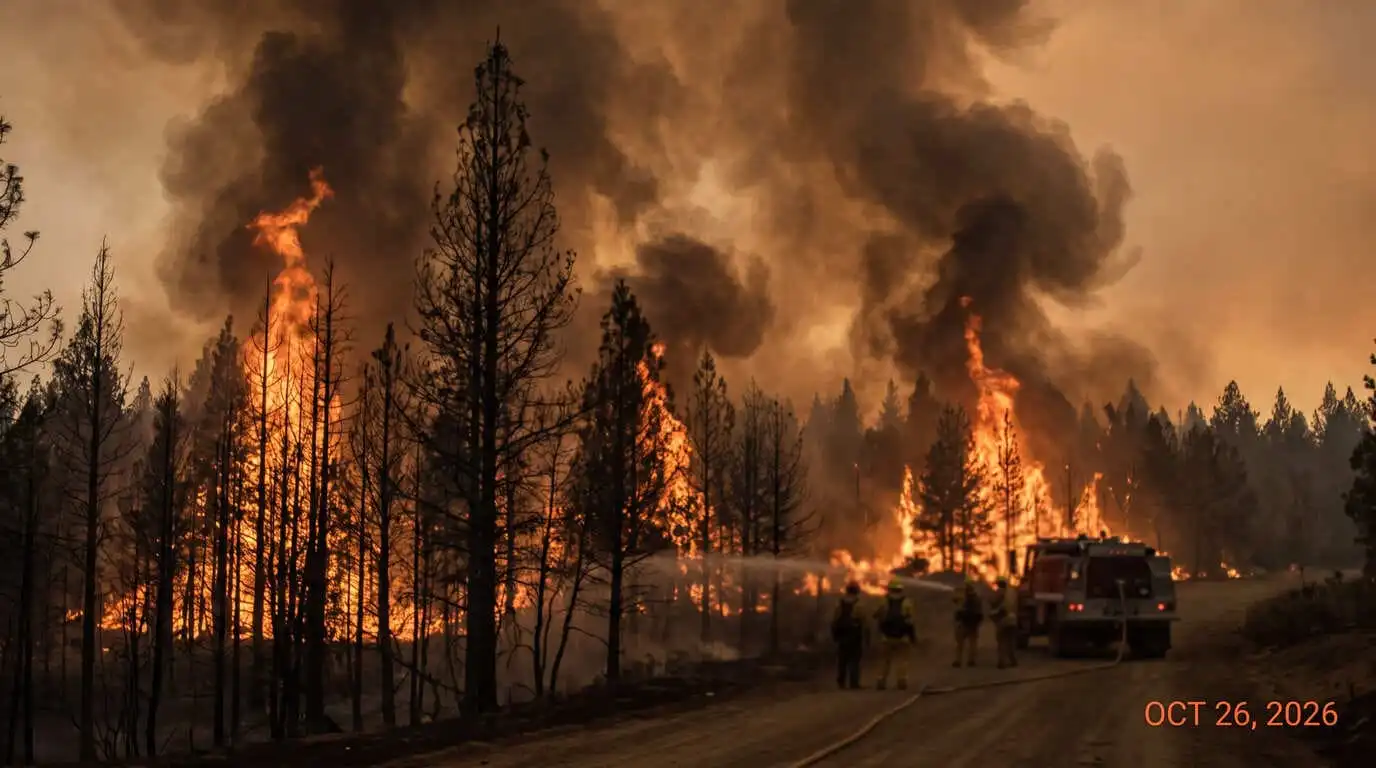
The year 2026 will go down in history as a year of extreme natural disasters. As humanity continues to grapple with the consequences of climate change, this year saw some of the most devastating natural events in years. This article provides a comprehensive overview of the worst disasters, their impacts, and the scientific background of these unprecedented events.

The first half of 2026 presented a mixed picture. Natural disasters caused approximately US$112 billion in damage worldwide. However, only US$44 billion of this was insured, revealing a staggering 60 percent insurance gap. While total losses were slightly below the inflation-adjusted averages of the past decade, the nature of these disasters—their intensity and regional variations—paints a worrying picture for the future.

On June 24, Venezuela experienced by far the deadliest earthquake disaster of 2026. Approximately 200 kilometers west of the capital, Caracas, near the city of Morón, two massive earthquakes struck the region within just 39 seconds of each other. The first earthquake reached a magnitude of 7.2, followed by an even stronger tremor with a magnitude of 7.5. According to the US Geological Survey (USGS), it was the strongest earthquake in the extremely earthquake-prone region since 1900.
The consequences were devastating. According to official figures, more than 6,300 people died. But the impact on the already fragile infrastructure of the economically struggling country was equally dramatic: Satellite-based analyses by researchers at Oregon State University showed that potentially more than 58,000 buildings were damaged or destroyed. The estimated total damage amounts to approximately 30 billion US dollars, of which less than 1 billion US dollars was insured.
The year 2026 was not an exceptionally strong earthquake year in terms of the number of very strong earthquakes. On average, around 15 earthquakes with a magnitude of 7 or higher occur worldwide each year. By mid-August 2026, there had only been ten – but with devastating consequences.
The strongest earthquake of the year struck on June 8th off the southern coast of the Philippine island of Mindanao, registering a magnitude of 7.8. Despite its enormous strength, "only" at least 107 people died – proof that earthquake magnitude alone does not determine the consequences. Improved building standards and emergency planning saved lives.
On August 10, a magnitude 7.4 earthquake struck Colombia. Although the epicenter was over 100 kilometers deep, more than 260 people died. Landslides and damaged roads significantly hampered rescue efforts. Shortly afterward, on August 15, a magnitude 7.7 earthquake struck the Indonesian island of Flores. With nearly 1,000 aftershocks, it was an extremely active seismological event, claiming over 50 lives.
Japan, situated on the Pacific Ring of Fire, was struck by several earthquakes. On April 20th, a magnitude 7.4 earthquake struck off the northeast coast. Just three months later, on July 28th, another earthquake with a magnitude of 7.1 claimed over 30 lives.
A particularly tragic example is Afghanistan, where a "weak" earthquake of magnitude 5.8 on April 3rd killed at least twelve people. This underscores an important reality: In poorer countries, even moderate earthquakes can lead to disasters if building standards are low and disaster preparedness remains underdeveloped.

The first half of 2026 was marked by heat waves of historic proportions in Europe and North America. Scientists speak of "pulverizing records" because new record highs exceeded previous records by several degrees Celsius in some cases.
In June 2026, Central and Western Europe experienced unprecedented temperatures. In Möckern, in eastern Germany, a temperature of 41.8°C was recorded – a full 0.6°C above the previous nationwide record from 2019. It is noteworthy that June is not normally the hottest month of the year. Monthly temperature records had already been broken in Europe in May.
A study showed that a similar heat wave 50 years ago would have been about 3.5°C cooler. Europe is warming twice as fast as the global average due to climate change, making it the fastest-warming continent.
A particularly dangerous phenomenon occurred in the USA in June: a heat wave with an extreme combination of temperature and humidity reached levels that would have been virtually impossible without climate change. In many eastern US states, the temperature barely dropped below 27°C, even at night. This sweltering heat is considered especially stressful and deadly for both humans and animals.

Heat waves are the natural hazard that claims the most lives. In Germany alone, the Robert Koch Institute estimates that more than 5,000 people will die from heat-related causes by June 2026. This figure is not systematically recorded internationally, but experts assume hundreds of thousands of deaths worldwide.
The economic impacts are equally severe, though difficult to quantify. Heat waves cause decreased labor productivity, production losses, infrastructure damage, and crop failures. An OECD study using company data from 23 developed countries showed that for every ten additional days with temperatures above 35°C, annual labor productivity falls by an average of 0.31 TP3T – an effect comparable to an energy price increase of 51 TP3T.
The year 2026 was influenced by the "Super El Niño"—an exceptionally strong climate phenomenon that intensified extreme weather events worldwide. This led to catastrophic forest fires in several regions.
Simultaneously, 103 wildfires raged in Canada. 29,000 people were evacuated, and over 120,000 hectares of forest burned. Smoke from these fires blanketed large parts of the northeastern United States, with New York and surrounding areas suffering from extreme air pollution. Air quality reached "very unhealthy" levels, with AQI values exceeding 201.
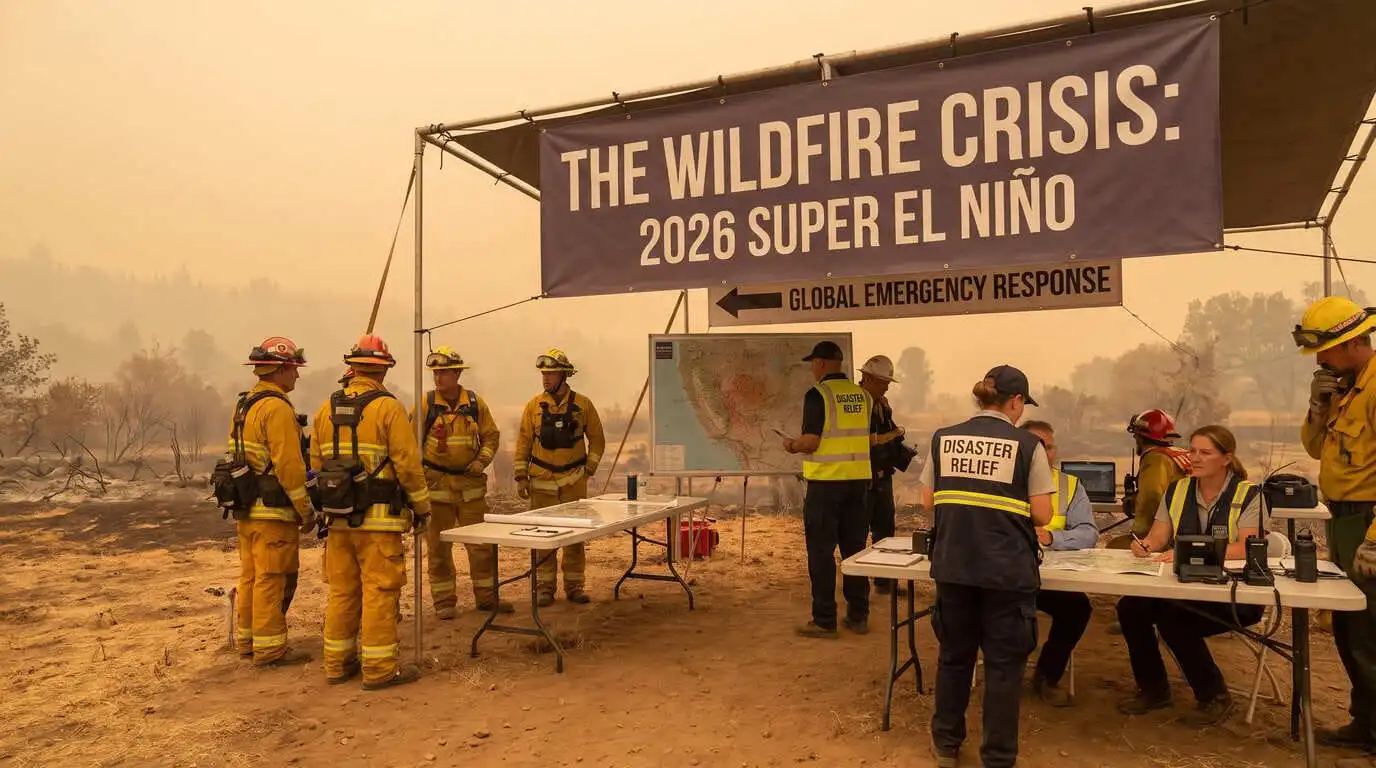
In Europe, the fourth worst forest fires on record were recorded as early as the summer of 2026. Spain experienced historic fires, including the Burgohondo fire – the largest forest fire in Spanish history. Over 100,000 people were evacuated, and at least 15 died directly as a result of the fires.
Indonesia also experienced its largest forest fires since the El Niño of 2015. Almost 95,000 hectares were destroyed in July alone, and the smoke blanketed parts of Southeast Asia in dense smog.

China experienced massive flooding in May 2026. A band of rain hundreds of kilometers wide brought persistent downpours of up to 400 millimeters per square meter to numerous provinces. Over 100 rivers burst their banks. City centers were flooded, and vehicles were swept away. Initial estimates put the death toll at around 45, with total damages amounting to approximately US$2.8 billion.

Nepal was hit by devastating floods in August and September. Scientists report that these were triggered by a glacial collapse in the Himalayas – a clear sign of the accelerating effects of climate change on high mountain regions.
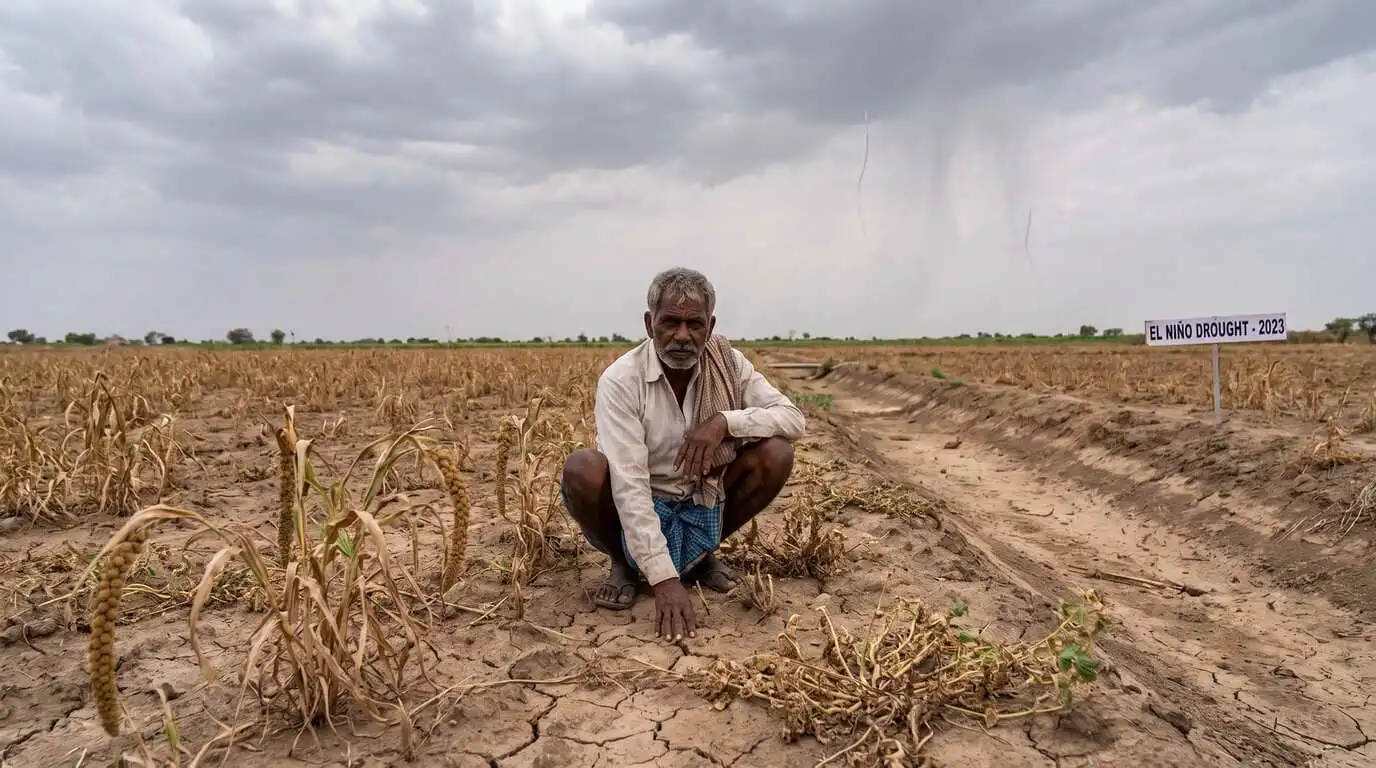
Parallel to El Niño, the monsoon rains, vital for agriculture, began later than usual and were significantly weaker in India. This is one of the weakest monsoon seasons in two decades and threatens to lead to massive agricultural losses.
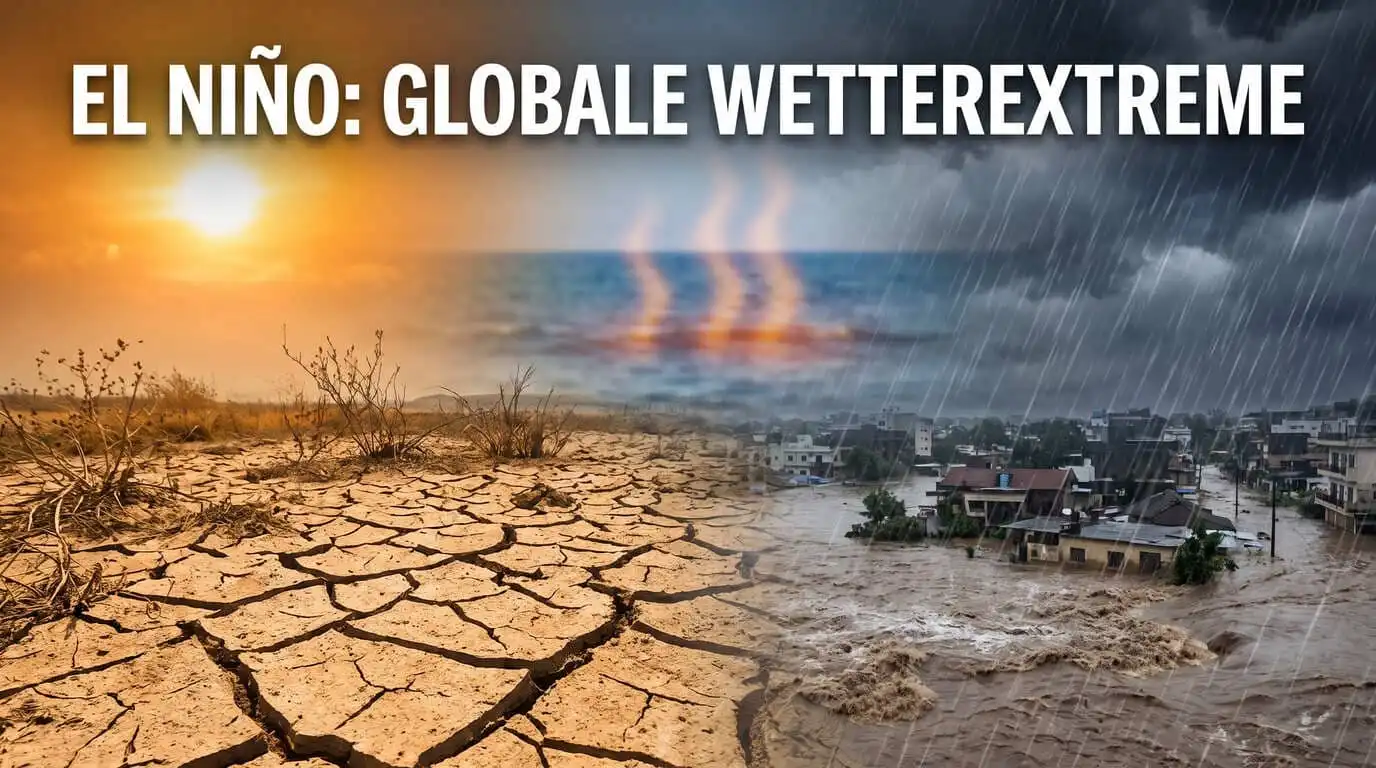
Scientific studies unequivocally prove that climate change is the driving force behind many of these disasters. Two independent rapid attribution studies showed that the 2026 European and North American heat waves would have been "virtually impossible" without human-induced climate change.
Since the 2015 Paris Agreement, the years 2015 to 2025 have been the 11 hottest years on record. Sea surface temperatures reached record levels in 2026. In July 2026, the world recorded its hottest or jointly hottest July since records began (tied with July 2024).
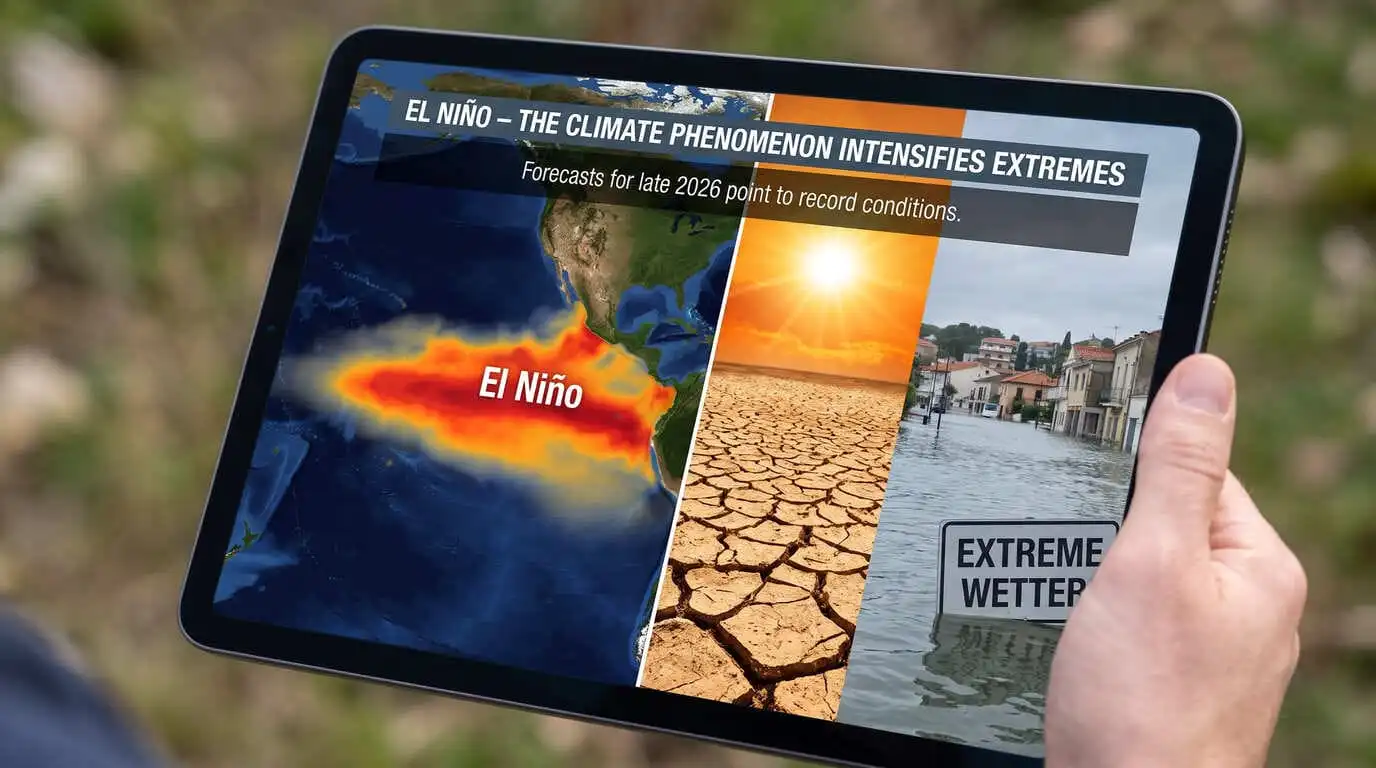
El Niño is a natural climate phenomenon defined by warm sea surface temperatures in the tropical Pacific Ocean. It influences weather patterns worldwide. Forecasts indicate record El Niño conditions at the end of 2026 – possibly the most extreme El Niño event since the 19th century.
El Niño has varying effects worldwide: In Australia, Central America, and southwestern Africa, it leads to drought and wildfires. In western South America, parts of Brazil, and the southwestern United States, however, it can cause intense rainfall with flash floods. El Niño dampens the hurricane season in the North Atlantic but increases typhoon activity throughout the North Pacific.
The combination of progressive global warming from greenhouse gas emissions and a super El Niño creates a "dangerous mix". The UK Met Office warns that 2026 could go down in history as an exceptionally hot year and that 2027 is likely to replace 2024 as the warmest year on record.
The World Meteorological Organization warns that it is very likely that global temperatures will temporarily exceed 1.5°C above pre-industrial levels between 2026 and 2030. This is the threshold at which scientists warn of irreversible climate tipping points and severe environmental damage.
The CO₂ concentration in the atmosphere reached approximately 432 ppm in some months in 2026 – over 501 ppm above pre-industrial levels. While the rate of emission growth has slowed, total emissions continue to rise.

A fascinating and worrying example can be seen in European nuclear power plants. Extreme drought led to record low water levels in major European rivers such as the Rhine and the Danube. These rivers are needed to supply cooling water to nuclear power plants. As a result, Romania had to completely shut down its Cernavodă nuclear power plant, which supplies about 201 TPU (twenty-three ounces) of Romania's electricity production. Hungary was forced to shut down three of its four reactors at the Paks nuclear power plant, reducing electricity production to 101 TPU (twenty-three ounces) of normal capacity—a country that normally derives about half of its electricity from nuclear power.
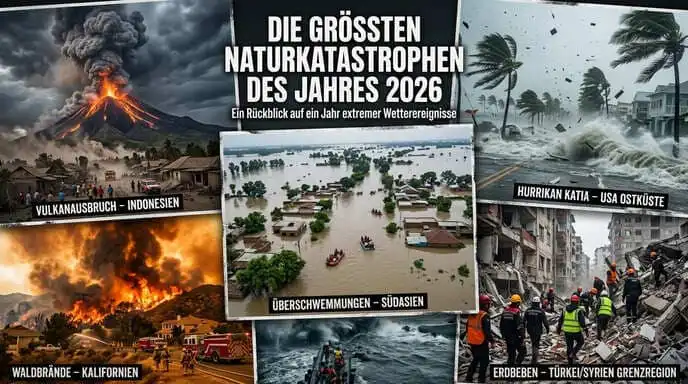
The year 2026 made it clear that the era of "natural" disasters is over. These events are the direct result of decades of greenhouse gas emissions from burning fossil fuels and deforestation. Scientists agree: without drastic measures to reduce emissions, these extreme weather events will intensify even further.
The good news is that solutions exist. The rapid price decline in solar, wind, and storage technologies makes renewable energies not only ecologically sound but also economically attractive. Nearly 60 countries have committed to developing national roadmaps to end their dependence on fossil fuels.
The natural disasters of 2026 are a wake-up call. The time to act is not tomorrow or next year – it is now. Only through a just and rapid transition to renewable energies, combined with measures to prevent new risks in vulnerable areas, can we still avert the worst-case scenarios.
This article was written on September 22, 2026, and provides an overview of natural disasters up to and including August 2026. The situation is evolving, particularly with the intensifying El Niño expected in the second half of the year.