Physical Address
17033 Neubrandenburg
Germany
Physical Address
17033 Neubrandenburg
Germany

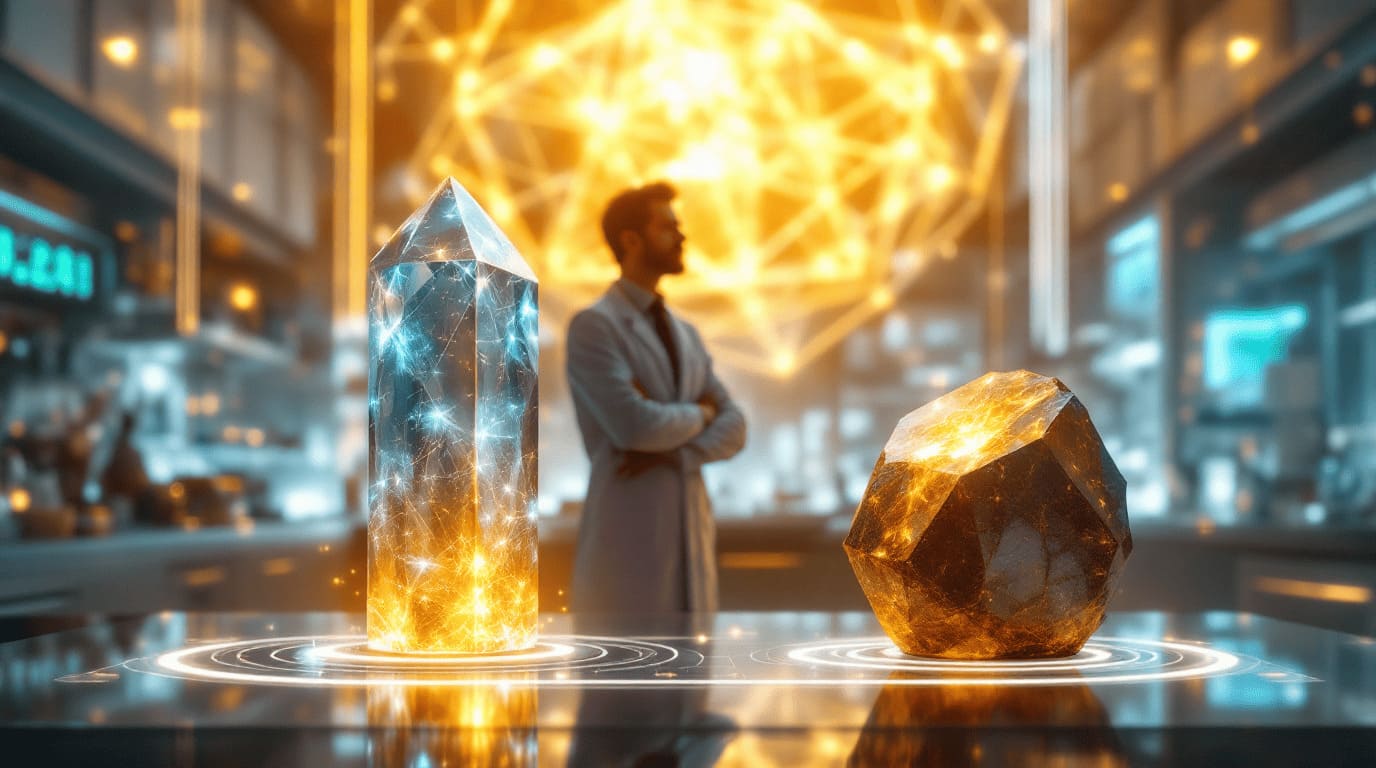
Put on your lab coat, grab your magic wand – we're deconstructing the supernatural until it looks like a quarterly report.
I must confess: I'm a spreadsheet guy, a proponent of double-blind studies, and someone who actually enjoys reading the fine print on cough syrup bottles. This naturally makes me the most boring person at a Renaissance market. While everyone else is raving about the "mystical energies of the forest," I'm the one in the corner asking about the specific calorie density of a dryad's diet or whether the local wizard has a permit for so much open fire.
And yet, lately I have been captivated by a concept that combines my love of order with my secret longing for the impossible: Magic as a science.
Magic and science are not bitter rivals. They are two different ways of making the universe do what we want.
Science is magic that works reliably. Magic is science that hasn't been peer-reviewed.
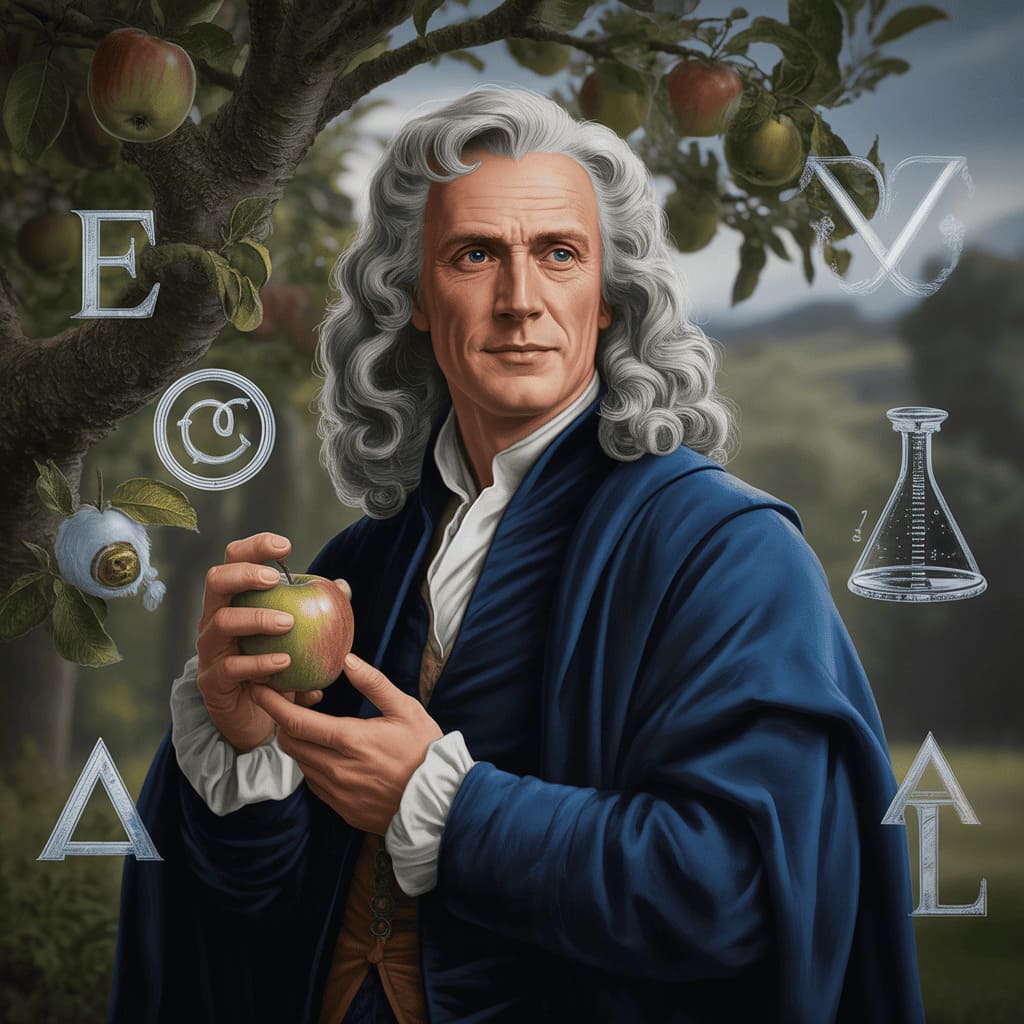
To understand magic as a science, we need to look at Isaac Newton. Most people remember him as the man who had an apple fall on his head and invented gravity—a gross oversimplification, but let's leave that aside. Newton was also arguably the last great alchemist in the world.
He spent more time searching for the philosopher's stone and deciphering occult codes in the Bible than on calculation. Why? Because for Newton, the universe was a vast puzzle left behind by a divine architect. He saw no difference between the "laws" of physics and the "secrets" of magic. He believed that if one only found the right equation—the right one—the world would reveal its secrets. Spell – would find.
If you gave Newton an iPhone, he wouldn't say, "Ah, advanced microcircuits." He would say, "This is a very small, very loud fortune-telling mirror. Where do I put my wand?"„
In the world of fiction – where I spend an unhealthy amount of my time – there is a divide between "soft magic" and "hard magic."„
No one knows why he can do what he does. He gives cryptic advice, smokes a pipe, and occasionally makes a mountain explode. Mysterious. Poetic. And from a scientific perspective, a logistical nightmare.
How is that taxed? What are the occupational safety requirements for a Balrog-fighting bridge?
Here, magic is like chemistry. If you want to fly, you have to burn a certain amount of tin in your stomach. If you want to move an object, you have to take its mass and air resistance into account.
Here lives Magic as a science Really. Magic is not a gift from the gods – it is a natural resource that can be measured, optimized, and – most importantly – monetized.
Expect "fireball insurance" to be the most expensive part of your home insurance.
When we treat magic as a science, the entire aesthetic changes. Forget the eerie towers and bubbling cauldrons in damp cellars. That's just poor ventilation and lack of funding.
The modern-day wizard-scientist wouldn't wear stars and moons on his hat. He'd wear a crisp white lab coat with the embroidered logo of a Silicon Valley startup called... AetherStream wear. His "magic spells" would not be shouted in Latin; they would be whispered in Python or C++.
What is programming if not modern magic? You type a series of esoteric symbols into a glowing glass pane, and if you place a single semicolon incorrectly, the whole thing refuses to work – or worse – conjures an error message out of thin air.
If you do it right, you can send pictures across the ocean instantly. We literally live in a world of enchanted mirrors – and we mainly use them to watch videos of cats being scared by cucumbers.
In science, gravity should always pull a ball downwards. When I mix acid and base, I get salt and water.
Magic, on the other hand, is capricious by nature. It relies on things that science hates: "willpower," "intention," and "the alignment of the stars.".
„"Professor Smith, you say the experiment has failed because you are not here today…" in the mood were?"“
„"Correct. My chakras were misaligned, and I had a slight cold which dampened the incantation."“
„"Funding application rejected. Please return your beakers."“
The solution: Automated Thaumaturgy Machines that "chant" at 10,000 words per minute, and industrial crystals that can store intention. Then magic is no longer magic. It's just another electricity bill.
Why do we do this? Why do we try to strip wonder from the supernatural and replace it with diagrams and formulas?
A "mysterious force" is frightening. A "measured force" is a tool. If the spirit in my attic is a "spectral entity that feeds on electromagnetic fluctuations," I don't need a priest—I need a ground wire and maybe some better insulation.
Defining magic as a science gives us a sense of control. It suggests that even the most chaotic aspects of our existence—death, fate, the afterlife—operate according to a set of rules that we are only a few PhD theses away from deciphering.
We don't want to live in a world where things happen "just like that". We want a world where things happen because it says so on page 452, paragraph B of the Universal Physics Handbook.
„"Any sufficiently advanced technology is indistinguishable from magic."“
— Arthur C. Clarke
We are the magicians of the past. If you took a smartphone to the 14th century, you would be burned at the stake before you could explain what "Wi-Fi" stood for. But the reverse is also true: any sufficiently understood magic is indistinguishable from technology.
Once we understand how a dragon breathes fire—is it a biological methane sac? A flint-based radio mechanism in its molars?—the dragon ceases to be a monster of legend. It becomes a biological curiosity. A giant, winged flamethrower with a hoarding disorder.
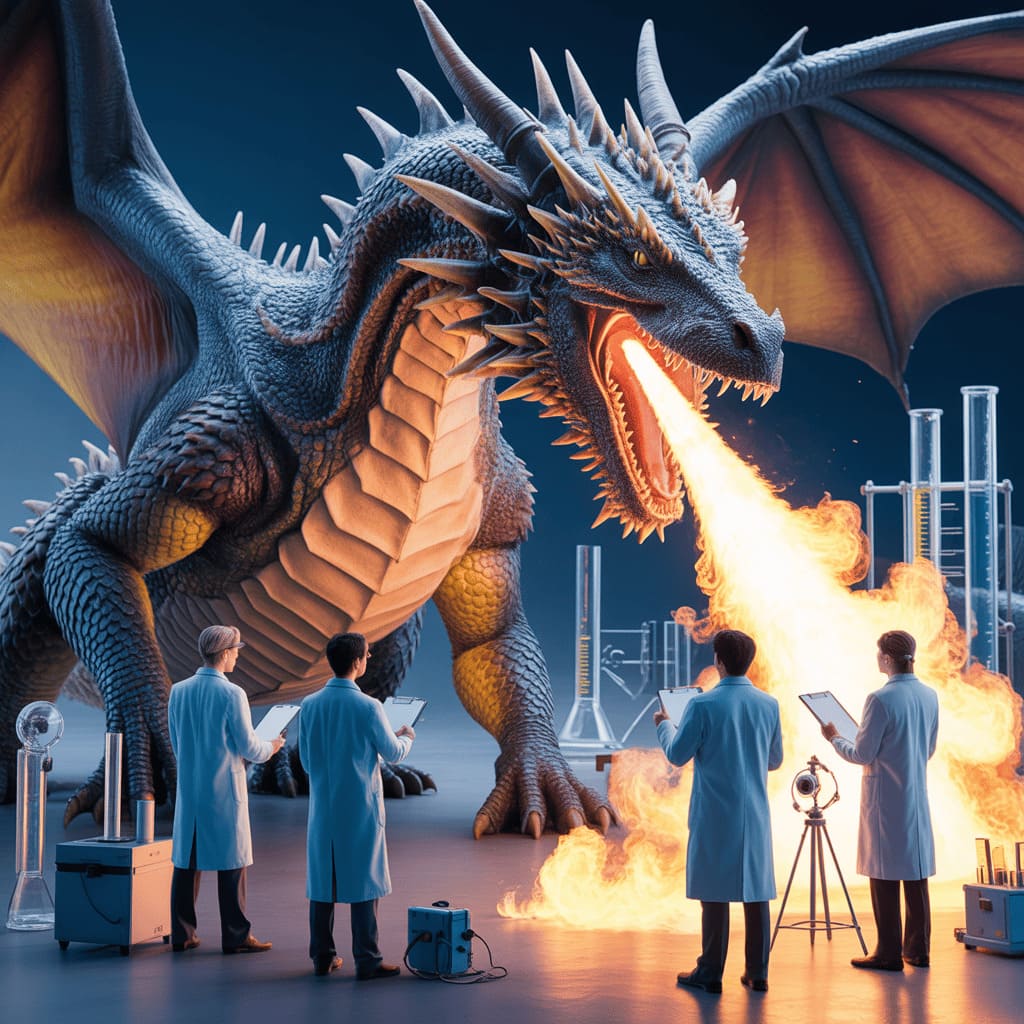
There's a certain sadness to it, isn't there? When we turn magic into science, we lose the sense of wonder. We lose that tingling sensation in the back of our neck that comes when we realize the world is bigger and stranger than we could ever imagine.
I'll stick with my tables, thank you very much. I like knowing that 2 + 2 equals 4. But I admit, there's a part of me—the part that still gazes at a particularly bright star and wonders whether it's a planet or a portal—that hopes magic never quite becomes science.
Let scientists have atoms and gravity. Let them have subatomic particles and thermodynamics. But let's leave a little room for the things that can't be measured with a ruler. Because the moment we turn "magic" into "science," we have to start filling out forms for it.
And believe me, as a professional writer who deals with editors and invoices on a daily basis: there is nothing – absolutely nothing. nothing – less magic and more paperwork.
May your equations be elegant, your variables constant, and your lab coats stain-resistant.
But let something happen every now and then, just because it's strange. Let a little "hocus-pocus" remain off the record.
I have to go now and calculate the drag coefficient of a flying carpet. It's for a "friend." Or a table. Probably a table.
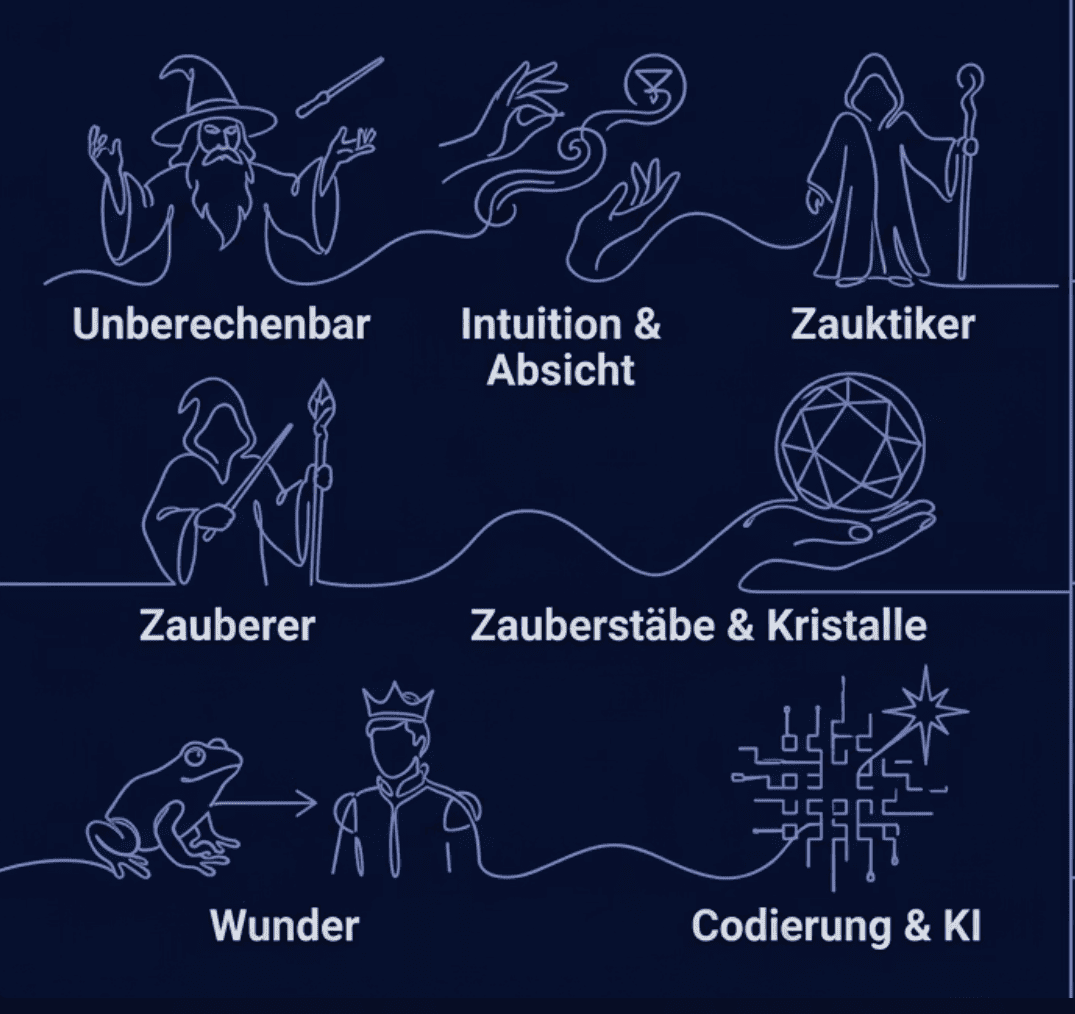
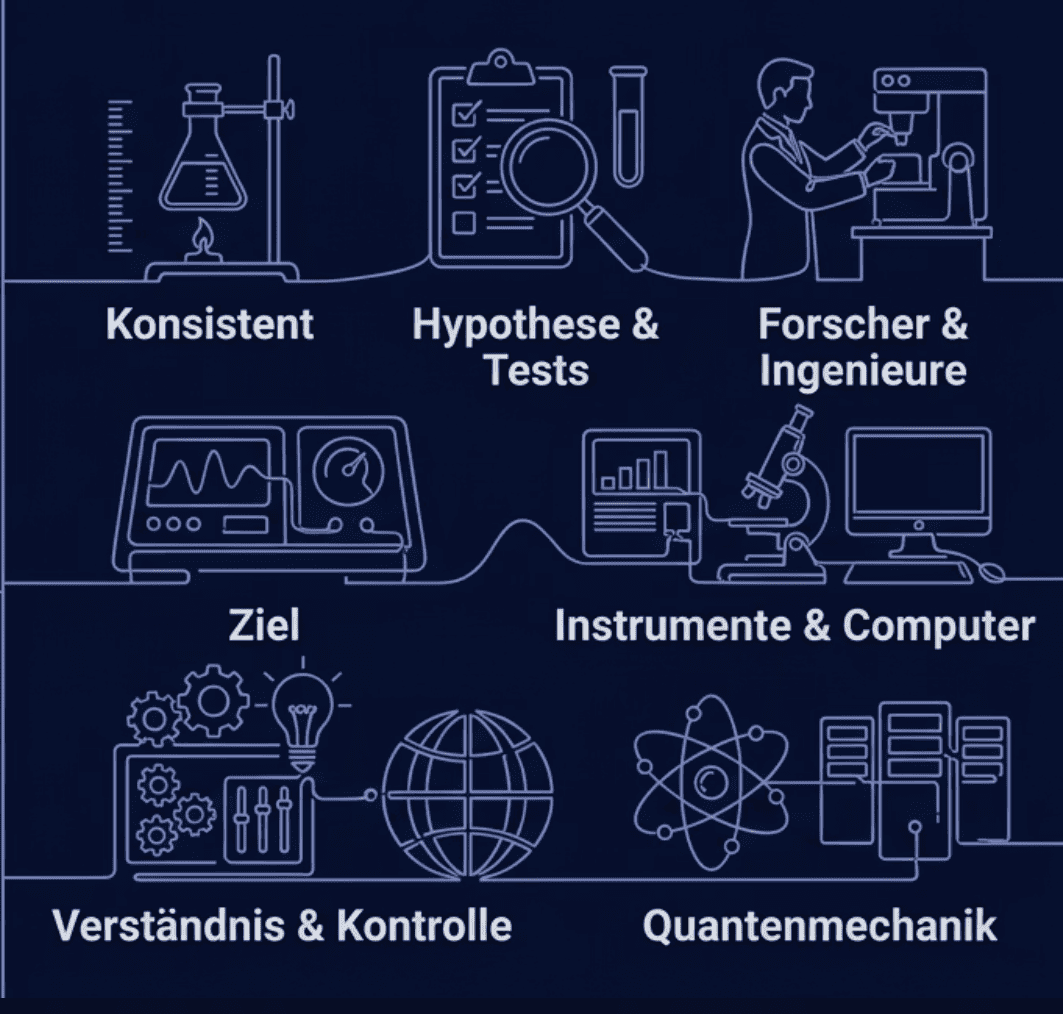
Whether magicians or scientists – both are trying to do the same thing: to get the universe to reveal its secrets. The only difference is the lab coat.