Physical Address
17033 Neubrandenburg
Germany
Physical Address
17033 Neubrandenburg
Germany

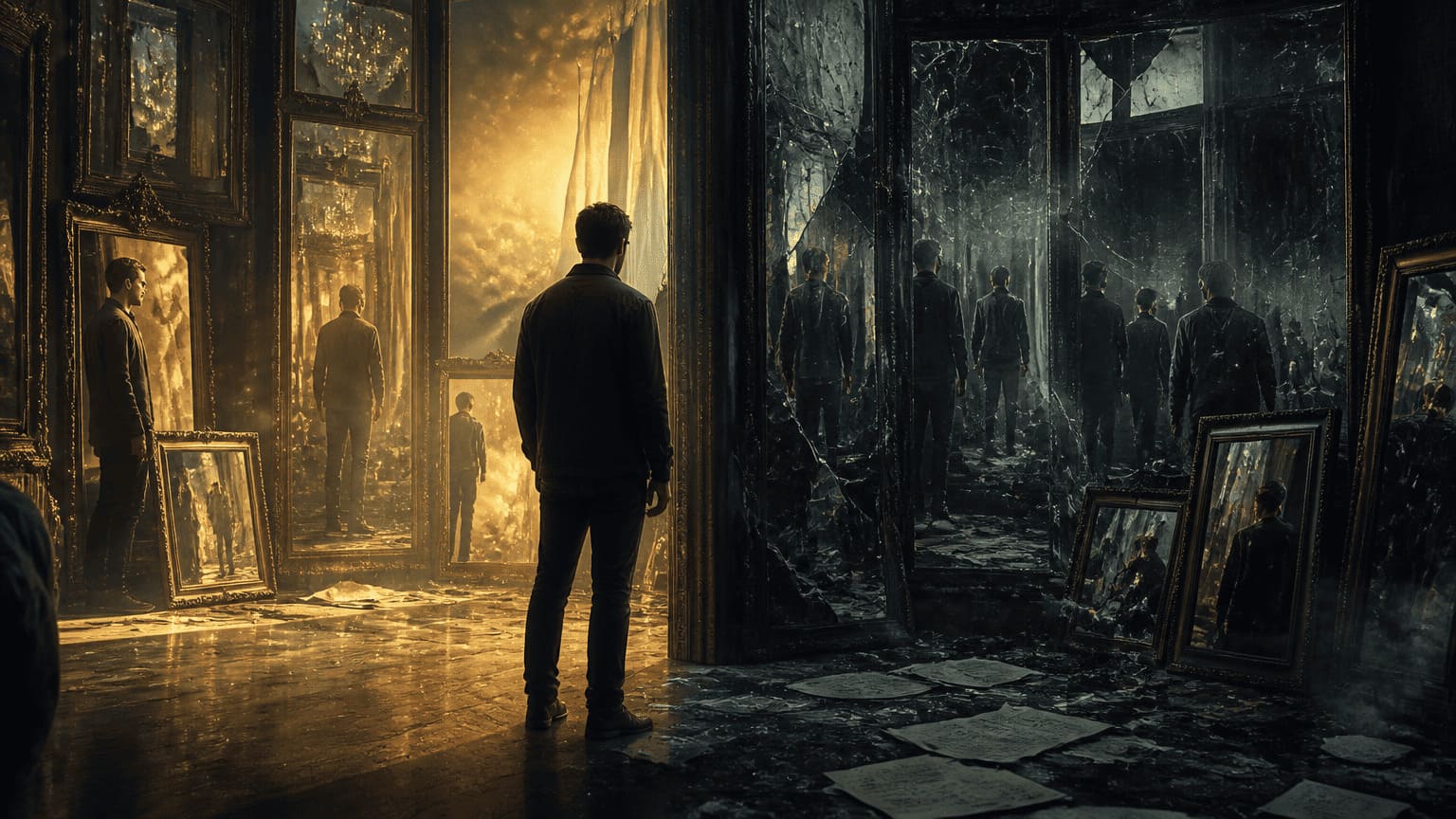
Herein lies the biggest problem with magic: it is impossible to know if it works.
That sounds strange, but it's true. Because magic is too subtle to be definitively verified.
You perform a ritual. Then something happens. Was it the ritual? Or chance? Or your changed behavior?
Many people see this as a problem. I see it differently. This is the feature, not the bug. Because it means that magic works with your mind, not against it.
But that also means: You have to be extremely critical. Otherwise, you'll fall into self-deception.
In this article, I'll show you how to verify reality. How to recognize when you're deceiving yourself. And how to maintain critical thinking while believing in magic.
That's not sexy. But it's fundamental.

The biggest problem is a psychological phenomenon called confirmation bias.
This means: You only notice the things that confirm your beliefs. You ignore the things that contradict them.
For example, you cast a love spell. Then:
You notice the first thing and ignore the second. That's confirmation bias.
It's automatic. Your brain does it without you even realizing it. That's why you can't just be "more critical." You need systems.
This is the scientific model.
You perform a ritual for one goal. Then you choose a similar goal and perform NO ritual.
For example:
With ritual: „"I am more confident in meetings at work" (you do a ritual for 2 weeks)
Without ritual: „"I feel more confident in meetings with friends" (you don't perform any rituals)
After two weeks: Where are you more confident? At work (with ritual) or with friends (without ritual)?
If the answer is "At work" – then the ritual was probably effective.
If the answer is "Equal in both" or "With friends," then the ritual probably wasn't effective. It was simply your general self-confidence that grew.
It's not perfect. But it's better than confirmation bias.
Not "I feel better." But "I can measure that.".
For example, instead of "I am more self-confident", you could say:
These are objectively measurable. Not interpretable.
After two weeks of ritual: Did you do these things? Yes or no?
That's much clearer than "I feel more confident."„
Many people attribute their new magic to old events.
„"I performed a ritual for prosperity and a week later I got a job – magic works!"“
But: Did you get the job because you applied (outside of the ritual)? Or because the ritual worked?
The honest answer: Probably both.
But here's the test: If the ritual truly works, the before-and-after results should be clearly different.
Previously: You get one job per year.
After ritual: You get two jobs per year (or faster).
That's a clear change.
But if you attribute every job you've ever gotten to "the universe responding," you're experiencing confirmation bias.
This is my favorite system.
Before your ritual, write down:
„"I will perform a ritual for self-confidence. I expect it to work by: [SPECIFICLY]"“
For example, "I expect to say at least two things in a meeting next week."„
THEN you perform the ritual.
THEN you observe whether your prediction has come true.
That's difficult because you can't be "interpretable." The prediction was specific. It's either true or it's not.
This is a genuine review.
The best test is time.
Not "Did the spell work in a week?" but "Did the spell work over three months?"„
Why? Because coincidences happen in the short term. But in the long term, reality does not deviate.
For example, „I cast a wealth spell and a week later I became rich“ – that could be a coincidence.
But „I cast a wealth spell and over three months my income doubled“ – that is probably real change (or at least a significant change).
A long-term perspective is your best friend.






You're just looking for evidence to confirm your beliefs.
How to recognize it: „"Every piece of evidence supports my theory. There is never any evidence against it."“
This isn't magic. This is confirmation bias.
How to correct it: Actively seek out counter-evidence. "What would mean that my ritual didn't work?"„
This is not necessarily "wrong", but it is important to understand.
The placebo effect is: if you think that something will help, it often does – not because of the „something“, but because of your belief.
This is real. But it's also real that it's not supernatural.
If you perform a ritual and it works, it could be:
A) The ritual has supernatural power. B) The placebo effect worked. C) Your changed behavior created the result. D) Chance.
Most of the time it's C or B, not A.
And that's okay! That's still magic, if magic is that you change.
How to recognize it: If you change while the ritual is taking effect, your behavior is probably the force behind it.
How to correct it: Separate the variables. What changed besides the ritual? Did you speak differently? Did you take more action?
It's subtle. You remember the successes. You forget the failures.
„"My rituals always work!" You perform ten rituals. Three work. Seven don't. But you only remember the three.
This isn't a deliberate lie. This is how human memory works.
How to recognize it: If you think all your rituals are working, something is wrong.
How to correct it: Write everything down. Not later. As it happens. "Ritual on January 5th: Goal was prosperity. Result: nothing special." "Ritual on January 12th: Goal was focus. Result: I was actually more focused."„
The journal is your friend. It doesn't lie.
That is: After the fact, you look back and think, "It was obvious that this would happen."„
For example, you perform a prosperity spell. A month later you get a promotion. You think, "It was obvious – my ritual worked!"„
But: Was it obvious that a promotion was coming? Or was it a surprise?
That is the difference between true foresight and hindsight.
How to recognize it: If your "prediction" only became clear after the event, that's hindsight bias.
How to correct it: Write down your predictions BEFORE the event, not after.
This is: A marksman fires wildly at a wall. Then he draws a target circle around the bullet holes and says, "I am a sniper!"„
In magic: You perform many rituals with vague goals. Then you look back and say, "All my rituals work because I can interpret everything; that's what happens!"„
For example, you cast a "prosperity spell". This could mean: money, new opportunities, gifts, emotional well-being, new relationships – all of which could be interpreted as "prosperity".
Then something happens. And you say, "Look – prosperity!"„
How to recognize it: If your goal is so vague that almost anything fulfills it, then you have this problem.
How to correct it: Be specific. "Prosperity" is not. "I earn €500 more per month" is specific.
That is: You see patterns that do not exist.
For example, „I perform a ritual, and then something happens – that’s no coincidence, that’s a pattern!“
But: It rains often. It snows often. A lot happens. If you look for something "in terms of rituals," you will find it.
This isn't magic. This is statistics.
How to recognize it: If your "proof" is based on chance, you have this problem.
How to correct it: Ask yourself: "Would this happen even without the ritual?" If yes, it's not because of the ritual.
This is: "I've invested so much time/money in magic, it has to work."„
You don't want to admit that it's not working because you've invested so much.
That's psychologically understandable. But it makes you numb to reality.
How to recognize it: If you ignore mistakes because you've invested so much, you'll have this problem.
How to correct it: Accept that some investments fail. That's okay. Learn and move on.

It seems impossible: How can you believe in magic and be critical at the same time?
But it is not impossible. It is even necessary.
True magicians are critical thinkers. They are not believers in a religious sense.
They don't say, "I believe that magic works." They say, "I have proof that magic works – under these conditions."„

It's simple:
If you have proof that something works, believe it.
If you don't have proof, be skeptical.
Not "unbelieving" – that's also a belief. But skeptical: "I'm open-minded, but I need proof."„
For example:
„"I have proof that mediation improves my focus." – Believe that. Mediation has evidence.
„"I'm not sure if black crystals 'attract negative energy'." – Be skeptical. There is no proof.
„"I don't know if the universe is conscious." – That's okay, to say "I don't know." You don't have to believe or not believe.
Treat magic like science.
Not: „Crystals have power. That is true.“
Instead: "Hypothesis: Crystals could make me more focused. Let me test that."„
Then: „After a month, I realize that crystals don't help me significantly. But regular breathing helps. New hypothesis: Focus comes from inner practice, not from objects.“
That's how scientists work. That's how good magicians work.
This is a scientific principle.
A statement is scientific if it can be refuted.
For example, "This candle will burn down within an hour" – that's falsifiable. If it doesn't burn down, I was wrong.
But "The universe loves me"—that's not falsifiable. No matter what happens, you can say, "That was a test of love" or "The universe has a plan."„
The trick is: Stick to falsifiable statements.
Not: "Magic works."„
Rather: "If I perform this ritual, I will be more confident in a week, and I will measure that with these metrics."„
This is falsifiable. This is verifiable.
The best attitude is:
Not dogmatic. Not blindly religious. But pragmatic.
This is how magic really works.
Before each ritual, ask these questions:
If you cannot answer these questions, your ritual cannot be tested.
Here's something important:
Placebo is not wrong.
If your brain heals you, if the placebo heals you, that is true healing.
The power is real. It only comes from within, not from without.
This means: If a ritual works because you believe in it, it still works.
The difference is this: you should understand why it works. Not because magic is supernatural, but because your mind is powerful.
And when you understand that, you can directly influence your mind – without ritual. That's even more powerful.
That's honest. That's fair.
A: No. Real magic stands up to scrutiny. If your magic only "works" when you don't look too closely, it's not real magic. It's self-deception.
A: That's not bad. That's scientific. You learn what works and what doesn't. That's progress.
A: No. But at least sometimes. Check rigorously once a month. The rest of the time you can relax.
A: Then stick with your intuition. But be aware that it can't be verified. That's okay, but be honest with yourself that it hasn't been verified.
A: No. Critical thinking means you believe in magic intelligently. You ask questions. You verify. You change your belief based on evidence. That's not disbelief. That's intellectual belief.
A: That's possible. If your skepticism is so strong that you sabotage things, then yes. But that's not real skepticism. Real skepticism is: "I'm open, but I ask questions." That works like magic.
A: That's the interesting question. If something really works, but science can't explain it, it means we have to learn new science. That's not a problem for magic. That's an opportunity.
A: No. You are rational. Dogmatism is believing everything without proof. Not believing is not dogmatic – it's healthy.
The best magician is not the one who believes everything.
The best magician is the one who is intelligently critical.
Because: If you're critical, you learn faster what works. You don't waste time on things that don't work.
A devout magician blinds rituals. A critical magician optimizes them.
The devout magician is deceived. A critical magician sees clearly.
That's not romantic. But it's effective.
So: Examine your assumptions. Ask questions. Hold onto data. Change your beliefs based on evidence.
This is not the opposite of magic. This is magic at its highest level.
This article was written for people who want to understand that true magical power comes from clear thinking, not blind faith.
Further links: