Physical Address
17033 Neubrandenburg
Germany
Physical Address
17033 Neubrandenburg
Germany

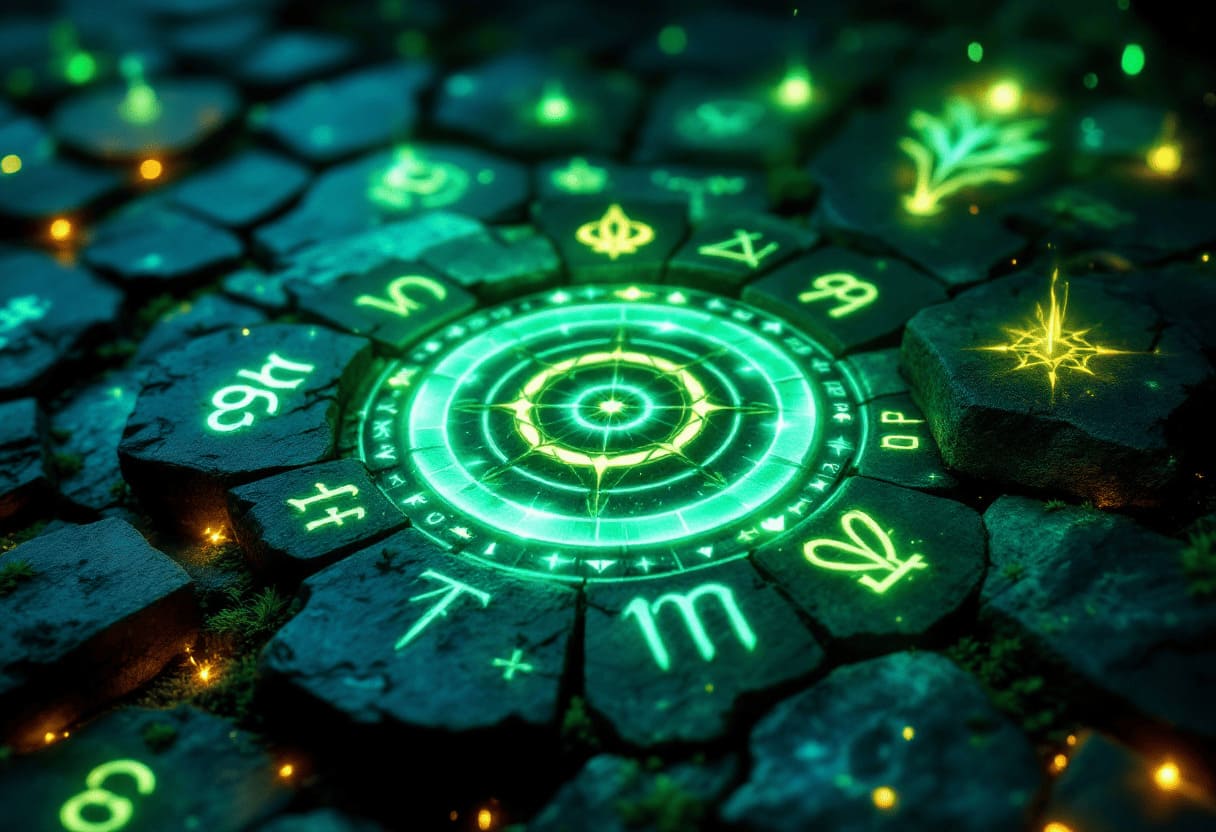
Imagine not just watching the news or checking a weather app to know if you need an umbrella tomorrow. Imagine if the positions of the sun, moon, and planets in the sky gave us clues about upcoming weather events. Sounds like science fiction? The idea isn't as far-fetched as it seems. Welcome to the fascinating world of... Astrameteorology.
Astrometeorology is a subfield of astrological meteorology, which attempts to predict weather phenomena based on astronomical constellations and cycles. It relies on the idea that the gravitational forces and energy fields emanating from celestial bodies could have subtle but measurable effects on the Earth's atmosphere and thus on the weather.
It is important to emphasize that astrometeorology is not a scientific field in the modern sense. It is not recognized by established meteorology and climatology. Nevertheless, it has a long and varied history, and some of its concepts are quite comprehensible, even if the exact mechanisms are disputed.
The idea of seeking a connection between heaven and earth is ancient. Even in early cultures, people observed celestial movements and tried to recognize patterns and cycles that correlated with natural phenomena such as seasons, crop yields, and weather events.
Astrometeorology assumes that the gravitational attraction The Earth's atmosphere is known to be influenced by the sun and moon, causing tides. Why shouldn't this force also affect the larger water masses in the atmosphere—clouds and precipitation? Furthermore, some astrometeorologists suggest that other planets could exert subtle influences on Earth's atmosphere through their gravitational and possibly electromagnetic fields.
In astrometeorology, various astronomical constellations and cycles are considered:
Astrometeorologists often create weather maps based on astrological principles. These maps can highlight specific "hot spots" or time windows in which certain weather patterns are more likely. For example, they can be used to predict sudden weather changes, periods of storms, or even calmer weather.
However, the limitations of astrometeorology are obvious and should not be underestimated:
Astrometeorology is undoubtedly a fascinating subject that reflects humanity's curiosity about the connection between the cosmos and our daily lives. It invites us to view the world from a different perspective and to reflect on the invisible forces that shape our universe.
For precise and reliable weather forecasts, however, we remain dependent on established meteorology and its scientific methods. But who knows? Perhaps future scientific discoveries will one day reveal even more about the subtle connections between the heavens and the weather on our planet. Until then, we can view astrometeorology as a historical, often poetic interpretation of nature—a reminder that we are part of a grand and wondrous whole.
I hope you enjoy this blog post! Let me know if you have any suggestions for changes or additions.