Physical Address
17033 Neubrandenburg
Germany
Physical Address
17033 Neubrandenburg
Germany


All effective influences known to us have the same structure. We call it the Unified Effect Structure. Everything built in accordance with it makes it possible to achieve the desired result.
There is only one condition: The Unified Structure works with those who breathe. Ideally – with humans.

Chapter 1
„"Everything has its price." We heroically overcome obstacles, break through barriers. Action equals reaction.
Often described as luck. We circumvent obstacles, utilize the terrain's unique features, and forge win-win relationships.
Direct action is Clausewitz's approach: the more troops and resources, the closer victory. Indirect action is Sun Tzu's approach: luring the enemy to where you want them.
01
If there is no or only negligible resistance
02
If we have more strength and resources – and we don't feel sorry for them
03
The ratio of effort to result should be reasonable.

The immediate criterion for applying direct action is the good old principle of proportionality. If direct action is more advantageous than a detour – act directly.

Sometimes someone pays for us. Someone or something covers the costs – consciously or unconsciously. Not only people, but also gravity, the laws of the market, systemic archetypes, and human prejudices can work for us.
Rivers flow – log drivers transport timber on them. The wind blows – the sails of mills turn. A girl smiles kindly – young men spontaneously offer help.
People donate to the church of their own accord, throw themselves into battle without orders, and pay taxes without a second thought. They do it THEMSELVES!
Chapter 2
The scheme for effective influence comprises five necessary and sufficient phases. They are necessary in the sense that omitting a phase significantly reduces the probability of success.
Create a point of reference
Rework resistance
Say it or do it
Cover your tracks
Clean up behind you
First, you have to get their attention. Captivate them, catch them, stop them. It's important that the person is truly communicating with us at that moment.

To address by name, to touch on an interesting topic, to come into focus
An interesting problem, something new, something extraordinary
Don't follow the opinion of the masses, but surprise them immediately.
You cannot influence someone unless you can capture their attention. Communication begins when a person hears their name or something meaningful to them.

Our task is to ensure that the person doesn't understand what's really happening for as long as possible. As long as we follow this principle, there will be no conscious resistance.
Do not suppress opposing forces, but rather lull into a stupor that which gives rise to them.
To distract from something else or to turn the criticism on our side
Everyone gets what is important to them and gives away what is not.
Key principle: You cannot consciously defend yourself against something you don't know is happening.
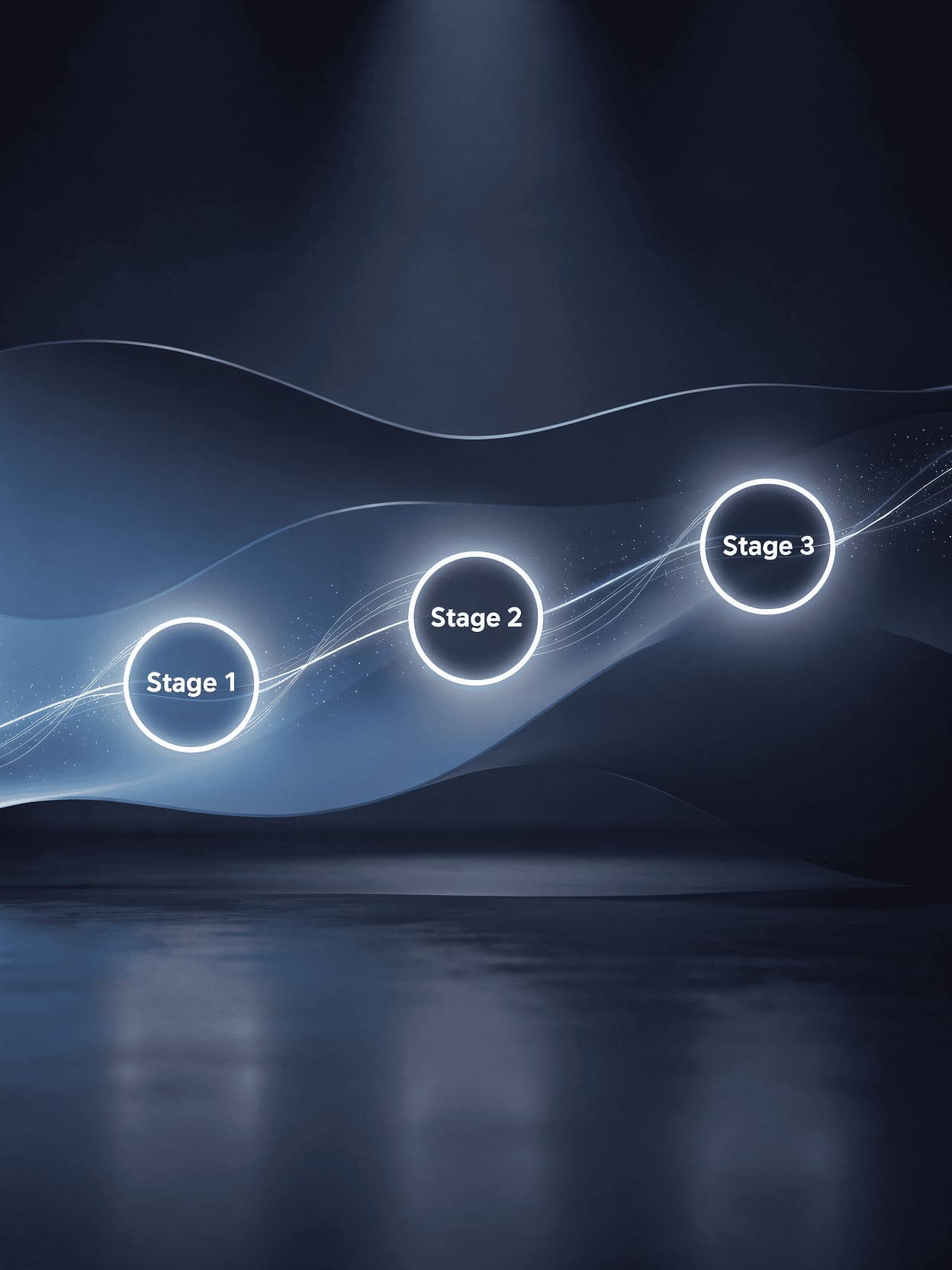
The intervention can target behavior („do it!“), feelings („feel it!“) or thoughts („think this!“).
Performed very quickly – like an operation.
We continue to divert attention. We do not expect immediate action.
The person must forget that the instruction came from us.
We end the manipulation phase. We bring the person back to their reality.
Nothing has happened. Everything is as it was before.
There are no ineffective manipulators. There are only impatient ones. The more complex the intervention, the more powerful the distraction must be and the longer the latent period must be.
Chapter 3
There is an objective reality that one can touch. And there is a subjective reality – things that may not actually exist: karma, energy meridians, national borders, moral concepts.

Most of the time, people spend their lives in a reality that does not exist in the outside world.
Only illness or physical pain brings one much closer to reality.
A person's perception of reality is based on the words they know. People with a minimal vocabulary are much closer to objective reality.
We've discovered that in many cases, words are primary. Reality begins after that. As long as we don't know the meaning of a word, it means nothing to us.
The "foreignness" of words plays a special role. They become markers: "Attention here!"„
Technologically (how it works) and historically (where it comes from)
Prove that it is either a discovery or a centuries-old, proven tradition.

Our task is to guide people away from objective facts and towards verbal facts. Simply inventing a word isn't enough. We need a hypothesis, an idea, a theory that explains what it might mean.