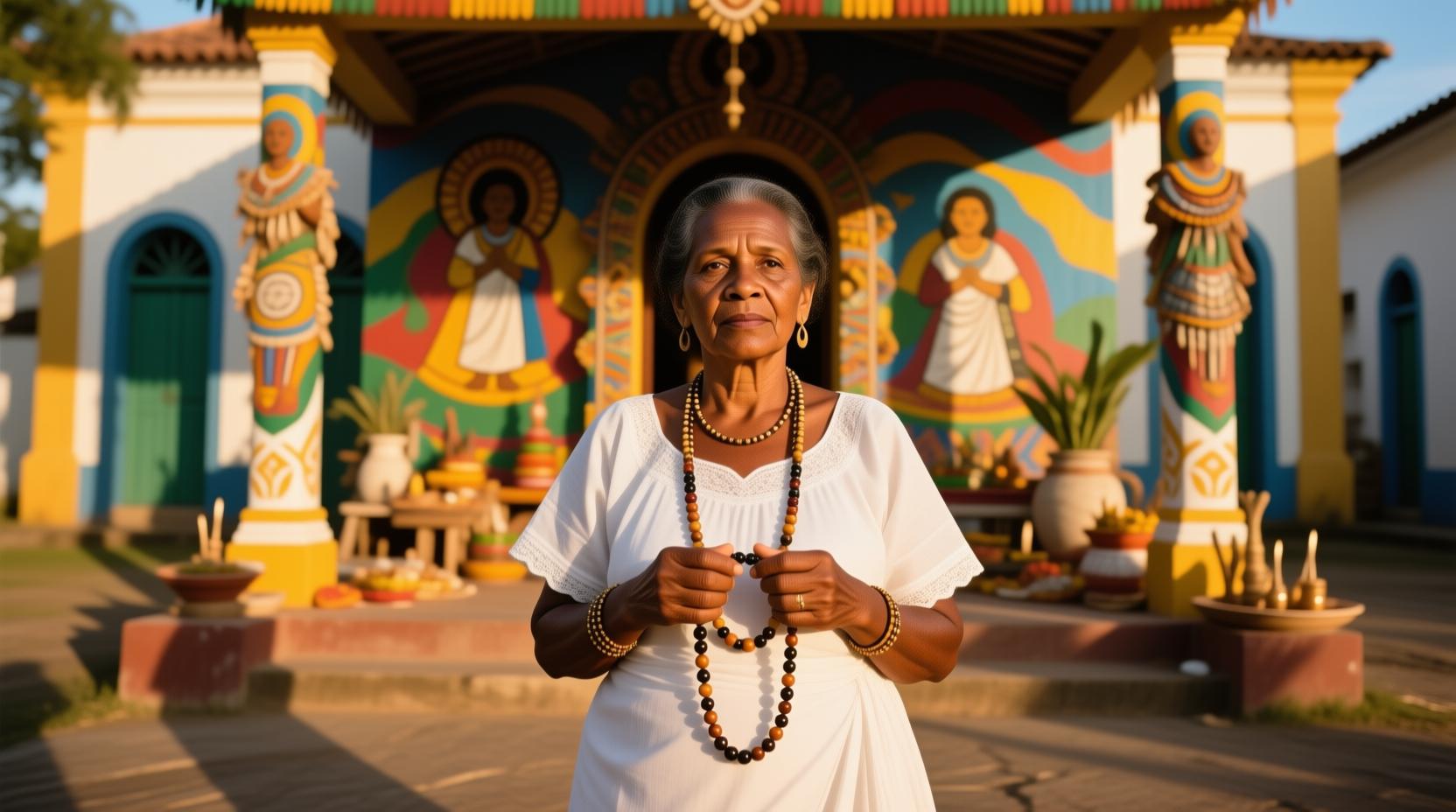
Candomblé Travel Guide to Bahia – In the Footsteps of Afro-Brazilian Spirituality
A cultural road trip through the cradle of Candomblé, full of rituals, colors, music and unforgettable encounters.
Watch and listen to the video version of the article
1. Why Bahia is the heart of Candomblé
Candomblé is more than a religion – it is a vibrant network of music, dance, art and community that has its roots in West Africa and has flourished in Brazil since the 19th century.
factor
Meaning for Candomblé
Historical Migration
Slaves from present-day Nigeria, Benin and Cameroon brought their Orishas (deities) to Bahia.
Cultural diversity
A mix of Yoruba, Bantu, Fon & Portuguese influences creates a unique syncretism.
Geographical concentration
Salvador, the former colonial center, is home to over 200 terreiros (temples) – more than any other place in the world.
In short: If you want to understand Candomblé, you have to travel to Bahia.
2. The Must-See Terriros – Pilgrimage Sites of Faith
2.1 Ilê Axé Opô Afonjá – the oldest terreiro
Location: Pelourinho, Salvador
Founding: 1910, directed by Mãe Menininha do Gantois
Highlight: The annual Iemanjá Festival (June 2nd) on the beach of Rio Vermelho – a spectacular fire and water ritual.
2.2 Ilê Axé Iyá Omí—Casa do Alá—Casa de Glória
Location: Terreiro do Pelourinho (near São Francisco Church)
Special feature: Accessible to visitors (after registration) – opportunity to participate in a Ritual Workshop to participate.
2.3 Casa Branca – the “White House” in Cachoeira
Location: 75 km northwest of Salvador
Why: Rural atmosphere, traditional drum sounds (atabaques) and authentic Comidas de Terreiro (e.g. acarajé, caruru).
2.4 Terreiro de Candomblé Boa Morte – in the Itapuã district
Location: Right by the sea, ideal for a sunset ritual.
Tip: Combine the visit with a walk along the Barra Beach – there the urban meets the spiritual.
3. Practical travel tips – How to combine respect and enjoyment
3.1 When is the best time to travel?
May–September: Dry season, less rain, pleasant temperatures (23-28 °C).
July & August: highlight of many festivities (e.g. Festa de Ogum).
3.2 What to pack?
Light, airy clothing (Cotton, linen) – but no shorts for temple visits.
A scarf or shawl to cover shoulders and knees (respect for sacred areas).
Comfortable shoes – many terreiros are located on cobblestones.
3.3 Rules of conduct in the Terreiro
RegistrationMany terreiros require prior registration by email or telephone.
PhotographOnly with explicit permission – some rituals are taboo.
Take off your shoes: In front of the altar, out of respect for the holy ground.
DonateA small contribution (approx. 30-50 BRL) is often expected; it supports the community.
MoneyUse only official exchange bureaus; take cash in small denominations to markets.
transportUber, taxi or app-based scooters (e.g. “99”); for remote terreiros, a rental car or a local guide is recommended.
4. Culinary journey of discovery – food that reflects the spirit of Candomblé
Court
Meaning
Where to try
Acarajé (deep-fried bean balls with vatapá)
Offering to Oshô (Basket) – Symbol of protection.
Mãe Jurema in Salvador, Boca do Inferno in Cachoeira
Caruru (Okra stew)
Will be Xangô (Thunder God) offered.
Local markets (Mercado Modelo)
Feijoada (Bean stew)
Communal meal following lengthy rituals.
Restaurants with a “Candomblé atmosphere” – Restaurante do Nego
Caipirinha (Cachaça cocktail)
Do people drink at parties to... Oxum-To awaken energy.
Beach bars in Rio Vermelho
Tip: Ask the hosts “um prato de oferenda” – you will receive a small, symbolic „sacrificial dish“ that is not otherwise on the menu.
5. Rhythm & Dance – The music that beats at the heart of Candomblé
Atabaques (large drums) – the basic framework of every ritual, conveying the voice of the Orishas.
Agogô (Metallic sound) – evokes the energy of Oxossi and Ogum.
Canto (Singing) – often in Yoruba language, poetic and meditative.
Experience spot:Casa da Mae Sabiá in Salvador – weekly “Roda de Candomblé”, where visitors dance (e.g. batuques) can learn.
6. Sustainable Tourism – How to Protect Spiritual Culture
Respect privacy of the communities – not every ritual is intended for tourists.
Buy locally produced products (e.g. handmade) cestos (made of rattan and ceramics) – supports the economy of the Terreiros.
Dispose of waste correctly Many Terreiros organize annual clean-up campaigns.
Share your experiences responsibly – tell stories about the people, not just about the „exotic“ rituals.
7. Travel Itinerary – 5-Day Program for an Intensive Candomblé Experience
day
Activities
Evening
1
Arrival in Salvador – Check-in, walk through the historic Pelourinho.
Dinner with Moqueca (Fish stew) in Restaurante Amado.
2
Visit Ilê Axé Opô Afonjá (Guided tour, conversation with a Mãe de Santo).
Participation in the Iemanjá Festival on the beach of Rio Vermelho.
3
Day trip to Cachoeira – Casa Branca and Acarajé Workshop.
Live music in Barra Grande – Open drum circles.
4
Walk to Terreiro de Boa Morte – Meditation by the sea.
Salsa night in Beco das Lavadeiras (local dance school).
5
Off-the-grid experience: Visiting a small village community, Cooking class for Caruru.
Return flight – reflection on the experience, thanks to the hosts.
8. Conclusion – More than a vacation, a spiritual awakening
A visit to Bahia is not just a beach trip, but an invitation to immerse oneself in the deeply rooted African-Brazilian spirituality. Through respectful encounters, sharing meals, and absorbing rhythm and dance, Candomblé becomes a vibrant learning environment that extends far beyond the usual tourist routes.
So pack your curiosity, an open heart and a pair of good shoes – and let Bahia transport you to a colorful universe of gods, drums and community.
We respect your privacy:We use necessary cookies and – with your consent – cookies for statistics and marketing. You can change or withdraw your selection at any time.Privacy Policy | Cookie Policy
Cookie Preferences
Manage your cookie preferences below:
Essential cookies enable basic functions and are necessary for the proper function of the website.
name
Description
Duration
Cookie Preferences
This cookie is used to store the user's cookie consent preferences.
180 days
These cookies are needed for adding comments on this website.
name
Description
Duration
comment_author
Used to track the user across multiple sessions.
session
comment_author_email
Used to track the user across multiple sessions.
session
comment_author_url
Used to track the user across multiple sessions.
session
Statistics cookies collect information anonymously. This information helps us understand how visitors use our website.
Google Analytics is a powerful tool that tracks and analyzes website traffic for informed marketing decisions.
Used by Google Analytics to determine which links on a page are being clicked
30 seconds
_ga_
ID used to identify users
2 years
_gid
ID used to identify users for 24 hours after last activity
24 hours
_gat
Used to monitor number of Google Analytics server requests when using Google Tag Manager
1 minute
_gac_
Contains information related to marketing campaigns of the user. These are shared with Google AdWords / Google Ads when the Google Ads and Google Analytics accounts are linked together.
90 days
__utma
ID used to identify users and sessions
2 years after last activity
__utmt
Used to monitor number of Google Analytics server requests
10 minutes
__utmb
Used to distinguish new sessions and visits. This cookie is set when the GA.js javascript library is loaded and there is no existing __utmb cookie. The cookie is updated every time data is sent to the Google Analytics server.
30 minutes after last activity
__utmc
Used only with old Urchin versions of Google Analytics and not with GA.js. Was used to distinguish between new sessions and visits at the end of a session.
End of session (browser)
__utmz
Contains information about the traffic source or campaign that directed user to the website. The cookie is set when the GA.js javascript is loaded and updated when data is sent to the Google Analytics server
6 months after last activity
__utmv
Contains custom information set by the web developer via the _setCustomVar method in Google Analytics. This cookie is updated every time new data is sent to the Google Analytics server.
2 years after last activity
__utmx
Used to determine whether a user is included in an A / B or Multivariate test.