Physical Address
17033 Neubrandenburg
Germany
Physical Address
17033 Neubrandenburg
Germany

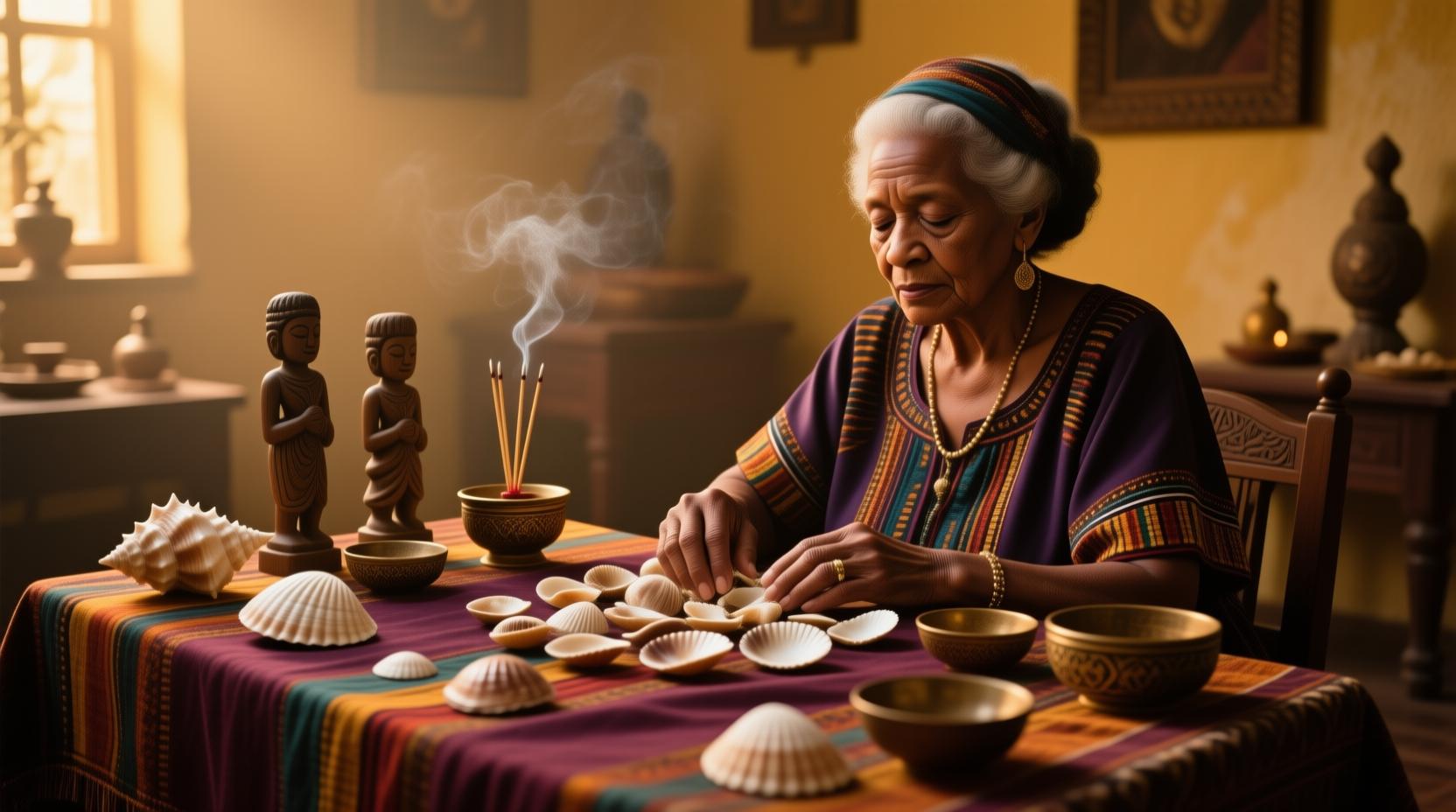
A deep look into the spiritual world that has shaped Cuba for centuries
In the bustling streets of Havana, the rhythmic drums of a rumba celebration, or the quiet halls of a Santería temple, one senses an invisible force that permeates the daily lives of Cubans. This force manifests itself in divination—a complex system of symbols, chants, and rituals rooted in the West African religions of the Yoruba peoples, and practiced today as Ifá, Diloggun and the invocation of the Orishas is alive.
But what is really behind these terms? How do the oracle systems work, and what role do the deities (Orishas) play? In this article, we explore the secrets of Afro-Cuban divination, recount its history, explain its practice, and show why it inspires people today more than ever in their search for meaning, healing, and guidance.
| Period | Event | Significance for fortune-telling |
|---|---|---|
| 15th–19th centuries | Slave trade – Yoruba prisoners to Cuba | Transfer of religious traditions (Ifá, Orishas) |
| 1868–1878 | Cuban Wars of Independence | Santería becomes a symbol of resistance and identity |
| 1900s | Syncretism with Catholicism | Orishas receive holy masks (e.g. Babalú Ayú → St. Luis) |
| 1970s | Secularization & Tourism Trend | Public screenings, but also the risk of alienation |
Forced migration led to the merging of Yoruba spiritual practices with Catholic rituals – a process that anthropologists describe as Syncretism to describe. The results are today distinctive rituals in which a Babalawo (Priest of Ifá) invokes the Orishas, while a Santero or a Santera leads the Tangó ritual.
Ifá is the central divination system of the Yoruba tradition. It is based on an extensive, orally transmitted corpus of 16,384 Odu verses (Collections of verses) that encode the divine knowledge of the Orishas. Each Odu contains metaphors, myths, and instructions for action – the equivalent of a spiritual library.
„"Ifá speaks through the signs, but man must open his heart to understand."“
– Babalawo José Martínez, 2019
Diloggun (also Eleke or Ifá of the Orisha) is the fortune-telling technique that specifically targets the Orishas (Deities) are consulted. While Ifá addresses the universal divine principle, Diloggún focuses directly on the individual guardian deities – of Elegu (Gatekeeper) until Oshún (Love and fertility).
| symbol | Orisha | Key aspect |
|---|---|---|
| Head of a snake | Ogun | War, metal, technology |
| Red Rose | Oshún | Water, sensuality, prosperity |
| Black pepper | Ogun | Protection, enforcement power |
| Holy basil | Obatalá | Purity, creation, justice |
| Orisha | symbolism | Typical colors | Assignments |
|---|---|---|---|
| Elegu | Path opener, destiny guide | Red, Black | Beginning, decisions |
| Obatalá | Creator, purity | White | Justice, health |
| Yemayá | Mother of the Sea | Blue, silver | Maternity, protection |
| Oshún | Love, fertility | Yellow, gold | Money, romance |
| Changó | Thunder, war | Red, Gold | Power, courage |
| Ogun | Metal, work | Green, Black | Craftsmanship, Technology |
| Babalu Aye | Illness, healing | Brown, Green | Health, Care |
„"When I hold the Opel in my hand, I feel not only as the recipient of a message, but as part of a millennia-old network of people striving for truth."“
– María Pérez, Babalawo student, 2023
| Step | What to do | Notice |
|---|---|---|
| 1. Research | Read land registers: “The Ifá Oracle” by A. K. Babalola; “Santería: The Religion of the Caribbean” by L. M. Gómez | Pay attention to reputable sources. |
| 2. Visiting a temple | Looking for a local Casa de Santería (Havana, Miami, Madrid). | Observe, respect etiquette (no photos without permission). |
| 3. Participation in a ritual | Sign up for a Diloggun experience to. | Wear white clothing, bring a small offering (e.g., fruit). |
| 4. Learning | Join one Ifá course part – often via a Babalawo. | The training takes years; start with the basics (Odu, Ase). |
| 5. Reflection | Note down your impressions in a spiritual diary. | Connect the messages you receive with your everyday life. |
Ifá, Diloggún, and the Orishas are more than just exotic rituals—they form a living, dynamic system that has provided guidance, healing, and community to people for centuries. In an ever-accelerating world, these practices remind us that wisdom not only in rational thinking, but in dancing dialogue between man and spirit.
Whether you are a curious traveler, a spiritual seeker, or a culture enthusiast, Afro-Cuban fortune-telling holds a rich treasure trove of stories, symbols, and energies. Take the first step, open the gate to Elegu, and let the Orishas guide you—the adventure begins now.
Discover the power that has permeated the island of Cuba for generations – and find your own connection to the ancient oracles of Ifá and Diloggún.
Tell us in the comments which Orisha appeals to you the most – we look forward to hearing from you!