Physical Address
17033 Neubrandenburg
Germany
Physical Address
17033 Neubrandenburg
Germany

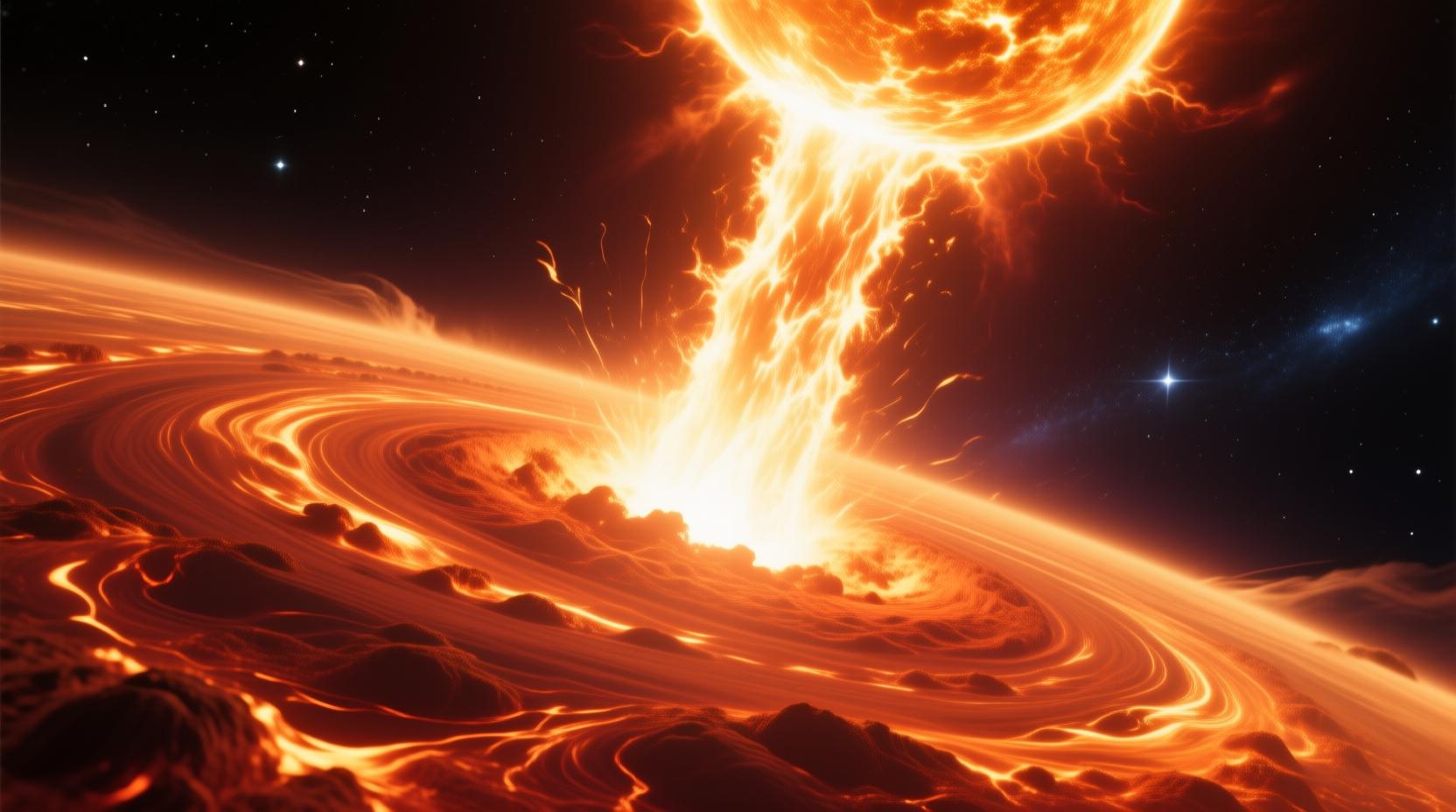
After a two-week lull, the sun has surprisingly resumed its activity. A strong eruption in the early morning marks the beginning of a period of heightened geomagnetic risks, which is expected to peak next week.
BERLIN/WORLD WEATHER CENTER. The lull above the sun's surface is over. For the first time in two weeks, solar activity has returned with a strong surge, as reported by observation stations worldwide. At approximately 4:00 a.m. (CET), space weather centers on the eastern limb of the sun registered a sustained outburst of magnitude M1.0.
This so-called M-class flare is considered a moderate but significant eruption and has been classified as class 4 on the five-level solar activity scale. It signals a clear change after the recent lull.
The recorded M1.0 flare is not just an isolated event, but according to experts, it heralds a sustained increase in solar activity. The region at the edge of the sun from which the flare originated is now slowly rotating towards Earth and could produce further, stronger eruptions in the coming days.
Experts warn that this active phase between the November 3rd and 9th will reach its peak.
The main concern of space weather researchers lies in the danger persistent magnetic storms. Should the expected eruptions release coronal mass ejections (CMEs) directed straight towards Earth, these could lead to measurable geomagnetic storms in the coming week.
Magnetic storms, which are caused by the collision of high-energy solar particles with the Earth's magnetic field, can have a variety of effects:
Space weather centers are currently monitoring developments closely to issue more precise warnings for the expected magnetic storms in the first week of November. The public and operators of critical infrastructure are urged to keep an eye on current space weather reports.