Physical Address
17033 Neubrandenburg
Germany
Physical Address
17033 Neubrandenburg
Germany

Investigation of fundamental questions of human existence through the prism of self-knowledge and consciousness.

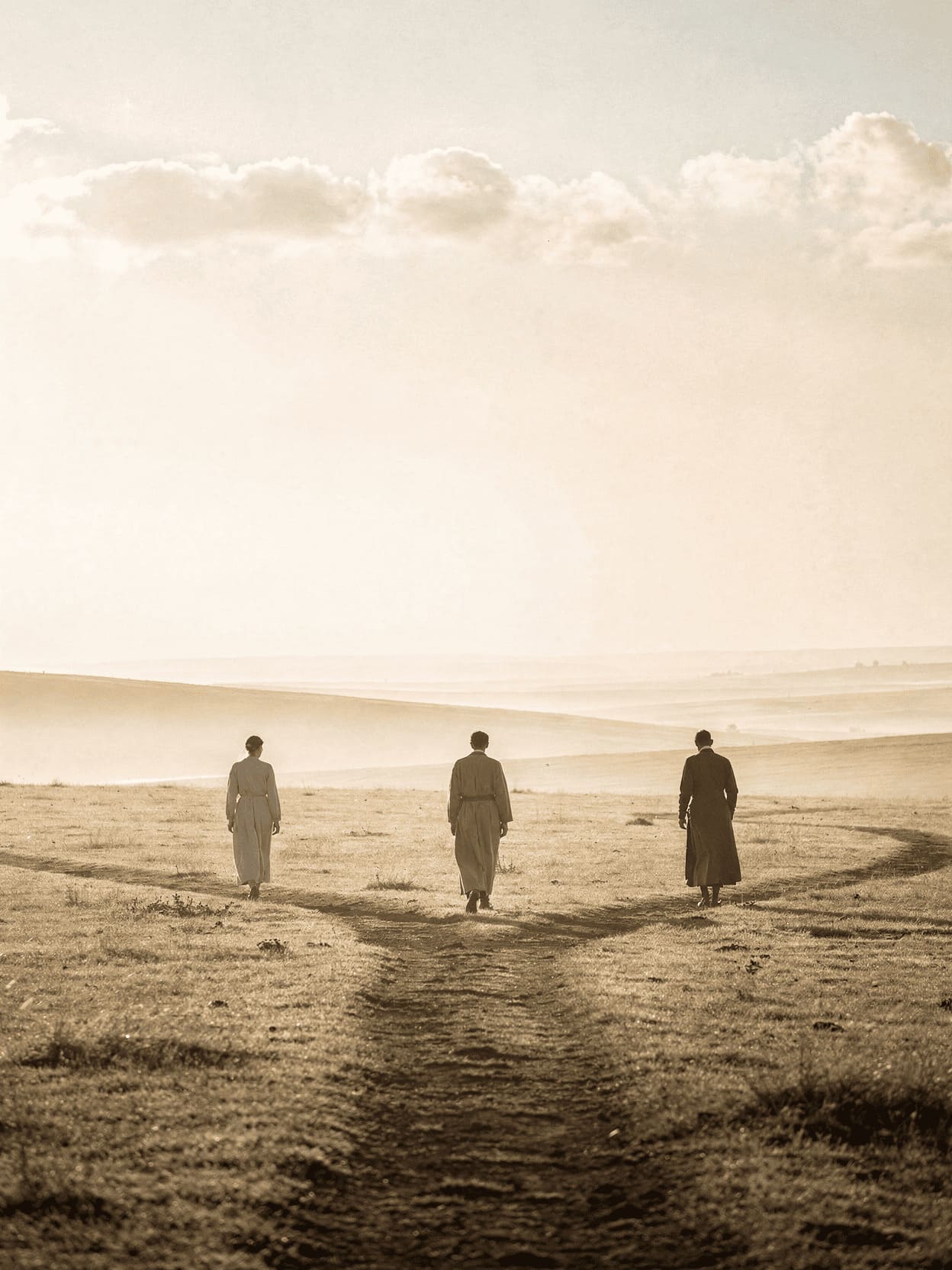
Krishnamurti describes a meeting with three types of people: a sannyasin, a follower of a brotherhood, and a utopian. They all live for the future (the next life, a divine niche, or a new state) and sacrifice the present to their ideals. The author asserts that becoming is a prolongation of suffering, and radical transformation is only possible in the present, in "being.".
People identify with groups, religions, or leaders out of fear, laziness, or habit. **Identification denies love and freedom; it is a form of self-defense and a surrogate for lived experience. Truth only emerges in a state of freedom, when all identification ceases.
Both phenomena result from a restless mind seeking intense sensations. Escaping from oneself through gossip or worry hinders deep self-knowledge. Peace of mind cannot be achieved through abstinence; it comes only with an understanding of what "is.".
Thought is not love, Because thought is based on memory and always divides. Jealousy and possessiveness are products of thought that take the place of love. Love is a state of being in which thought is absent; it cannot be cultivated or deliberately brought about.
Loneliness Solitude is not a fear-inducing isolation, but a pure, imperishable state of being. While seclusion (isolation) leads to conflict, solitude enables true communication with that which is beyond measure.
The separation into teacher and student leads to spiritual exploitation and self-deception. Humility is not an achievement., It cannot be cultivated for the future. It is important to understand oneself and not to follow someone who promises a reward.
Wealth often possesses more than people actually possess, creating a feeling of alienation and inner poverty. Desire to become (Expansion of the "self") hinders the understanding of reality for both rich and poor.
Conversion from one faith to another is merely a change of "cells" (prisons). Rituals act like stimulants., ...which dull the mind and heart over time. The truth lies beyond all ideological patterns and rituals.
Knowledge is based on the past and is an obstacle to understanding the unknown. Understanding the "self" is freedom from knowledge., since the accumulation of information often serves only as a protection against the fear of emptiness.
To be respectable means to build a wall of security around oneself made of money, power, or virtue. Respectable people fear the truth. and are closed off to reality due to constant concern for their own self-improvement.
Political activism often serves as an escape from the triviality of everyday life. External changes (political and economic) cannot be separated from internal ones. The inner always triumphs the outer.. Only deep awareness can lead to an integration of life as a whole.
Experience (past, memory) hinders the state of experiencing (present). In true In this state of experience, there is neither an experiencer nor an experienced thing. – it is a silent movement of being beyond time.

True virtue comes from the heart, not the mind; virtue cultivated by the mind is merely a clever calculation and self-defense. Virtue is a spontaneous understanding of what is., and no accumulated resistance.
Outward renunciation and a simple life do not equate to simplicity of heart. Complexity begins with the desire to "be" (protected, meaningful). Reality cannot be achieved through means., but by ending all attachments.
Every person is a "multiplicity," a collection of conflicting desires. The whole cannot be understood through a part; one must recognize the desire itself, without the participation of the "understander", who is himself a product of desire.
Sleep is not only important for the body's recovery, but also for calming the mind. Deep sleep is essential for... creative renewal This is possible if the mind voluntarily relinquishes the tendency to gather experiences.
Relationships are the process of uncovering the ways of the "self," which we often resist. We love with our minds (seeking security, possession), not with our hearts. Unity arises only when the mind becomes still..
Reality (the incomprehensible) cannot be found through discipline or tools created by time. The mind must be completely still., without registering or giving a name, so that the immeasurable can occur.
To seek the truth is to deny it, since the search is based on desire and projection. Self-awareness is the first step.; it reveals itself in the process of relationships and actions without choice.

Rejecting ugliness and clinging to beauty means being insensitive. Reality reveals itself only in the absence of contrasts. and the conflict of choice.
Society exists for the individual, to grant them the freedom to awaken their highest reason. The conflict between humanity and society reflects the inner conflict within humanity. Transformation in the present is more important than the state's future plans.
We cling to names and positions out of fear of being "nothing." **The "self" is an emptiness** that we try to fill with activity and identifications. Freedom comes through the fearless experience of this emptiness.
Faith is an expanded desire, a refuge that often replaces love and clarity. **The idea is less important than the action**, but we often replace action with activity based on faith.
True stillness is not the result of fatigue or discipline, but a state in which **the "experiencer" and the process of accumulation are absent**. It is the creative stillness of life outside of time.
Liberation from material things requires wisdom, not just outward gestures. Simplicity does not come from the mind.; it arises together with freedom from conflict and an understanding of desire.
The constant repetition of words or rituals offers only temporary satisfaction and numbs the mind. Truth cannot be repeated.; what is mechanically reproduced is lifeless.
Entertainment often serves to..., to escape "what is".. The dependence on external stimuli (music, art) indicates an inner emptiness that the person is afraid to confront.
Following authority (guru, leader) is a denial of understanding. Authority breeds fear, and true clarity cannot be received from another.
True meditation is not about controlling the mind, but about... Uncovering and understanding the interests of the "self"„. The mind must be completely empty in order to perceive the immeasurable.
Anger has the quality of isolation and is often fueled by the desire to justify oneself by blaming others. Violence cannot be overcome by willpower.; It requires a silent awareness of the desire itself.

Belief in a teacher or an ideology provides a sense of security, but it creates illusions. Experience is not reality; for reality to appear, knowledge and accumulated experience must cease.
We cling to the feeling of separation because we live with feelings and are afraid of losing them. Only when the mind is calm is love possible without "I" and "mine".
The desire for power (through money, knowledge, or virtue) corrupts and destroys humility. Isolation is the path of the "ego," leading to antagonism and suffering.
Sincerity is often based on willpower, which hinders a passive recognition of the truth. Simplicity and sincerity are incompatible, since sincerity is geared towards attainment (identification).
To seek self-realization means to seek self-preservation and the permanence of desire. The illusion of self-realization conceals inner poverty..
We often fill the inner void with words and sounds, fleeing from ourselves. The awareness of the ways of the mind, who create these illusions, is the beginning of true meditation.
The idea (what „should be“) is more important to us than the fact (what „is“). Conflict arises from the attempt to adapt the fact to an ideal.; Understanding comes only through encountering reality without preconceived notions.

The fear of death is the fear of the end of accumulated experience ("I"). Renewal is only possible through the death of the center of continuity. (Idea, memory, word) in every moment.
We hurt others because we ourselves are wounded by our conflicts; defending the idea of self generates aggression. The realization that you are "nothing"., freed from fear and accumulation.
The term "my experience" suggests an illusion; experience based on belief only reinforces conditioning. There are no multiple paths to reality., since the very idea of the journey is an escape from inner conflict.
The solution to a problem lies within the problem itself, not in searching for an answer outside of it. You yourself are the problem; only passive, non-selective consciousness makes it possible to fully understand it.
We fear loneliness and use people or ideas to hide it. When a person He experienced his loneliness directly as himself., The fear disappears.
Following a pattern (an ideal) provides security, but it destroys the mind and leads to inner contradictions. **Integration is freedom from the struggle of becoming.**.
The idea restricts and controls action out of fear. Real action is free from idea and pattern; it is only possible in the present.
City life, with its comforts and alienation, leads to attachment to things and ideas. **Understanding the ways of the "self" is the beginning of reason,** which transcends urban cunning.
Knowing the cause of an obsessive idea does not eliminate it. **Acceptance of what "is"** and the calmness of the superficial mind allow the hidden conflict to reveal itself and resolve.
We choose leaders from our own chaos, seeking comfort instead of truth. No one else can bring about a change in you.; Resistance and control are not understanding.
Silence caused by external stimuli (mountains, music) is dead. The appropriate response to life is action., not the creation of an idea or the escape into the past.

We cling to problems because without them, the "self" does not exist. The truth liberates from oppression, but cannot be achieved gradually or through willpower.
Conflict arises from the desire to become something one is not (an ideal). Understanding what „is“ (reality), requires the absence of comparison and judgment.
Contradiction arises when we establish a fixed point (an ideal) and deviate from it. True action is independent of conclusions. and plans, it is complete at every moment.
Jealousy is a way of keeping a person as property for one's own security. Where there is possession, there is no love.; An idea cannot hide the absence of a flame.
Cultivating a pose (even an ascetic one) is a denial of naturalness out of fear. Only naturalness in freedom can reveal the truth..
Both levels of the mind arise from the past and from inferences. A problem can be solved when the entire mind is still. and projects no answers.
Thought is an inadequate response of memory to the ever-new challenges of life. True action is openness to the unknown., where there is no room for an idea.
We use others to escape the fear of loneliness, and we call it love. Jealousy and hatred are the result of possession and the search for security.
Resentment towards others is often an escape from one's own shame about one's own actions. We are ashamed of our falls because we have put ourselves on a pedestal.; Without a podium, there is no fall.

Fear only exists in relationships (to the past, the future, to success). The mind creates fear., by resisting the unknown challenge of the present.
Love cannot be bought through sacrifice or cultivated through exercises. The heart must be completely empty of the objects of the mind., so that love can arise within it.
The search for results is a search for death (completion), not for life. The experience is inexhaustible., if the memory doesn't bother her.
Meditation as a means to achieve happiness is merely a calculation of the mind. The destruction of the form of the "self" is meditation.; Happiness comes only in solitude.
Thought is always a superficial, conditioned response of memory. A state of experience is impossible as long as the thought process is ongoing..
Conscious sacrifice is merely a form of exchange and expansion of personality. Love for what "is" is the beginning of wisdom., in contrast to isolating renunciation.
We recognize the smoke (jealousy, anger, memory), but we mistake it for the flame of love. Love arises when the mind is free from thoughts. and the heart empty of objects of the mind.
The mind exists as long as it is occupied with something (even with God); this occupation is a form of escape from nothingness. The end of mental activity is the beginning of true stillness..
Knowledge is a barrier to experience and creativity. The truth is only revealed when thinking ceases., not through violence, but through self-knowledge.


Conflict (the awareness of the "self") arises from an inappropriate reaction to a challenge. The termination of the process of naming experiences ends the conflict.
Acting for an ideal is „like a dog chasing its own tail“ (a projection of the „self“). Action without an idea is the only radical revolution..
The search for the cause of suffering is often merely a search for comfort, not for understanding. Cause and effect are a continuous flow., no fixed points.
We become dulled by choosing habit and escape (books, rituals) instead of vigilance. To own something means to become dull.; Virtue is freedom, not accumulation.
Clarity is not what precedes action, but the action itself. Love is a flame without smoke, it lies beyond the achievements of the mind and of time.
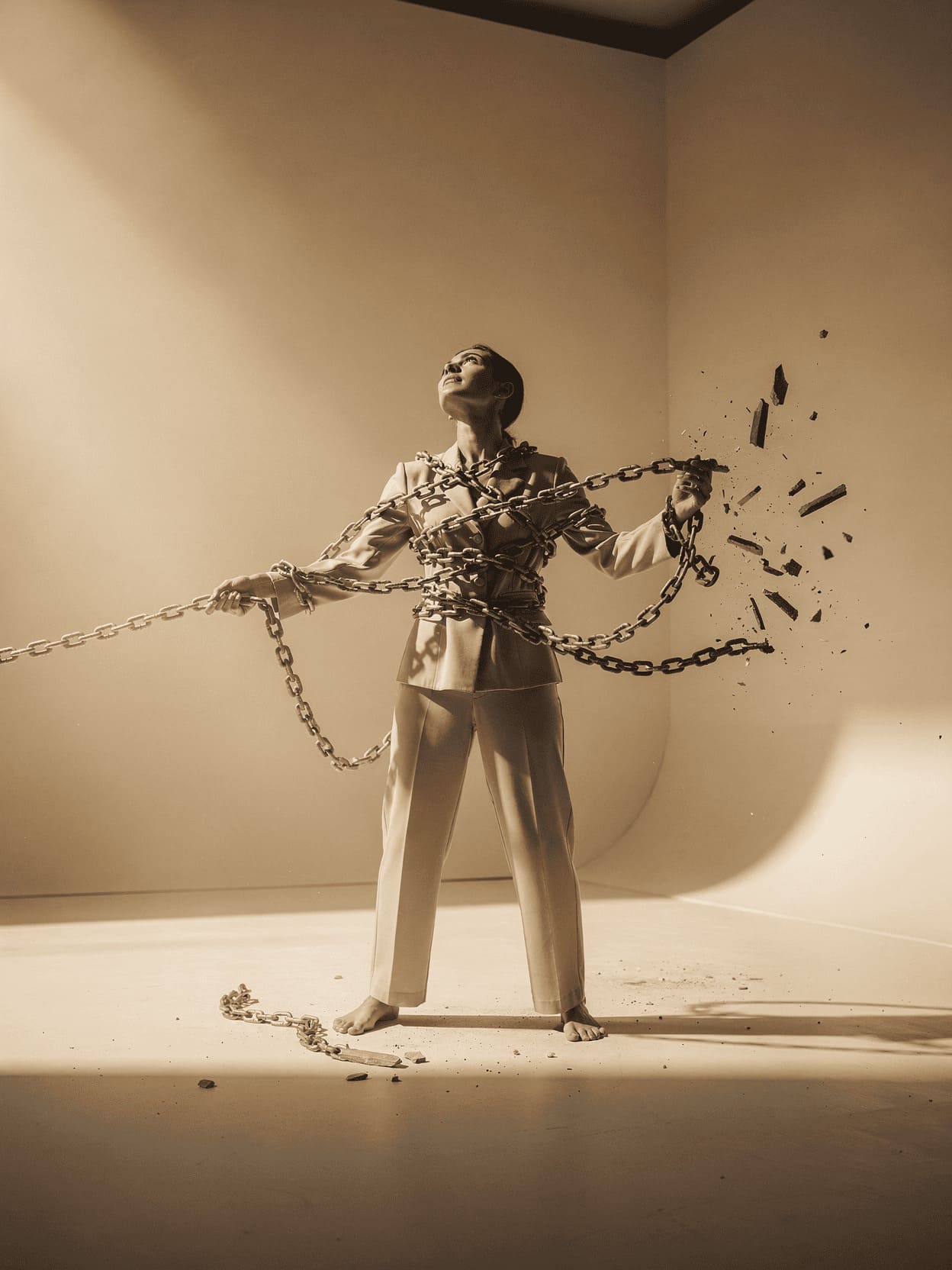
Ideologies divide people and sacrifice the people of today for a fictitious person of the future. Freedom from any ideology arises from self-knowledge..
Beauty requires sensitivity and openness to both the beautiful and the ugly. The search for beauty as an ideal is an escape from life., which is man himself.
Every conflict and every process of becoming is disintegration. Integration is not an act of will., but a state of completeness in the absence of struggle.
We use people (wife, husband) to escape our loneliness and call it love. In solitude (freedom from escape) fear ends..
A superficial mind cannot do true good; its "service" is often just a form of self-aggrandizement. The truth lies in the silent observation of what is., transforms the person.
Knowledge is conditional and an obstacle to understanding the unknown. To know is to remain in ignorance., and „not knowing“ is the beginning of wisdom.
Will is a goal-oriented desire that only intensifies the conflict. Silence cannot be brought about by means of anything.; it is present when there is no noise of effort and will.
Ambition is the beginning of the conflict, masked by the ideals of progress. We avoid what „is“.“, because we fear our own emptiness.

Satisfaction is the understanding of what "is", which is always new. She will arrive when all the searching is over.; Only love makes everything new.
Knowledge (memory) always refers to the past and hinders the discovery of the new. Wisdom comes when knowledge is exhausted., when the thought falls silent.
There is no distraction, there is only the flight from what "is" to more agreeable interests. When the spirit and that which "is" become one, Transformation and silence occur.
Psychological time is a process of becoming that is false. A life lived in time is confusion; Bliss is a timeless state of being.
We flee from grief into solace (religion, ideas), which only intensifies it. Understanding suffering requires passive vigilance. without judgments.
Feelings are always a reaction and a desire for "more", which leads to conflicts. Happiness is not a feeling and not a goal; It occurs when the mind is completely inactive.
Condemning a problem is an escape from it. Recognizing a flawed approach as flawed (through passive vigilance) opens the true path.
We seek security in the external (possessions) or internal (ideals), out of fear of the uncertainty of life. To remain with "being"., without ideals – that means finding freedom and happiness.
Often we don't love the work itself, but the satisfaction (power, happiness) it gives us. Using people as a means to an end – that is a lack of love. and a source of conflict.