Ostern 2026

Easter 2026

Easter – Frequently Asked Questions (FAQ)

Audio version of the article

Ostern 2026
1

When does Easter take place each year?

Easter is a movable feast. It is celebrated on the first Sunday after the first full moon following the vernal equinox (March 21). This can fall between March 22 and April 25.

2

How is the date of Easter calculated?

1. Determine the vernal equinox (March 21).
2. Find the first full moon that falls after this date.
3. The following Sunday is Easter Sunday. (This method is called "Computus".)

3

Why are there different Easter dates in the Western and Eastern Churches?

The Western Church (Roman Catholic, Protestant) uses the Gregorian calendar, the Orthodox Church the Julian calendar. The difference of 13 days often leads to different Easter dates.

4

What is the religious meaning of Easter?

Easter is the central festival of Christianity. It celebrates the resurrection of Jesus Christ from the dead – the victory over sin and death and the promise of eternal life.

5

What is Lent (Passiontide) and why does it end at Easter?

Lent lasts 40 days (excluding Sundays) from Ash Wednesday to Holy Saturday. It prepares believers for the resurrection of Jesus through penance, prayer, and abstinence.

6

Which church services are part of the Easter celebrations?

  • Good Friday service – commemoration of the crucifixion.
  • Holy Saturday (Easter celebration) – Easter Vigil with fire lighting, readings and the „Easter light“.
  • Easter Sunday – Festive Mass with the word „Risen“.
  • Easter Monday – often with an additional festive church service.
7

Why is there an Easter bonfire?

The Easter fire symbolizes the light of Christ, which dispels the darkness of death. In many regions of Germany, it is lit on Holy Saturday evening.

8

Where does the Easter Bunny come from?

The custom originates from German folklore: The hare, a symbol of fertility, hid eggs in the spring. German immigrants brought the tradition to North America in the 18th/19th centuries, from where it spread worldwide.

9

Why do we paint Easter eggs?

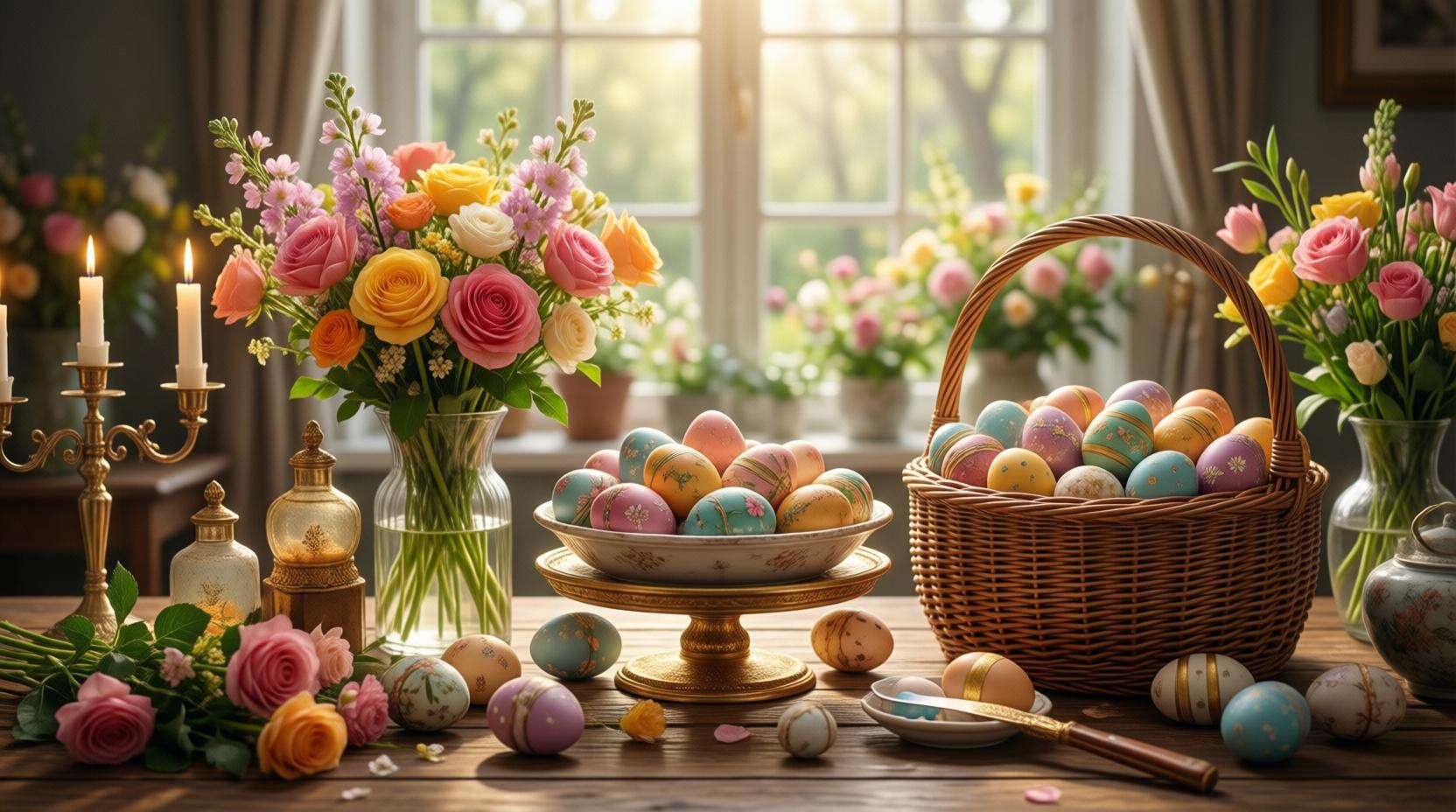
The egg has always symbolized new life and resurrection. Dyeing or decorating eggs is an ancient custom that dates back to the Middle Ages, from monasteries (e.g., dyeing with red to symbolize the blood of Christ) to today's DIY trends.

10

What regional Easter customs exist in Germany?

  • Easter fountains (Bavaria) – artistically decorated fountains.
  • Easter bonfire (Northern Germany, Rhineland).
  • Easter lamb shapes – gingerbread or marzipan shapes.
  • Easter water – blessed spring/stream water used for drinking or rituals.
11

What are typical Easter dishes in Germany?

  • Easter lamb (baked lamb made from yeast dough or ham).
  • Easter bread / yeast wreath (often with raisins).
  • Maultaschen (Swabian ravioli), eggnog, asparagus dishes (spring cuisine).
  • Easter bread (e.g., "Stollen" in southern Germany).
12

How is Easter celebrated in other countries?

  • Italy – „Pasqua“ with „Colomba“ (Colosse bird cake).
  • Spain – Processions (Semana Santa).
  • Poland – „Śmigus‑Dyngus“ (Easter Monday water battle).
  • USA – „Easter Egg Hunt“ and „Easter Bunny“.
13

What is the "Easter egg hunt" and how does it work?

Adults hide brightly painted or chocolate eggs in the garden/house. Children search for them on Easter Sunday. Often there is a "Golden Egg" prize.

14

How can I formulate Easter greetings?

  • „"Happy Easter and a blessed holiday!"“
  • „"A sunny Easter full of joy and hope."“
  • „"Happy Easter – may the light of the resurrection accompany you."“
15

Why are there Easter gifts?

In addition to the religious background, secular traditions have also developed in recent centuries: children receive small gifts, mostly chocolate, to share the joy of the resurrection.

16

How can I celebrate Easter sustainably?

  • Use reusable Easter eggs made of wood, fabric, or metal.
  • Colors made from natural ingredients (onion skins, beetroot, turmeric).
  • Local, seasonal food (asparagus, rhubarb, free-range eggs).
  • Green electricity for the Easter bonfire (e.g., solar lanterns).
17

What does the word "Easter" mean?

The Old High German word ōstar or ēostre refers to the Germanic spring goddess Ēostre (or Ostara). Christian usage later adopted the already existing spring festival.

18

Why is the color white often used at Easter?

White symbolizes purity, new life, and resurrection. Liturgically, white is worn on Easter Sunday; white flowers, candles, and fabrics dominate the decorations.

19

What is the „Easter fairy tale“ of the „Easter bunny“?

In many children's stories, the "Easter bunny" – a female rabbit – helps children find their eggs while simultaneously teaching values such as friendship, sharing, and patience.

20

How can I celebrate Easter respectfully in a multicultural environment?

  • Learn about the traditions of your fellow human beings.
  • Offer neutral activities (e.g., spring walks, crafting).
  • Use inclusive vocabulary („Feast of the Resurrection“, not just „Christian Easter“).
  • Respect dietary restrictions (e.g., vegan or halal options).
    How to use the FAQ

Have fun sharing your knowledge and celebrating a meaningful Easter! 🐣🌷🕯️
Leave a Reply

Your email address will not be published. Required fields are marked *