Physical Address
17033 Neubrandenburg
Germany
Physical Address
17033 Neubrandenburg
Germany

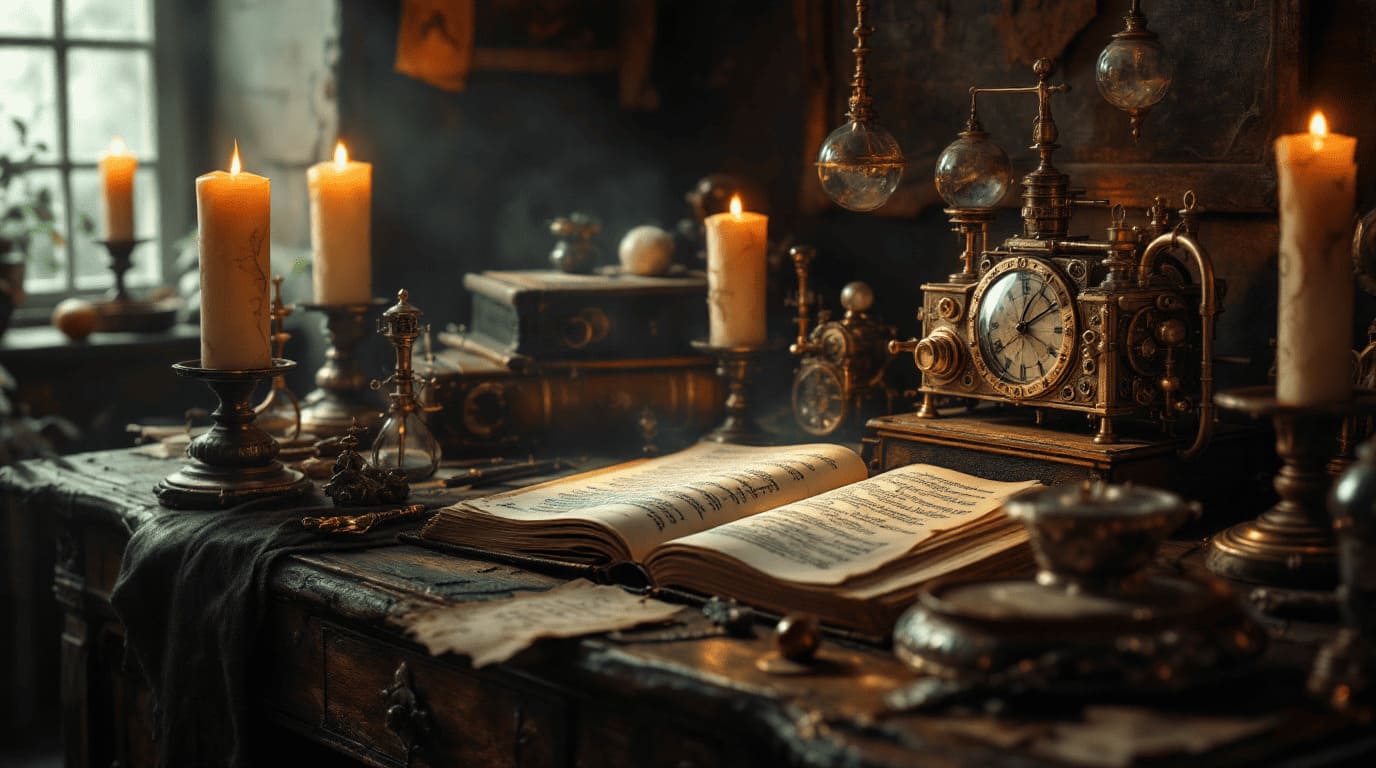
Here you will find a comprehensive catalog of frequently asked questions (FAQ) on the topic. Magic, mechanisms and practices. This compilation examines magic from a cultural-historical, religious studies, and practical perspective in order to provide the general public with a sound understanding.
Magic is often defined as the art and science of bringing about changes in reality (internal or external) in accordance with one's will. In contrast to natural science, which is based on measurable physical causality, magic often utilizes symbolic actions, psychological mechanisms, and the assumption of an energetic or spiritual interconnectedness of all things.
The art of illusion (show magic) uses sleight of hand, optical illusions, and psychological tricks to entertain the audience. Ritual or esoteric magic, on the other hand, is a philosophical and practical system that aims to expand human perception or influence life circumstances.
Most magical systems are based on the principle of Analogies (Correspondences). A central tenet is "As above, so below" (Tabula Smaragdina). It is assumed that symbols, planets, colors, and herbs exist in an energetic resonance. By manipulating a symbol in a ritual, an effect is supposed to be achieved on the corresponding target object.
Intention (will) is considered the driving force of magic. Without a clear, focused intention, a ritual remains a lifeless sequence of actions. In modern magic, intention is often sharpened through meditation and visualization to align the subconscious mind with a specific goal.
Many practitioners believe in a form of spiritual cause and effect. The "Law of Resonance" or the "Threefold Law" (Common in Wicca) is well-known, stating that any energy one sends out—whether positive or negative—returns to the originator amplified. This also serves as a moral compass within the practice.
Traditionally, the four elements are represented by tools:
This distinction is more a matter of popular culture than scientific precision. "White magic" is usually defined as selfless, healing, and protective, while "black magic" is used for selfish or harmful purposes. Many modern practitioners reject this dualistic view and instead emphasize the ethical responsibility of the individual.
Ceremonial magic (also called high magic) encompasses highly structured rituals, often based on ancient grimoires (books of spells). It is highly formalized, utilizing complex invocations, ceremonial robes, and precise time calculations (astrology) to seek transcendent experiences or communication with spiritual entities.
Chaos magic is a modern movement that emerged at the end of the 20th century. It is pragmatic and non-religious. Chaos magicians believe that belief itself is a tool. They use techniques from various systems or invent their own, as long as they lead to the desired result.
In folk magic and many nature religions, the lunar cycle is used as an energetic pacemaker:
A sigil is a graphic symbol that represents a specific intention. In practice, a wish is formulated as a sentence, the letters are reduced, and combined into an abstract symbol. This is then "charged" in a state of deep concentration (gnosis) and subsequently forgotten, so that the subconscious can work on it without disturbing doubts.
Renowned occultists like Dion Fortune defined magic as the art of altering consciousness at will. Many mechanisms of magic—such as visualization, affirmation, and ritual—correspond to modern psychological methods of mental training and autosuggestion.
Protective magic encompasses practices aimed at warding off negative influences (of a psychological or energetic nature). This is often achieved by drawing a "protective circle," wearing amulets, or energetically cleansing spaces with incense (e.g., mugwort or sage).
Although the terms are often used synonymously, there are differences: A amulet is passive and serves to protect against harm. talisman is active; it is made or consecrated for a specific purpose, to attract certain forces (e.g., luck, success, courage).
The four elements are considered the fundamental building blocks of existence – both materially and symbolically. In practice, they are used to establish balance. Each element corresponds to human qualities (e.g., fire with passion, water with emotions). A fifth element, the "ether" or "spirit," connects the other four.
Historically, magic has often been viewed as a craft or discipline that can be learned through study and practice. While some people have a natural inclination towards meditation or intuition, progress in most traditions is more a matter of perseverance, willpower, and self-reflection.
The protective circle is a ritually marked space. It serves two purposes: firstly, as a barrier against external distractions or unwanted energies, and secondly, as a "storage vessel" for the energy built up during the ritual, so that it can be released in a controlled manner.
Astrology provides the magical timetable. Many practitioners choose the timing of their rituals based on planetary constellations (e.g., Venus for themes of harmony, Mars for assertiveness) in order to make optimal use of the supposed cosmic currents.
From a professional perspective, the risks lie less in "demons" than in psychological stability. Intensive meditative work and dealing with the subconscious can bring repressed fears to the surface. A healthy degree of grounding (connection to reality) and critical self-reflection are therefore essential components of any reputable practice.
Although we live in a technological age, many people seek meaning, personal empowerment, and a reconnection to nature in magical practices. Magic often serves as a complementary system to rational engagement with the world, strengthening one's psyche and ritually accompanying life transitions.