Physical Address
17033 Neubrandenburg
Germany
Physical Address
17033 Neubrandenburg
Germany

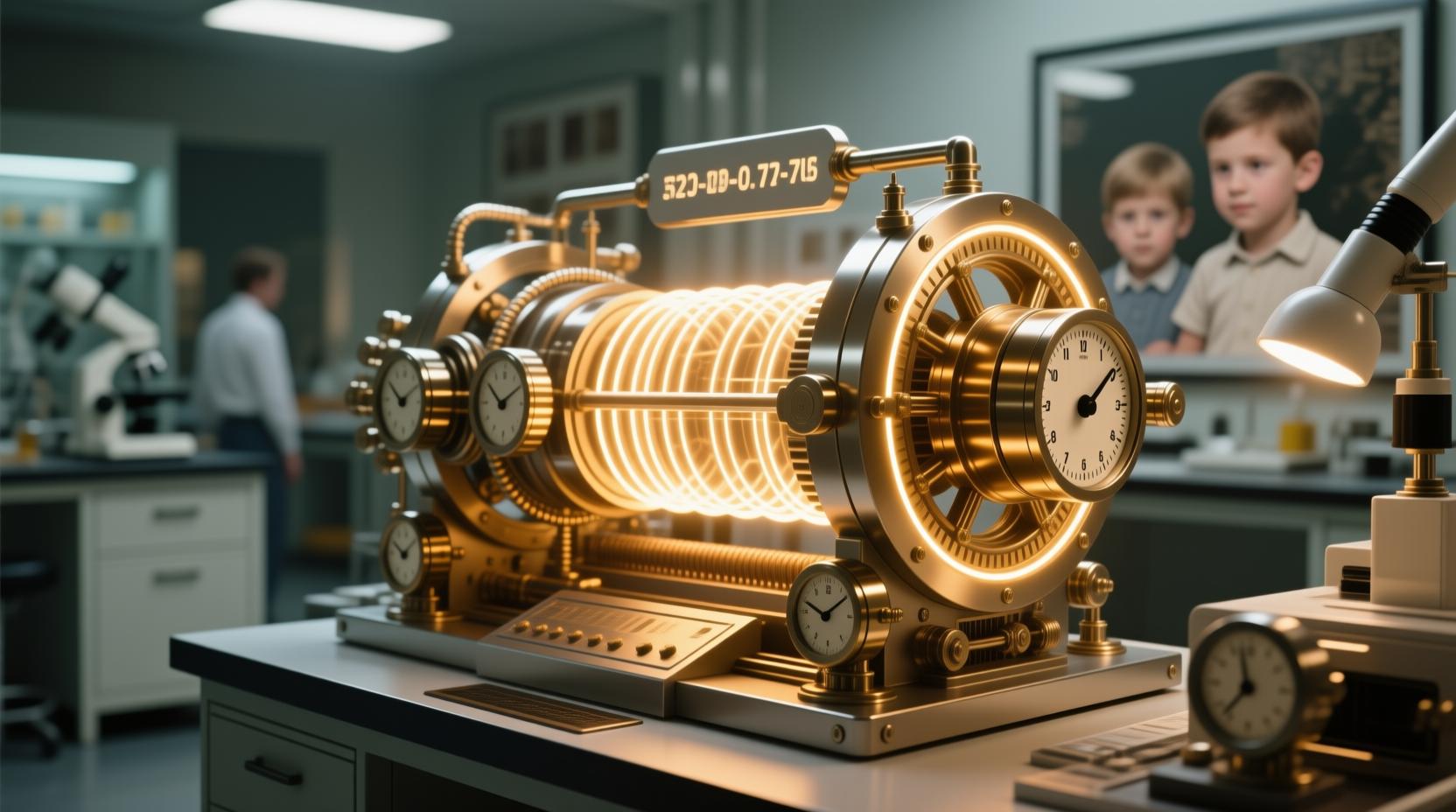
CAMBRIDGE. An international team at the renowned Cavendish Laboratory at the University of Cambridge has announced a technological sensation: the development of a working time machine. The groundbreaking device, named the "Chronos Mirror," is, however, revolutionary in its limitations: it allows its users only to return to their own childhood, and then only as silent observers.
The announcement, made yesterday at a press conference in Cambridge, has pushed the boundaries of theoretical physics and sparked a worldwide discussion about the nature of memory and time.
The device was invented by theoretical physicist Dr. Evelyn Reed, who worked on the project in secret for years. She explained that the "Chronos mirror" is not based on a gigantic capsule, as is common in science fiction, but on a complex system of neural interfaces and quantum entanglement.
„We haven’t found a way to alter the macroscopic past or travel back to the age of dinosaurs,“ explained Dr. Reed. „Our technology utilizes each individual’s unique connection to their own spacetime. The Chronos mirror is essentially an extremely sophisticated, multisensory memory replay system that physically projects the user into an earlier version of themselves.“
The crucial catch, and simultaneously the ethical safeguard, is that the travelers act as invisible, non-interactive entities in their past. Intervening, issuing warnings, or even altering events is physically impossible.
According to the researchers, the primary applications of the technology are not in the field of tourism, but in psychotherapy and memory research.
„Imagine the possibilities for coping with trauma,“ said Professor Alistair Finch, head of the research group. „Someone who experienced a traumatic event in childhood can now re-examine and process it from a safe, adult perspective, without the risk of retraumatization through direct intervention.“
The first participants to test the "Chronos Mirror" reported an overwhelming experience. They were able to relive not only visual impressions, but also smells, sounds, and even the feel of their childhood clothes or toys. One test subject described the experience as "absolutely real, yet simultaneously surreal and safe.".
Although the developers emphasize that there is no risk of manipulating past events (thus eliminating the so-called grandfather paradox), ethical concerns are already being raised. Critics question what psychological consequences confronting idealized or painful childhood memories might trigger, given that the game is based on the only reality they have ever known.
The University of Cambridge is now planning a comprehensive series of clinical trials in collaboration with psychiatric clinics. Should these trials be successful, the "Chronos Mirror" could be made available for therapeutic purposes within the next five years, albeit only in controlled environments.
Dr. Reed concluded her presentation with a philosophical outlook: „We have not just built a machine that travels through time. We have created a tool to better understand ourselves – a window into the person we once were.“