Physical Address
17033 Neubrandenburg
Germany
Physical Address
17033 Neubrandenburg
Germany

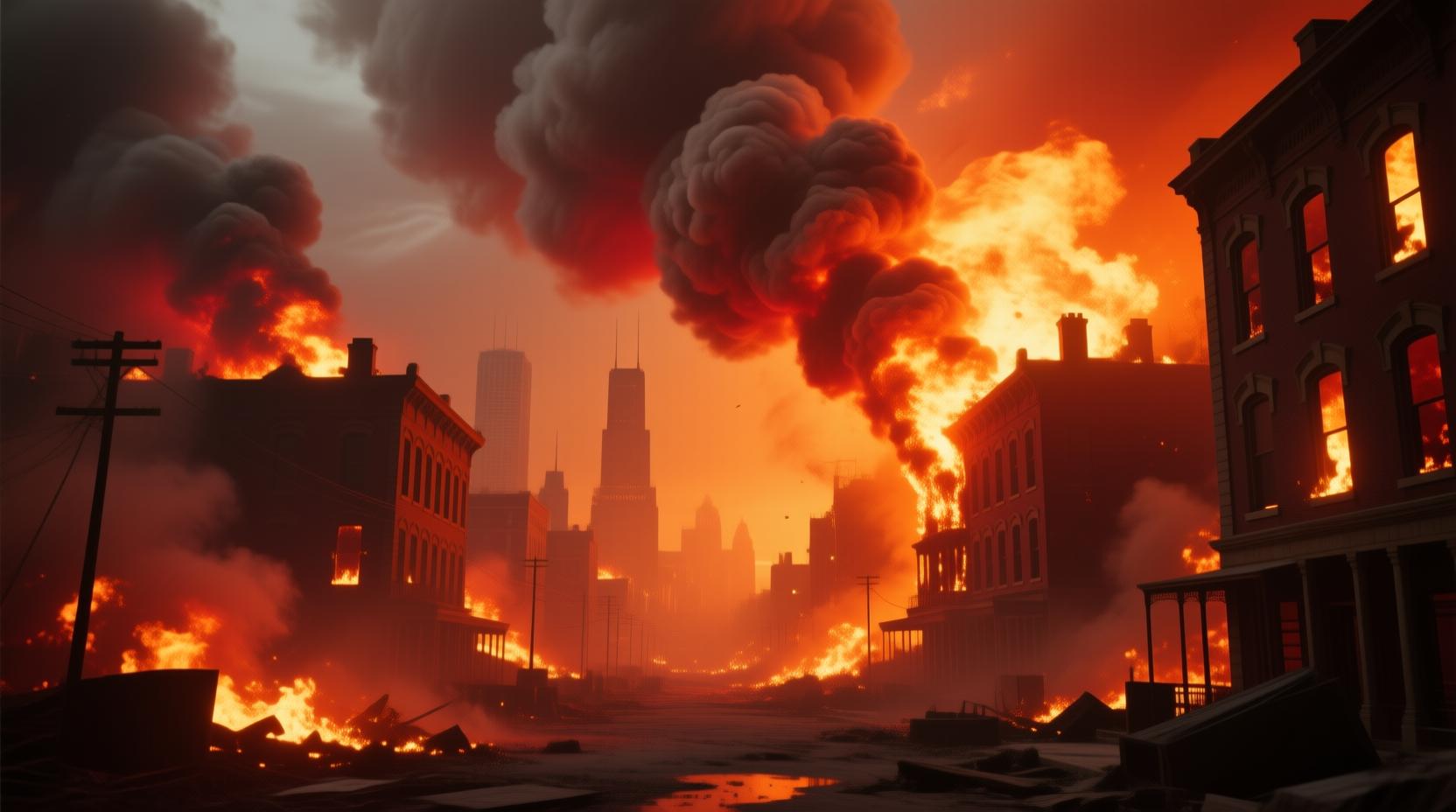
Chicago 1871: A rapidly growing metropolis, the pulsating heart of the American Midwest, known for its impressive wooden buildings and boundless optimism. But this optimism rested on a dangerous foundation. On the evening of October 8, 1871, a small fire unleashed a catastrophe of biblical proportions that literally reduced Chicago to rubble.
The Great Chicago Fire is one of the most devastating urban disasters in history – and a shining example of how a city can rise like a phoenix from the ashes.
Before we get to the famous cow, we need to understand the conditions that enabled the disaster. Chicago was a ticking time bomb:
The fire broke out in the southwest of the city, near a small barn on DeKoven Street. Fanned by the strong winds, the flames leaped from building to building. When the flames reached the riverbank and jumped over it, it was clear: this fire was unstoppable.
Did you know? The heat created fire vortices that carried burning pieces of wood and embers for kilometers through the air, thus repeatedly creating new fires.
The inferno raged for over 36 hours. The damage was unimaginable.
Key infrastructure, including the central waterworks (which, ironically, was supposed to supply water for firefighting) and the main commercial streets, was completely destroyed. Downtown Chicago, as it was known, no longer existed.
No article about the Great Fire would be complete without the most famous (and persistent) legend in American history: Catherine O'Leary and her cow.
The myth goes that on the evening of October 8th, Catherine O'Leary accidentally knocked over a lantern while working in the barn. The cow, so the story goes, kicked the lantern over, the hay caught fire, and the rest is history.
The reality: This story spread quickly because it was simple and sensational – an Irish immigrant family and an unlucky cow as scapegoats for a mega-disaster.
The truth: Later investigations completely exonerated the O'Leary family. They were unjustly stigmatized, suffered lifelong public scorn, and were even forced to leave their city.
The actual cause of the fire remains unknown to this day. It is more likely that vagrants illegally camping nearby, or even sparks from a nearby chimney, started the blaze. However, the decisive factor was not the spark, but the devastating weather conditions.
After the initial shockwave, there was international disbelief – would Chicago ever recover? The answer was an unmistakable „Yes“.
The citizens of Chicago displayed a unique will to survive. Instead of waiting for outside help, they began the cleanup almost immediately. Merchants set up their businesses in temporary tents and barracks, and the city planners' vision was bold.
The new beginning became an opportunity:
Ironically, the Great Fire of 1871 not only destroyed the city; it freed it from its constraints. It paved the way for a modern, steel metropolis, now known worldwide for its groundbreaking architecture.
The Great Chicago Fire remains a reminder of the fragility of human construction, but even more so, it is a monument to indomitable human determination. Chicago burned down, but it was rebuilt stronger, taller, and more fireproof.