Physical Address
17033 Neubrandenburg
Germany
Physical Address
17033 Neubrandenburg
Germany

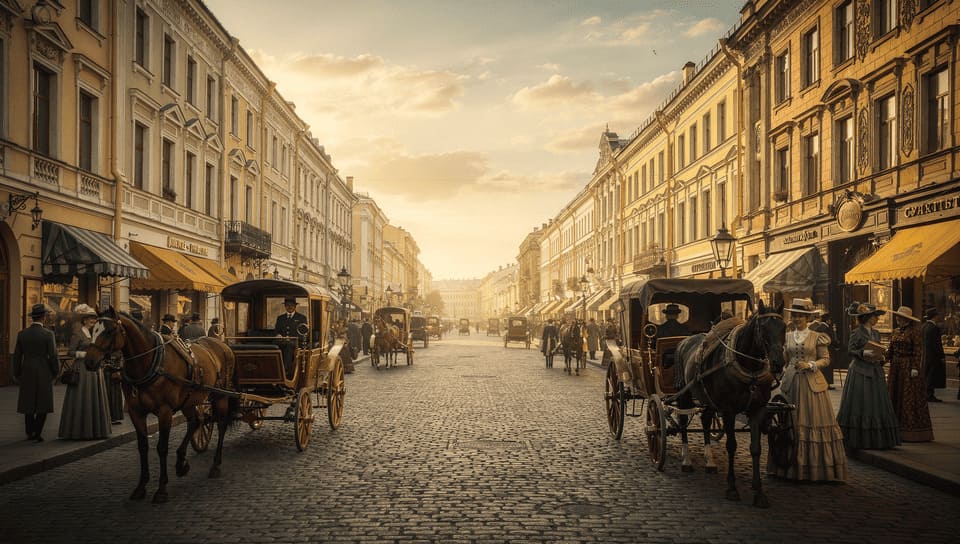
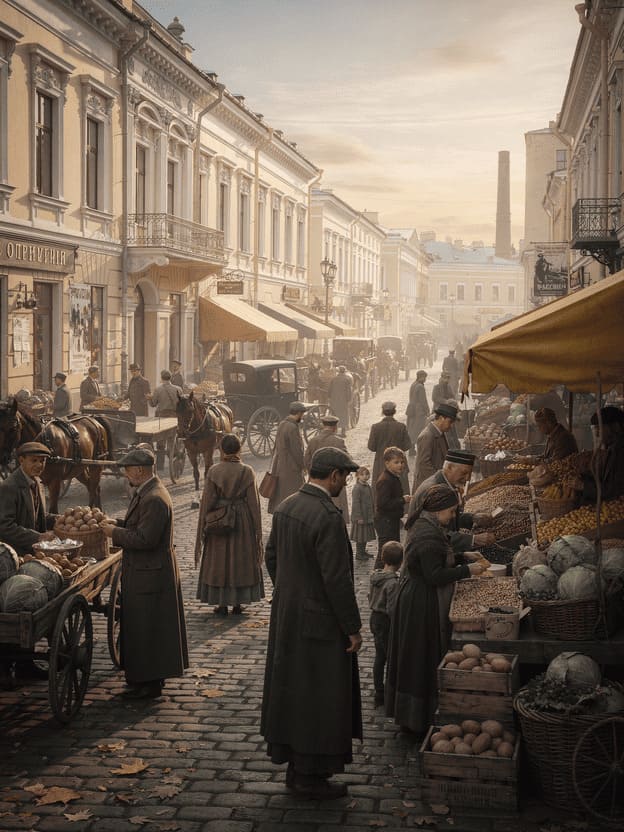
Introduction. In the annals of Russian history, few embody the turbulent intersection of idealism, violence, and political upheaval as vividly as Boris Savinkov. His memoirs, "Memoirs of a Terrorist," published in 1923–24, are a harrowing yet compelling eyewitness account of the revolutionary underworld that contributed to the collapse of the Russian Empire. This is not merely a personal chronicle; it is a window into the minds of those who viewed terror as a weapon of justice and a mirror reflecting the moral complexities of a society on the brink of collapse.
Chapter 1

Who was Boris Savinkov? Born in 1879 into a family of minor nobility, Savinkov was an engineer, soldier, and one of the most prominent, yet also most enigmatic, figures in early 20th-century Russia. At the age of 20, he joined the Marxist-socialist revolutionary group "Narodnoe Slovo" (The People's Word), whose aim was to overthrow the Tsar. Savinkov was directly involved in high-profile assassinations, including the 1904 murder of Interior Minister Vyacheslav von Plehve, and organized the Organization of the Struggle for the Liberation of the Workers, a secret society of radicals. After the February Revolution of 1917, he briefly collaborated with the Provisional Government but switched sides during the Civil War, siding with the White Army and later fleeing to Paris as an émigré.
Under the pseudonym V. Ropsin, Savinkov created significant literary works that illuminate the inner conflicts and psychological abysses of a terrorist's life. This dual identity—as a man of action and of words—makes him a unique historical figure.
Chapter 2
Savinkov's memoirs, "Memoirs of a Terrorist," are both a confession and a defense. He describes his immersion in revolutionary terrorism in stark terms, portraying his actions as part of a necessary "scientific" struggle against autocracy. Key themes include:

Savinkov argues that terrorism was a calculated, almost clinical instrument used to instill fear in the Tsarist regime and force it to implement reforms. He distinguishes between "revolutionary justice" and senseless violence, portraying himself more as a technocrat of chaos than a bloodthirsty fanatic.
The memoirs analyze the psychological consequences of a life lived in secrecy, paranoia, and moral uncertainty. Savinkov describes the camaraderie among the terrorists, their unwavering ideological zeal, and the psychological distance necessary to assassinate a state minister.
Surprisingly, Savinkov also expresses mixed feelings. While defending his actions, he acknowledges the human cost of terrorism – the destruction of relationships, betrayal, and alienation from "normal" life.
The memoirs reveal the duality of Savinkov's personality: a man who fought for social justice but used methods that would be condemned as terrorism today, and who later became a symbol of resistance for white emigrants.
Chapter 3
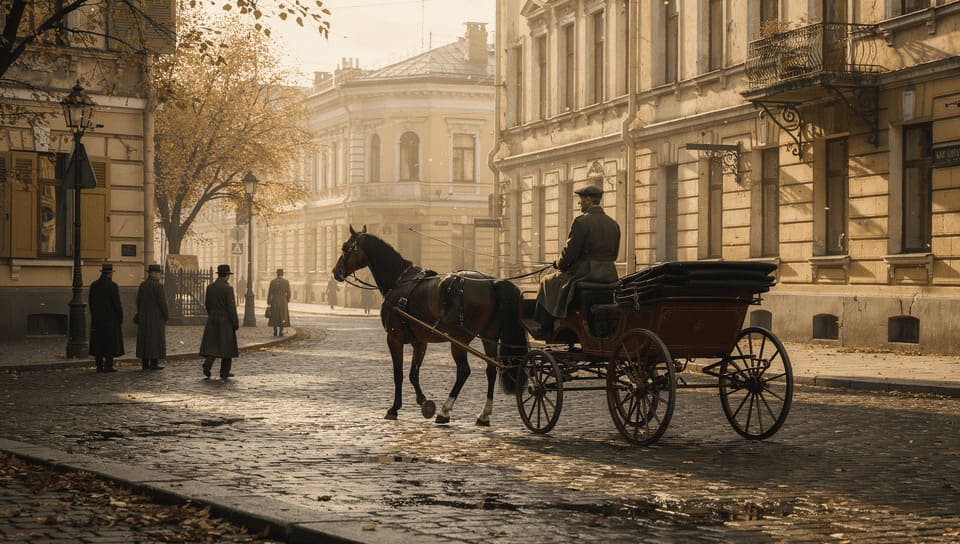
The attacks carried out by the combat organization were not spontaneous acts of violence, but carefully organized operations requiring months of preparation. In his memoirs, Savinkov describes the meticulous planning, the monitoring of targets, the procurement of explosives, and the psychological preparation of the terrorists.
Months of monitoring the travel routes and security measures of Tsarist dignitaries
Procurement and preparation of explosives, development of detonators and planning of escape routes
Historical Context: Violence and Revolution. Savinkov's story unfolds against the backdrop of a society in upheaval. In the early 20th century, terrorism was a defining characteristic of Russian radicalism. Groups like Narodnaya Volya before him believed that assassinating leaders would provoke a mass uprising. Savinkov's Socialist Revolutionaries refined this strategy by adopting the concept of "propaganda of the deed"—the use of violence as a political act and spectacle. His memoirs reveal how the revolutionaries saw themselves: not as criminals, but as modern-day Robin Hoods, armed with explosives instead of swords.
Chapter 4
„"Memoirs of a Terrorist" (Russian: Воспоминания террориста) is far more than just a chronicle of revolutionary activities. Savinkov created an autobiographical account of his activities up to 1909, which provides a profound psychological insight into the life of a terrorist.
His literary style combines documentary precision with psychological depth and has had a significant influence on Russian literature as well as on the political debate about violence and revolution.
The work reveals the inner conflicts between idealistic goals and brutal methods, between loyalty to comrades and doubts about the legitimacy of political violence. Savinkov addresses themes such as betrayal, moral dilemmas, and the existential loneliness of the terrorist.

„"The terrorist lives in a world between life and death, between hope and despair – a constant struggle with his own conscience."“
Chapter 5
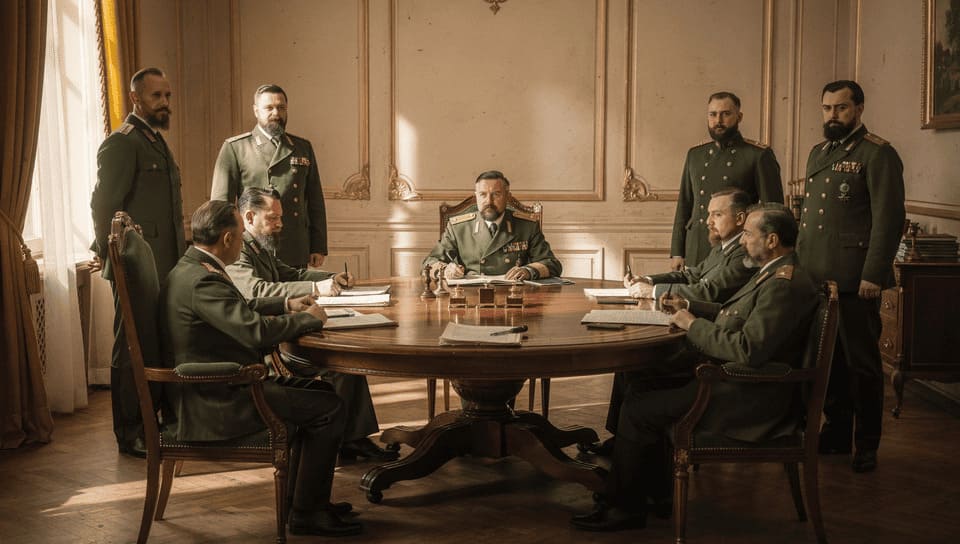
Assistant to the Minister of War, Alexander Kerensky, in the Provisional Government – an attempt to democratically reform Russia
After the October Revolution, Savinkov organized active military resistance against Lenin's takeover of power.
Founding of the "Union for the Protection of the Homeland and Freedom" in Paris – coordination of anti-Bolshevik forces
Savinkov's transition from terrorist to statesman illustrates the complexity of the Russian Revolution. When the Bolsheviks came to power, he found himself in opposition once again – this time against the new authoritarian regime.
Chapter 6
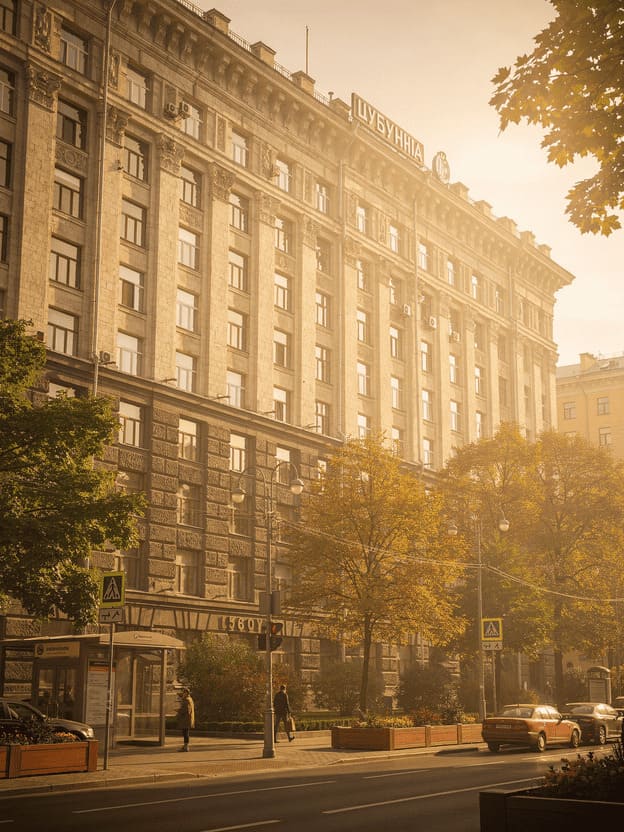
In 1924, the Soviet secret service operation "Trust" lured Savinkov back to Russia under false pretenses.
Immediate arrest by the OGPU, a public show trial, and a ten-year prison sentence in the notorious Lubyanka prison.
Savinkov officially died on May 7, 1925, after falling out of a window – the true circumstances are still disputed today.
Controversial cause of death: While Soviet authorities ruled it a suicide, many historians suspect murder by the secret police. Savinkov's death remains one of the unsolved mysteries of Soviet history.
Chapter 7
Upon its publication, "Memoirs of a Terrorist" sparked controversy. Soviet ideologues rejected the book as a reactionary attempt to whitewash the past, while it was revered in émigré circles as the legacy of a martyr. Contemporary historians, however, regard it as an important, albeit biased, source. The USSR banned the book, but post-Soviet scholars have re-evaluated it, identifying rare examples of insight into the mindset of a man who teetered between heroism and villainy.
Organizer of brutal attacks that claimed numerous lives and shook the foundations of the state
An idealist who fought for freedom and justice and personally made great sacrifices and took great risks.
A writer of considerable talent who explored the psychological depths of human existence.
A man caught between all sides – too radical for reformers, too moderate for extremists
However, the memoirs remain full of contradictions. Savinkov's rationalization of violence—for example, his claim that the murders "accelerated the revolution"—raises uncomfortable questions about the ethics of means and ends. Today, his legacy is debated: Was he a tragic idealist or a calculating fanatic?
Chapter 8
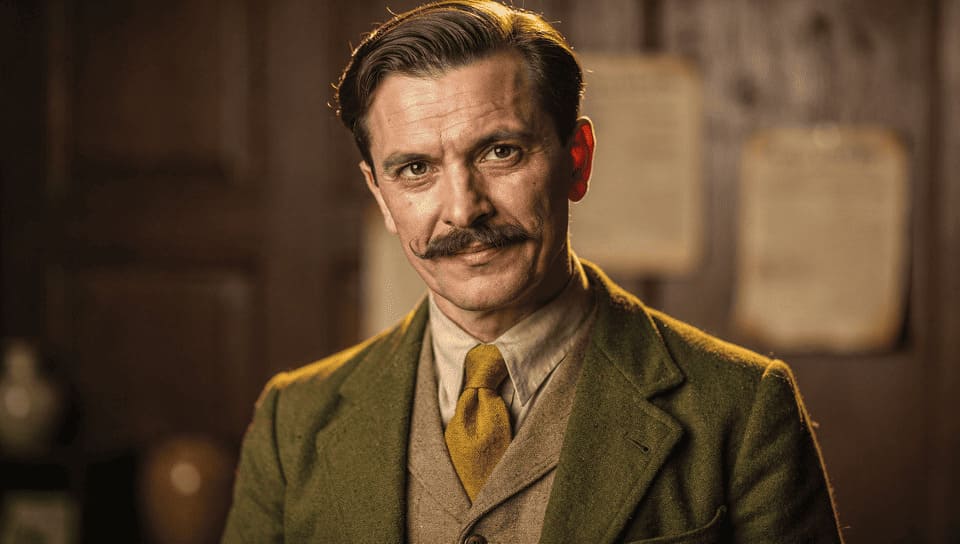
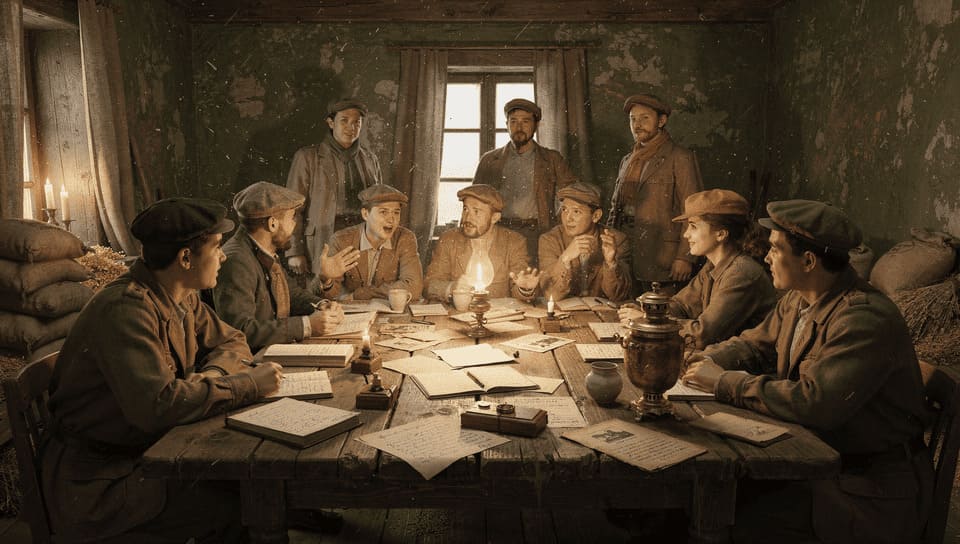
„"Each of us knew that the next day could be our last. We lived in a constant state between feverish activity and paralyzing fear."“
„"Planning an assassination requires nerves of steel and absolute precision. A single mistake not only means the failure of the mission, but often also the death of everyone involved."“
Although Savinkov's arguments are controversial, his narrative is a masterpiece of historical art. It prompts us to reflect on uncomfortable truths about revolution, power, and humanity's capacity to reconcile violence with virtue.
Conclusion
An authentic testimony from the psyche of a terrorist – rarely has anyone written so openly about the inner conflicts of revolutionary violence.
A warning about the complexity of political upheavals and the tragic consequences of individual decisions in times of change.
A work of lasting literary and historical value that helps us to better understand the Russian Revolution and its actors.
In summary, Boris Savinkov's "Memoirs of a Terrorist" is more than just a memoir; it is a historical artifact, a philosophical investigation, and an instructive history. For those who want to understand the turbulent soul of early 20th-century Russia, it is essential reading. Just don't expect easy answers. In Savinkov's world, every bomb had a blueprint and every ideology a shadow.
We invite you to delve deeper into the fascinating and shocking story of the Russian Revolution and its protagonists – and to reflect on the eternal questions raised by Savinkov's work.