Physical Address
17033 Neubrandenburg
Germany
Physical Address
17033 Neubrandenburg
Germany

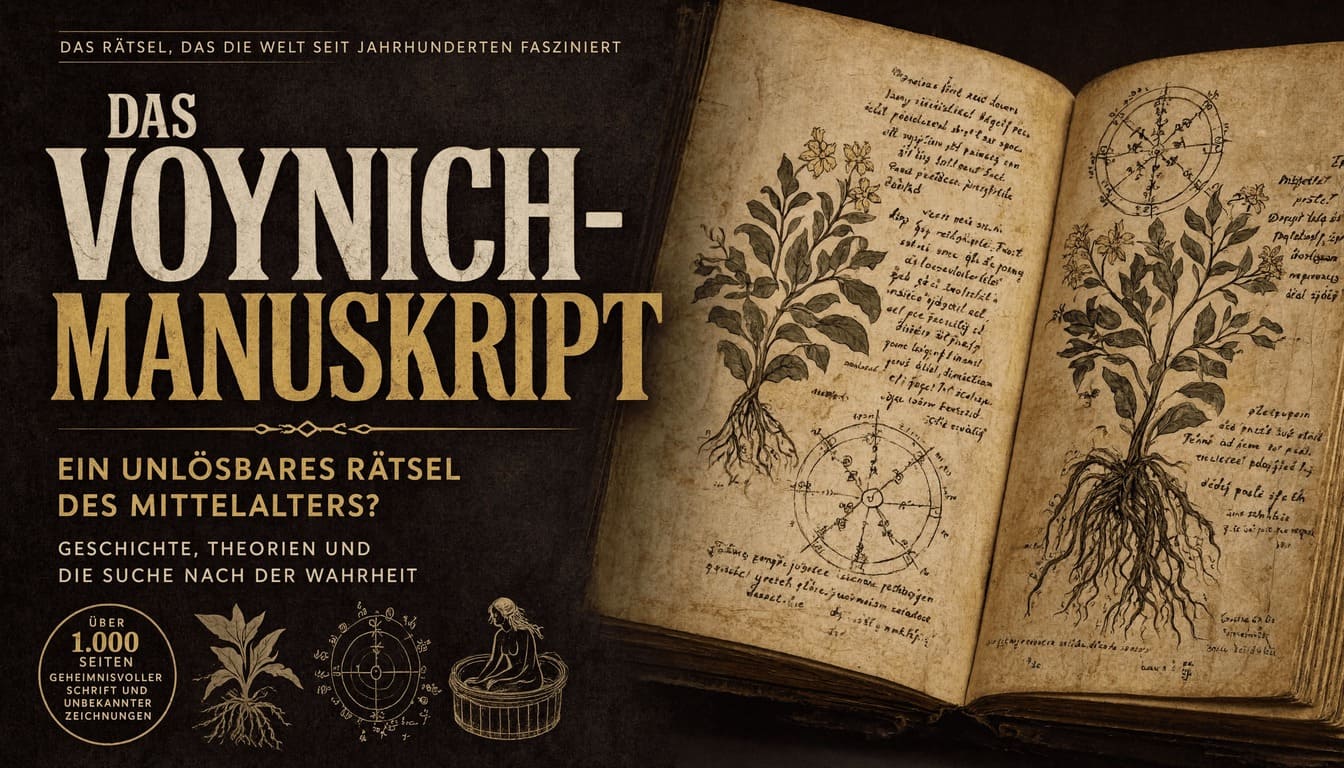
Based on my extensive research, I can give you a detailed overview of the latest discoveries concerning the Voynich Manuscript.
The Voynich Manuscript remains one of the most fascinating and enigmatic objects in cultural history. Although it has been intensively researched since its rediscovery by the Polish antiquarian Wilfrid Voynich in 1912, significant progress and new perspectives have emerged in recent years.
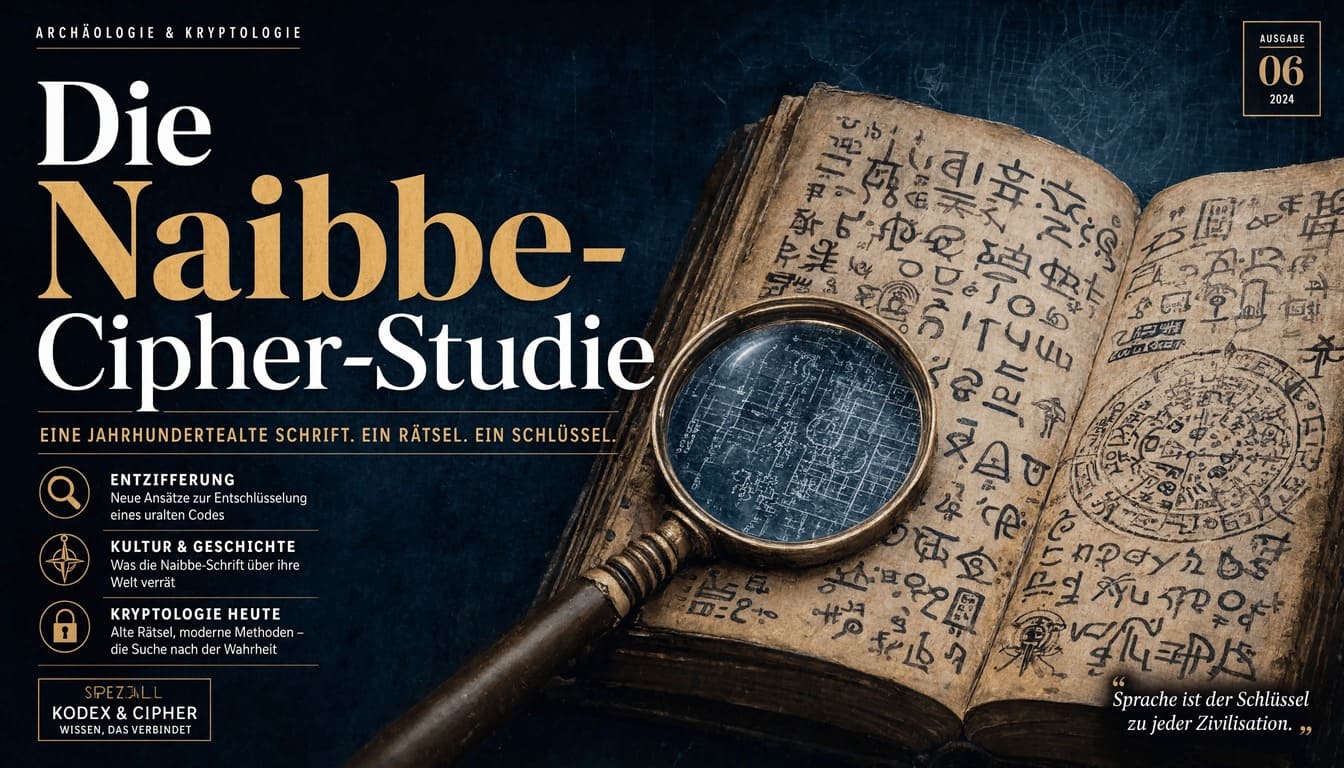
A breakthrough occurred in late 2024/early 2025 when science journalist Michael Greshko presented the so-called "Naibbe cipher" in a peer-reviewed study published in the journal "Cryptologia." This research does not prove that the manuscript has been definitively cracked, but it opens up a completely new perspective on how the document might have originated. The Naibbe cipher utilizes medieval encryption methods that were indeed available in the 15th century—including dice and playing cards—and can transform ordinary Latin or Italian texts into sequences that look remarkably similar to the mysterious Voynichese (the name of the unknown writing system). Significantly, the method reproduces many characteristic statistical features of the original manuscript, such as the frequency of certain symbols, typical word lengths, and specific positional patterns. This supports the long-controversial “numeral hypothesis” – the assumption that the manuscript actually used a code and was not merely a figment of the imagination or an unknown language.
Another significant discovery concerns the technical analysis of the manuscript itself. In September 2024, the esteemed medievalist Lisa Fagin Davis, executive director of the Medieval Academy of America, published the results of her analysis of multispectral images. These state-of-the-art imaging techniques revealed hidden details not visible to the naked eye. The multispectral images, taken in 2014 by the Lazarus Project, show three columns of letters on the first page of the manuscript. These consist of the Roman alphabet, a series of Voynich characters, and another Roman alphabet shifted by one letter. Fagin Davis identified this as an early 17th-century attempt at decoding.
Through careful comparative handwriting analysis (paleography), Fagin Davis determined that these alphabets most likely originated with Johannes Marcus Marci, a Prague physician and scholar. Marci was a significant figure in the manuscript's history: he inherited the document around 1637 from his friend Georg Baresch and sent it in 1666 to the great Jesuit scholar Athanasius Kircher in Rome, hoping he could decipher it. The handwriting features are highly distinctive—for example, Marci avoided the prominent loops on letters such as b, d, f, h, p, q, s, and y that were common in his time, a feature also seen in the enigmatic alphabet columns in the Voynich Manuscript.
The multispectral analysis has also resolved some long-standing debates: The manuscript is highly likely to be genuine and dates from the Middle Ages (radiocarbon dating suggests around 1425), and it is not a 20th-century forgery. The logic is compelling: An early forger from Voynich's time would hardly have gone to the trouble of fading annotations and then hoping that centuries later imaging technologies would be developed to reveal them.
Claire Bowern, a professor of linguistics at Yale University, commented on the latest findings in 2025. Bowern emphasizes that the Voynich Manuscript is indeed overwhelmingly difficult to study precisely because it seems so familiar—it depicts well-known themes such as stars and plants, but presents them in a highly unusual way. Through linguistic analysis, researchers have been able to determine that at least five different individuals contributed to the manuscript's creation (demonstrated through paleographic analysis). Also important: linguists can learn a great deal from word patterns, even if they don't know what the words mean. This helps to differentiate between various hypotheses—such as whether it is a genuine language, a constructed system, or even a forgery.
The Voynich Manuscript is a document written on parchment, comprising approximately 230 pages (some pages are lost), and was probably created in the 15th or early 16th century. It contains six clearly identifiable sections: botanical drawings, astronomical and astrological diagrams, balneological drawings (depicting baths and bathing scenes), cosmological medallions, pharmaceutical drawings of herbs and roots, and unillustrated text, possibly recipes, marked with star-shaped flowers. This structure suggests that the manuscript may have been a medical or alchemical manual—a work from the scientific and scholarly context of the Renaissance.
The research community has learned to be skeptical of sensationalist claims. A prominent example is Nicholas Gibbs, who in 2017 claimed in the Times Literary Supplement to have found the solution by arguing that it was a women's health manual with Latin abbreviations. However, his thesis was quickly criticized by experts and failed to convince. Similarly, in 2019, Gerard Cheshire was criticized by the academic community for his claim that the manuscript was written in a "proto-Romance language"—a category that, according to current research, does not exist.
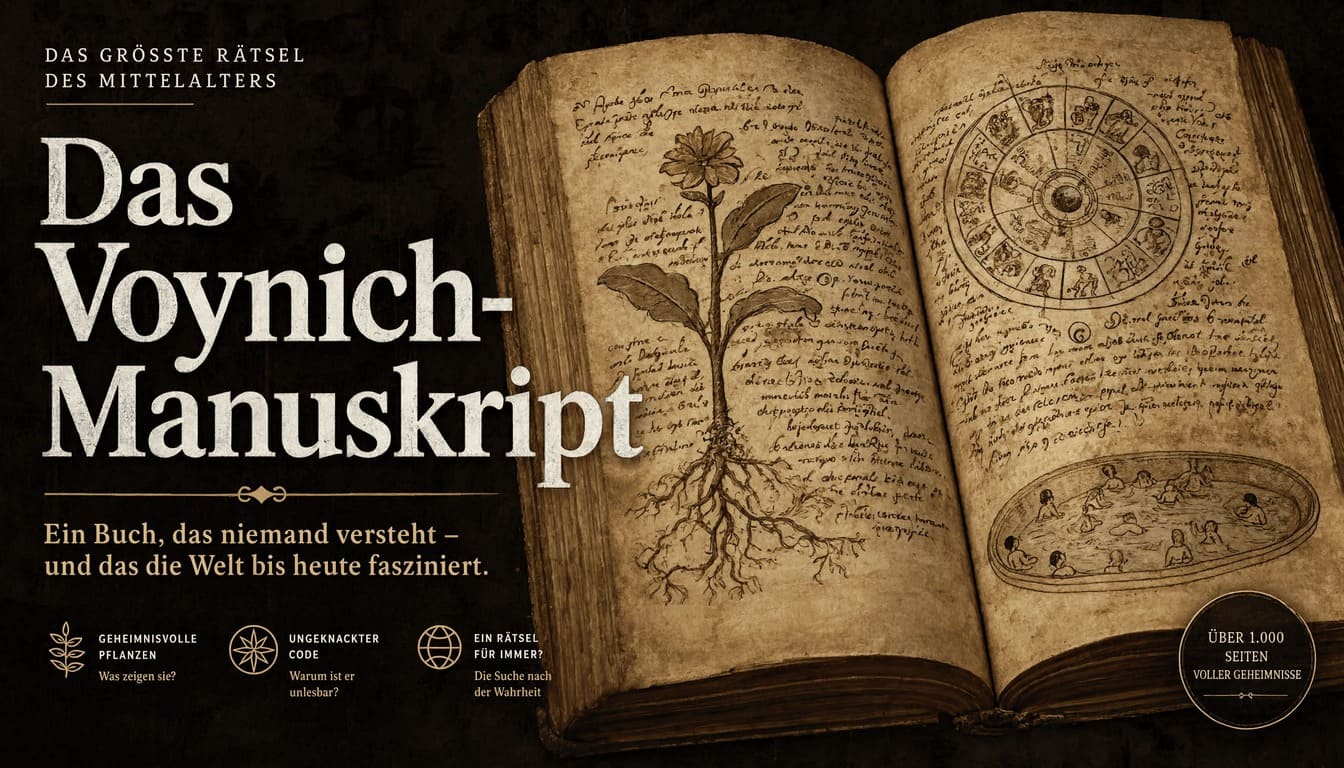
The Voynich Manuscript ultimately remains unsolved. However, experts agree that the new research provides an important framework for understanding how such an enigmatic document could have come into being. The available high-resolution scans allow researchers worldwide to analyze the manuscript without endangering the fragile original. The document is housed in the Beinecke Rare Book and Manuscript Library at Yale University and has only left the building once—for the “Decoding the Renaissance” exhibition at the Folger Shakespeare Library in 2014–15.
Research shows that the Voynich Manuscript is an authentic medieval document with a well-documented provenance tracing its history from Rudolf II through Johannes Marcus Marci to Wilfrid Voynich. Modern technologies and new theoretical approaches do not offer the solution to the puzzle itself, but rather a deeper understanding of the underlying system and the questions that future research must address.
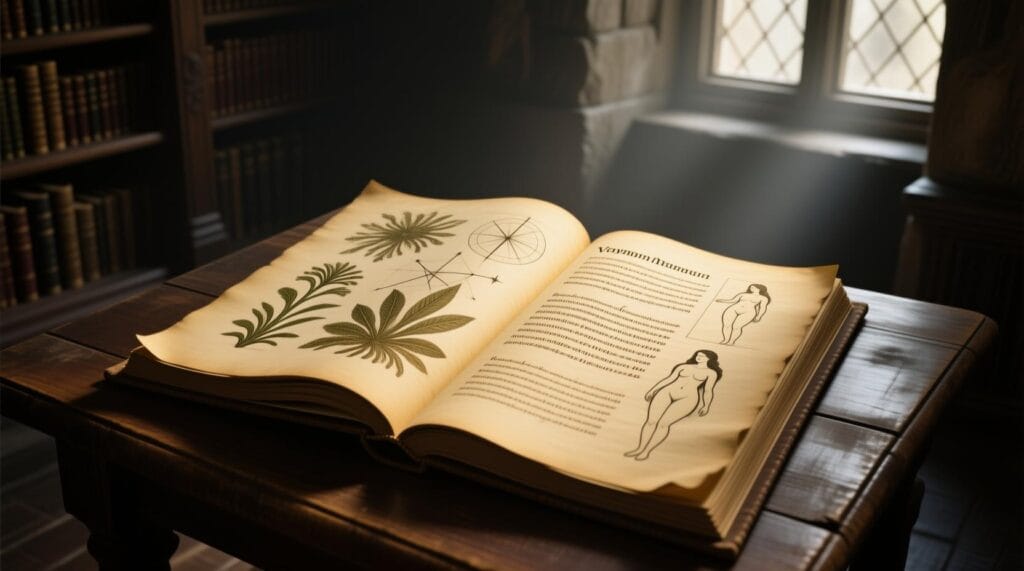
➡️A book that doesn't want to be read
Why is Voynichese so hard to crack?🫤🤫
Know history →The global theory: Hybrids as tools of power