Physical Address
17033 Neubrandenburg
Germany
Physical Address
17033 Neubrandenburg
Germany


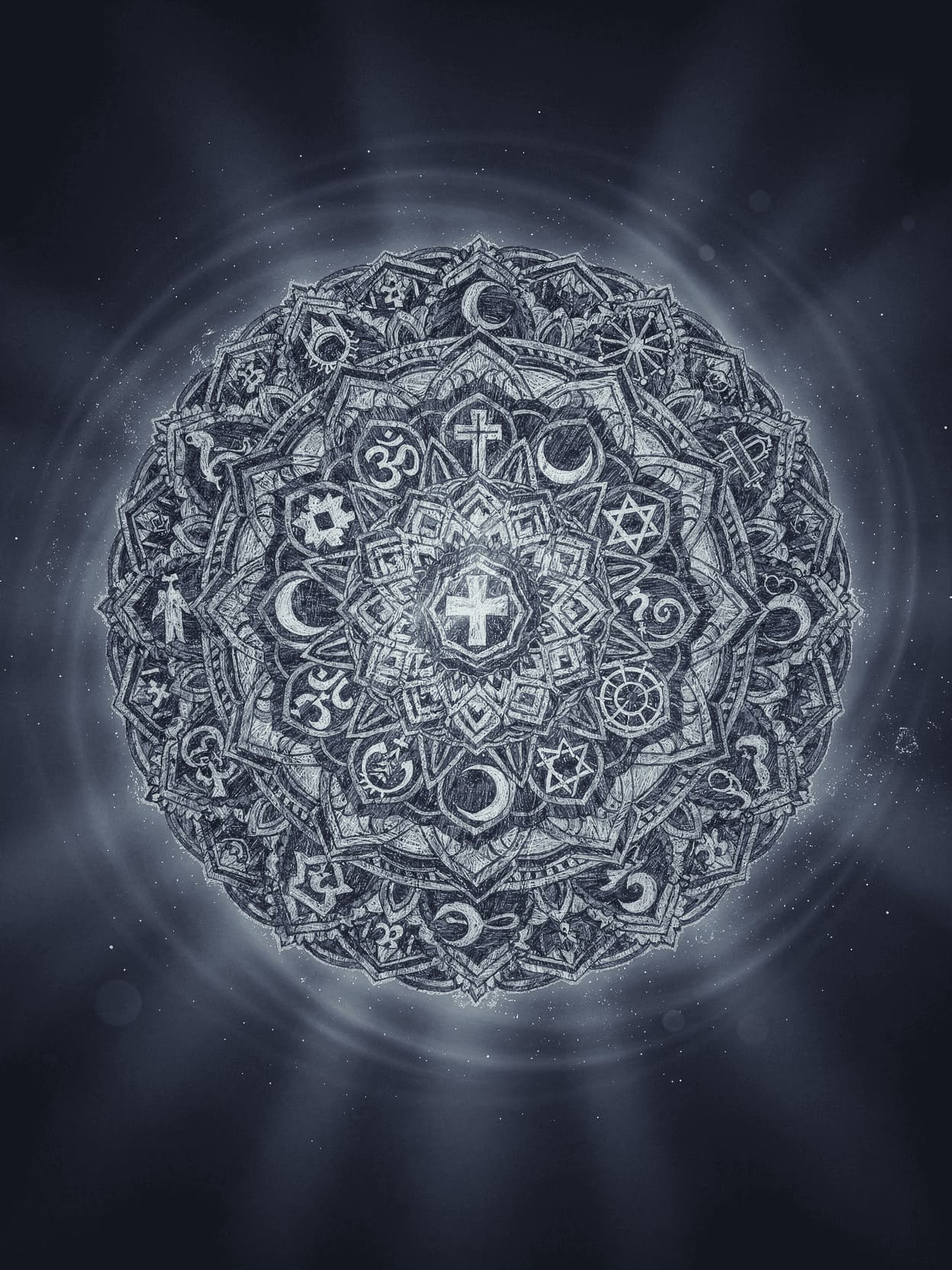
A comparative study of the teachings on reincarnation and transmigration of souls in the major religious traditions of humanity.
The idea of a cyclical existence is based on the belief that life does not end with physical death, but continues in a continuous cycle.
Reincarnation refers to the re-embodiment of the soul or consciousness in a new physical body after the death of the previous one.
The central question concerns the nature of what survives death – be it the immortal soul, consciousness, or a more subtle form of identity.
In various traditions, the soul is described as immortal, unchanging, and of divine origin. It carries karma and experiences through multiple lifetimes.
While reincarnation is central to Eastern philosophies, it only gained popularity in the West through the Enlightenment and New Age movements.
The oldest Vedic texts (c. 1500-500 BCE) do not yet contain a fully formulated doctrine of reincarnation. The focus was on ritual sacrifices and life after death in the heaven of the fathers.
The Puranas developed detailed cosmological ideas of different heavenly realms and hells in which the soul resides according to its deeds before being reborn.
The cycle of birth, death, and rebirth (Samsara) is considered painful. The ultimate goal is Moksha – liberation from this cycle through spiritual realization.
The Upanishads teach that each of us is an eternal, imperishable soul (Atman) that temporarily resides in a material body, much like a person changes clothes.
According to Hindu teachings, souls first undergo a fall into material existence, and then, through various incarnations, a process of purification. This path leads through 8.4 million different life forms – from plants and animals to humans.
Human birth is considered particularly valuable, as it is the only time that conscious spiritual development and ultimately liberation from Samsara is possible.

Our actions (karma) in this life determine the quality of our next incarnation. Good deeds lead to favorable circumstances, bad ones to suffering.
The Bhagavad Gita teaches that in addition to the individual soul (Jivatman), the supersoul (Paramatman) also resides as a divine witness in the heart of every living being.
By cultivating Krishna or God consciousness through Bhakti Yoga, the soul can transcend the cycle of birth and death and return to the spiritual realm.
In Mahayana Buddhism, which is widespread in Tibet, China, Japan, and Korea, the doctrine of reincarnation is linked to the concept of the Bodhisattva. A Bodhisattva is an enlightened being who voluntarily renounces Nirvana in order to help other sentient beings on their path to enlightenment.
In contrast to Hinduism, Buddhism teaches Anatta (non-self): there is no permanent, unchanging soul. What is reborn is rather a continuous stream of consciousness, a karmic pattern that is passed on from life to life.
The Tibetan Book of the Dead describes in detail the intermediate states (Bardō) between death and rebirth. During these 49 days, consciousness has the opportunity for liberation or to choose its next incarnation.
The Dalai Lama is considered a conscious reincarnation of the Bodhisattva Avalokiteshvara and is identified through a complex procedure in which the child must remember objects from his previous life.
„"Before you are enlightened, chop wood and carry water. After you are enlightened, chop wood and carry water."“
Zen Buddhism, which developed in Japan, places less emphasis on theoretical discussions about reincarnation. Instead, it stresses the direct, immediate experience of the present moment through meditation (Zazen).
Zen masters teach that dwelling on past or future lives distracts from what is essential: the realization of Buddha-nature in the here and now. The question of rebirth is often answered with a koan—a paradoxical riddle designed to transcend the rational mind.
Zen strives for Satori, a lightning-fast breakthrough to direct insight into the true nature of reality. At that moment, all concepts of birth, death, and rebirth dissolve.

The Jewish-Roman historian Josephus Flavius (37-100 AD) reported that the Pharisees – a significant religious group in ancient Judaism – believed in the transmigration of souls. According to their doctrine, the souls of the righteous would enter new bodies, while those of the unrighteous were subject to eternal punishment.
In Jewish mysticism, Kabbalah, reincarnation is referred to as "Gilgul Neshamot" (Wheel of Souls). This doctrine developed particularly in medieval Spain and reached its zenith in the 16th century with Rabbi Isaac Luria in Safed.
In 18th-century Eastern European Hasidism, Gilgul became a central concept. Rabbis reported cases of spontaneous memories of past lives, especially among children.
Although reincarnation is not an official Christian doctrine, there are passages in the New Testament that some interpret as hints of it. Jesus' disciples asked him whether a man born blind was blind because of his own sins or those of his parents (John 9:2) – a question that only makes sense if sins from a previous life were meant.
Origen of Alexandria, one of the most influential early Church Fathers, taught the pre-existence of souls and their possible reincarnation for spiritual purification.
The Second Council of Constantinople allegedly condemned Origen's teachings, including reincarnation. However, the historical details of this condemnation are disputed.
Cathar and Gnostic groups adhered to ideas of reincarnation and were persecuted as heretics.
Origen (185-254 AD) developed a complex theology of apokatastasis – the ultimate restoration of all souls to God. His doctrine of the pre-existence of souls and their cyclical incarnation was revolutionary for his time, but was later classified as heretical.
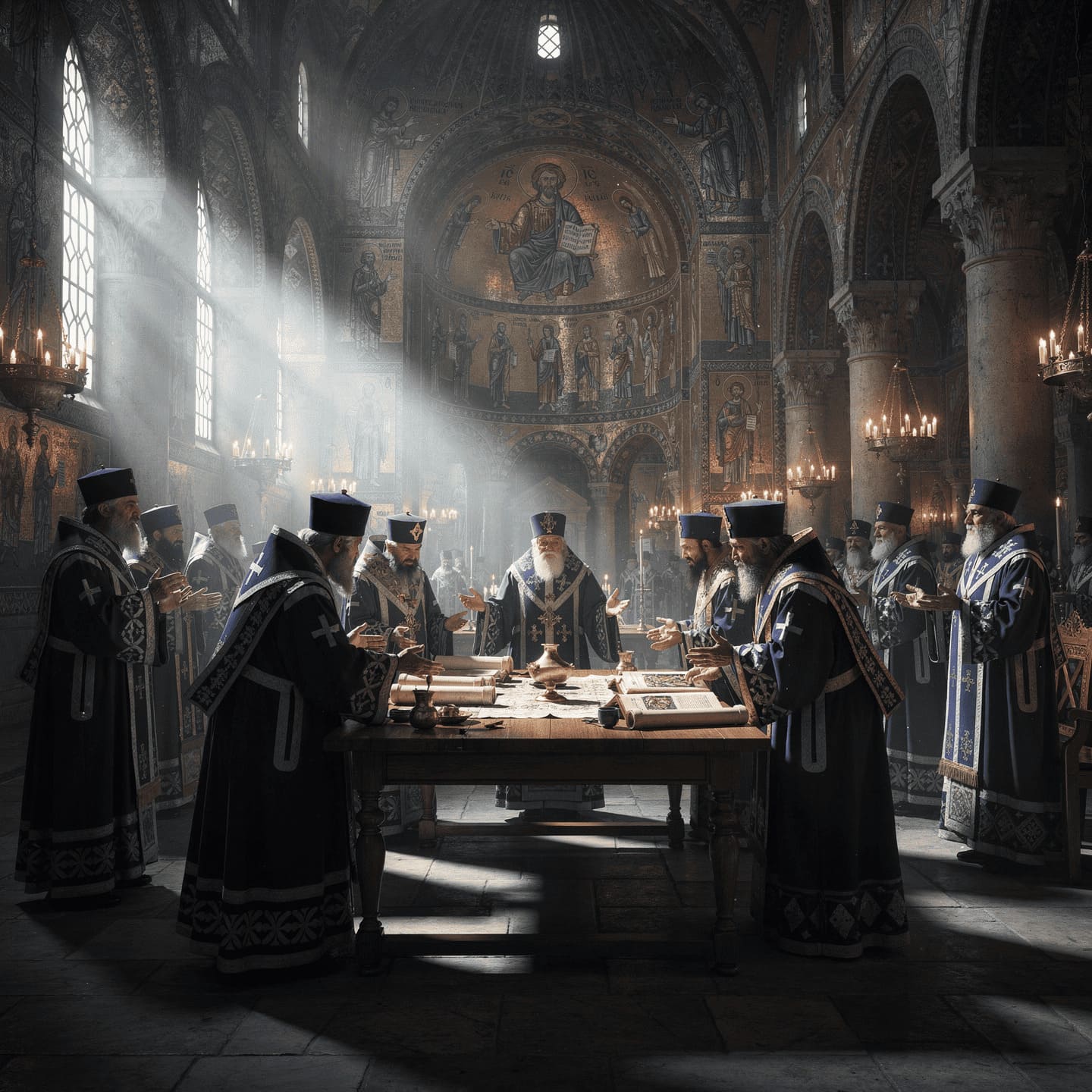
Modern church historians have expressed considerable doubts about the traditional account of the condemnation of Origen's teachings at the Council of 553. Several factors point to a later construction:
Some Christian mystics and theologians, such as Clement of Alexandria, Gregory of Nyssa, and even Jerome, showed sympathy for the idea of reincarnation, albeit in a modified form. This suggests that the doctrine was more controversial in early Christianity than later assumed.
The final rejection of reincarnation in Christianity had profound theological consequences: it reinforced the emphasis on a single earthly life followed by eternal heaven or hell, and thus shaped the Western concept of linear time and individual responsibility.
Orthodox Islam clearly teaches the physical resurrection (Ba'th) on the Day of Judgment, not reincarnation. The Quran repeatedly emphasizes that every person has only one life on Earth, followed by judgment and eternal residence in Paradise or Hell.
Between death and resurrection exists Barzakh, an intermediate realm where souls await the Last Judgment. This is not a state of rebirth, but of waiting.
In the Quran, death is sometimes described as a sleep from which believers will awaken on the Day of Resurrection. This metaphor emphasizes the continuity of consciousness and the certainty of resurrection.
„Allah takes the souls at the time of their death and those who have not died in their sleep.“ (Quran 39:42)
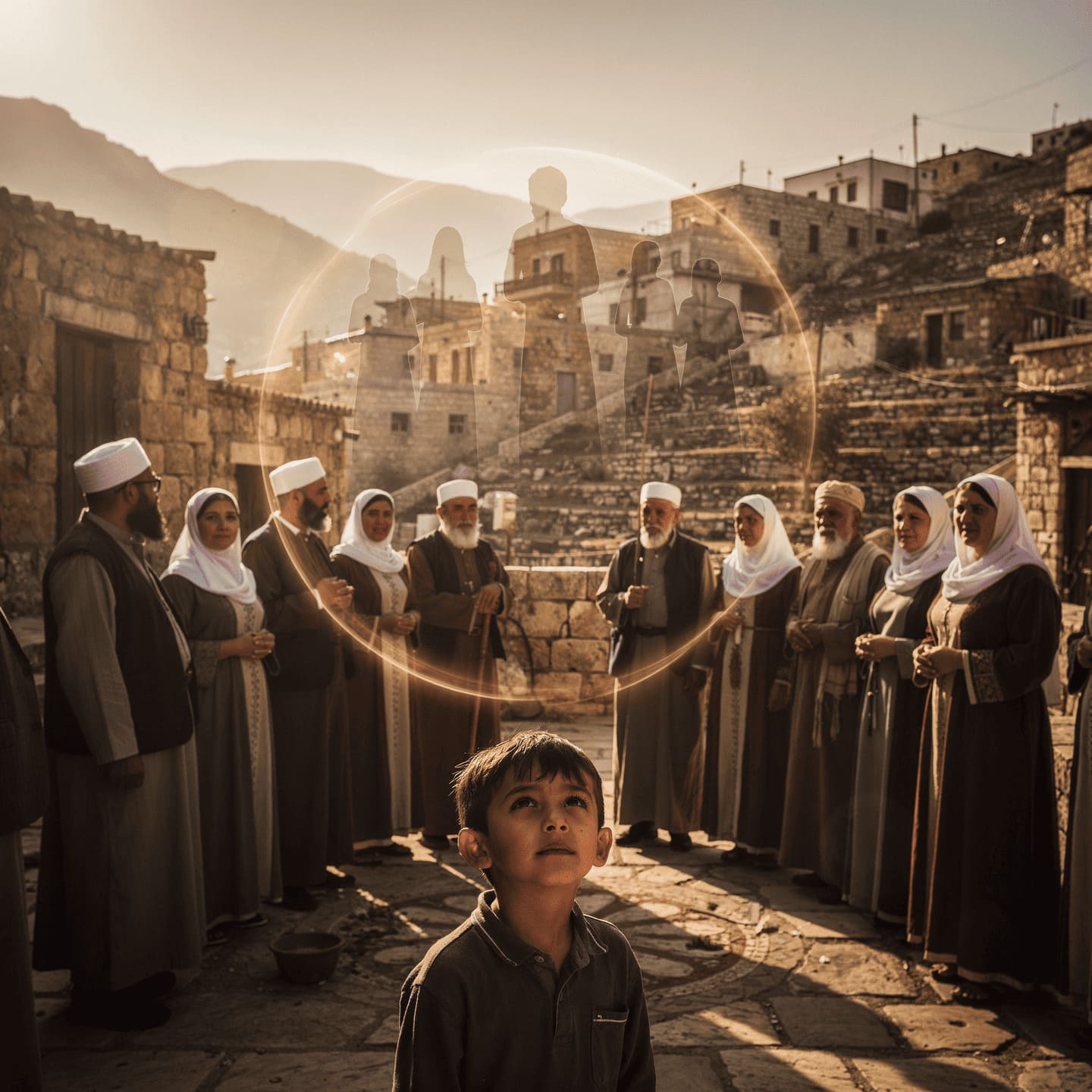
The Druze, a religious community in the Middle East with approximately one million followers, are the most significant Islamic group that believes in reincarnation. Their esoteric theology, which originated in the 11th century, teaches:
For the vast majority of Muslim scholars, the belief in reincarnation (Tanasukh) is considered a fundamental contradiction to Islamic doctrine. This rejection is based on several theological arguments:
Sufi mystics sometimes used metaphorical language about spiritual „deaths and rebirths“, but meant psychological transformations, not literal reincarnation.

Dr. Ian Stevenson (1918-2007) was a professor of psychiatry and head of the Department of Neurology and Psychiatry at the Medical College of the University of Virginia. He later became a professor of psychiatry in the Department of Behavioral Medicine and Psychiatry at Carlson University.
Stevenson dedicated 40 years of his career to investigating reincarnation cases using scientific methodology and documented over 3,000 cases worldwide.
Stevenson conducted meticulous interviews with children who remembered past lives, as well as with their families and the families of the deceased individuals.
He documented specific information about names, places, events, and personal details that the children could not possibly have known in the normal way.
Particularly noteworthy: Stevenson found correlations between the children's birthmarks and wounds or scars of the deceased people they remembered.
His monumental work "Twenty Cases Suggestive of Reincarnation" (1966) and the four-volume series "Reincarnation and Biology" (1997) remain milestones in the scientific study of this phenomenon. While Stevenson did not claim to have definitive proof of reincarnation, he argued that the cases he documented deserved serious scientific consideration and could not simply be dismissed as fraud or imagination.