Physical Address
17033 Neubrandenburg
Germany
Physical Address
17033 Neubrandenburg
Germany

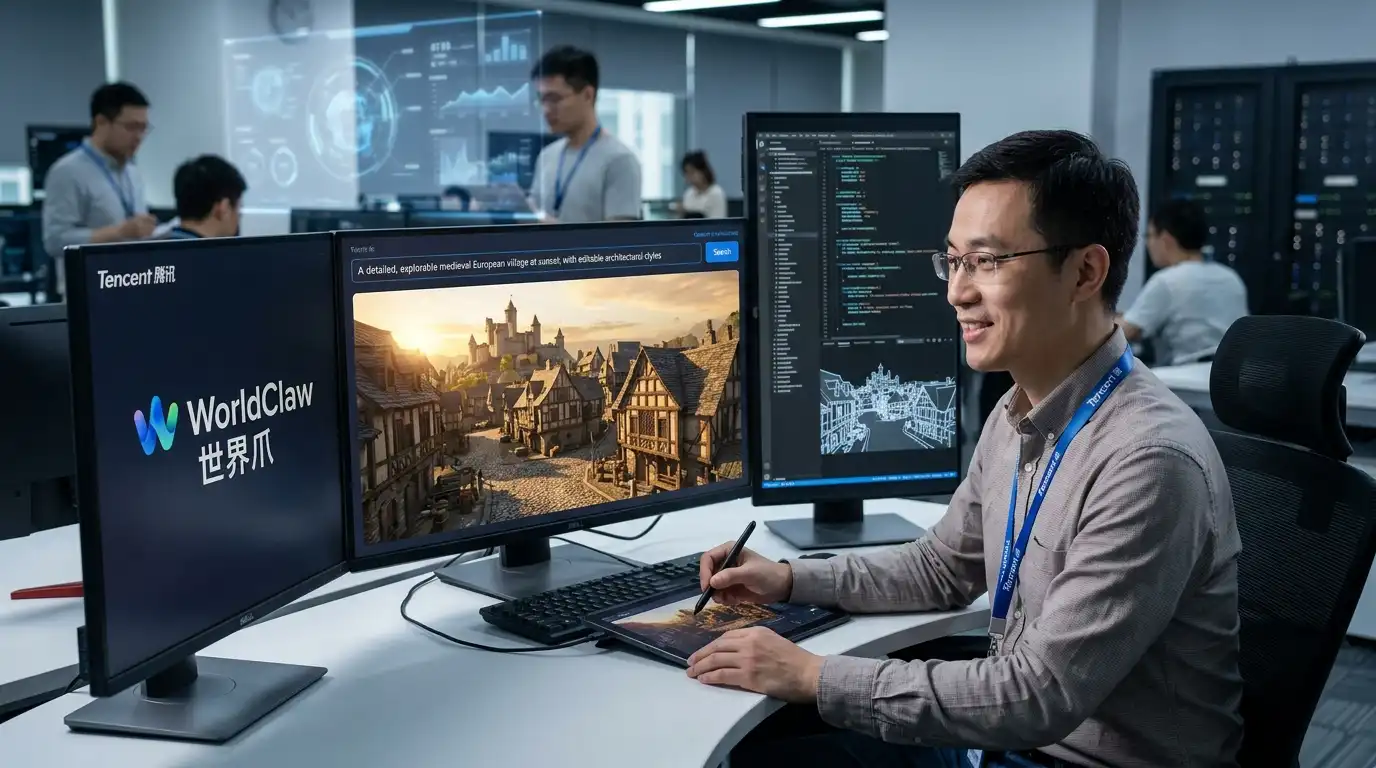
Generative AI is capable of generating a fully developed, open 3D world from a single text input.
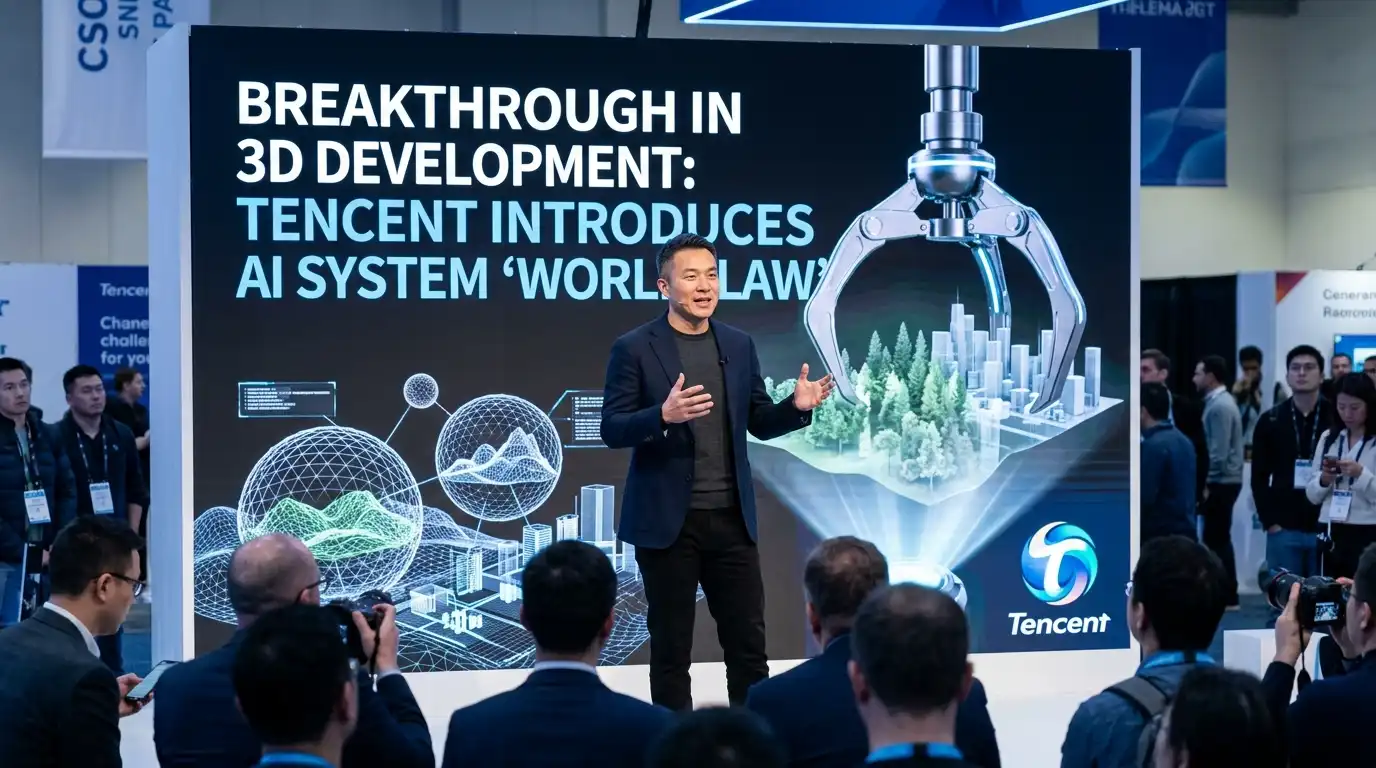
A single text command creates a fully navigable, editable 3D environment. The Chinese tech giant is making this innovative tool available to the public for video game and film production.
The technology group Tencent has launched „WorldClaw“A novel AI system has been unveiled that could fundamentally change the creation of digital worlds. Generative AI is capable of generating a fully developed, open 3D world from a single text input.”.
Users can then move freely through the generated scene. Unlike previous approaches, which often only create a visual 3D illusion or a static panorama, WorldClaw delivers a true, three-dimensional environment. This environment is composed of standardized and fully editable 3D objects – including precise geometry, high-resolution textures, and customizable material properties.
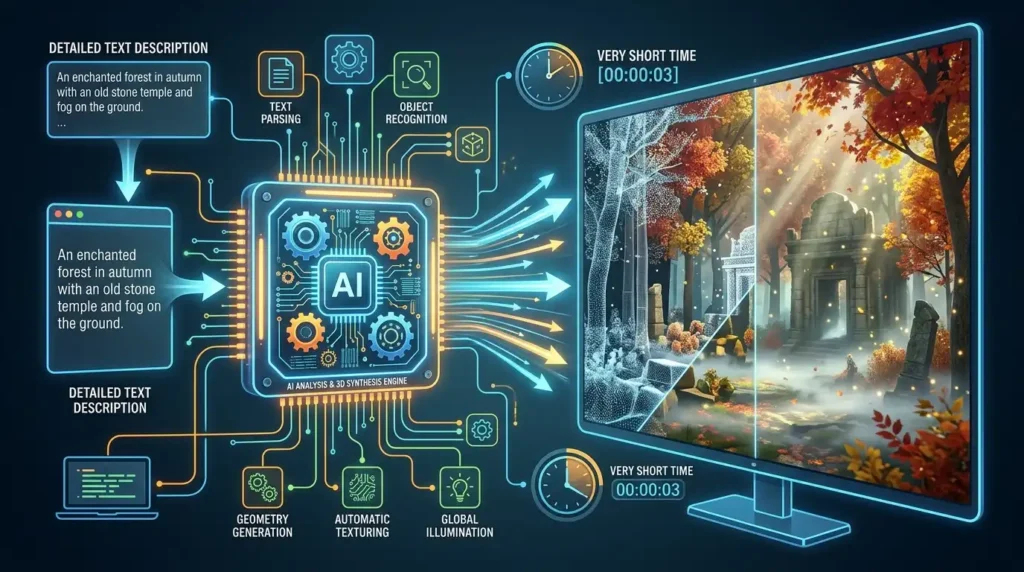
To structure such complex scenes in a structured and logical way, WorldClaw uses a sophisticated, multi-stage process:
The biggest advantage for the industry lies in the usability of the results: The end result of WorldClaw is not a mere projection, but an ensemble of independent 3D assets. 3D artists and game developers can directly open the generated worlds, extract or modify individual objects, and seamlessly integrate the entire package into existing 3D production pipelines and game engines (such as Unreal Engine or Unity).
Tencent is thus underlining its ambitions in the field of generative media and has already made the "WorldClaw" project publicly accessible. Industry experts consider this move a significant milestone that could drastically accelerate and democratize so-called "world-building" in game development.
Q: What exactly is "WorldClaw"?
A: WorldClaw is a groundbreaking AI system developed by the Chinese technology company Tencent. It enables the automatic creation of complete, walkable, and editable 3D environments – based on a single text command (prompt).
Q: What distinguishes WorldClaw from previous 3D AI tools?
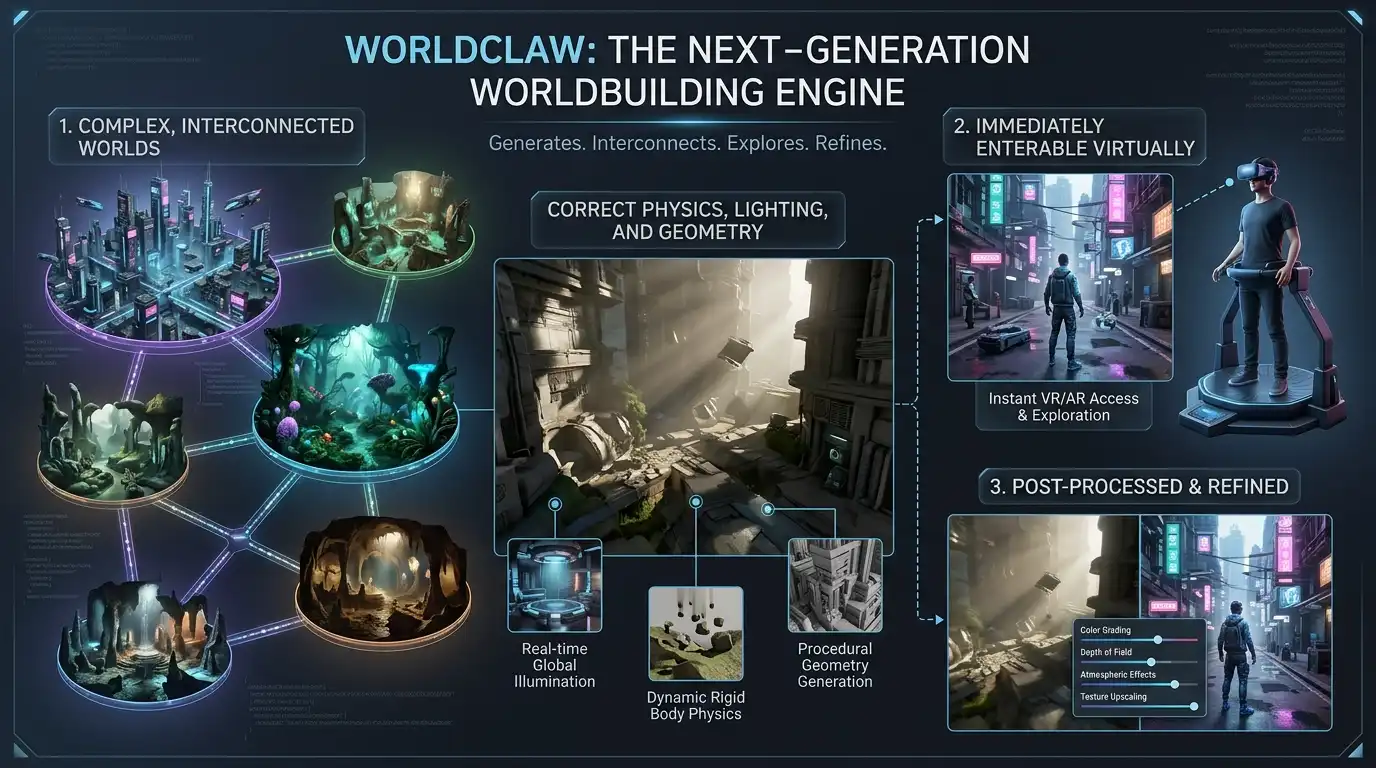
A: Previous AI tools could mostly only generate individual 3D objects or static 360-degree images. WorldClaw goes a step further: It creates complex, interconnected 3D worlds with accurate physics, lighting, and geometry that can be virtually explored and edited immediately.
Q: How does creating a 3D world work with WorldClaw?
A: The user enters a detailed text description (e.g., "An enchanted forest in autumn with an ancient stone temple and fog on the ground"). The AI analyzes the text and generates a complete 3D scene, including textures, objects, and lighting, within a very short time.
Q: What does "fully accessible and editable" mean?
Walkable: You can move freely through the generated world in real time (like in a video game).
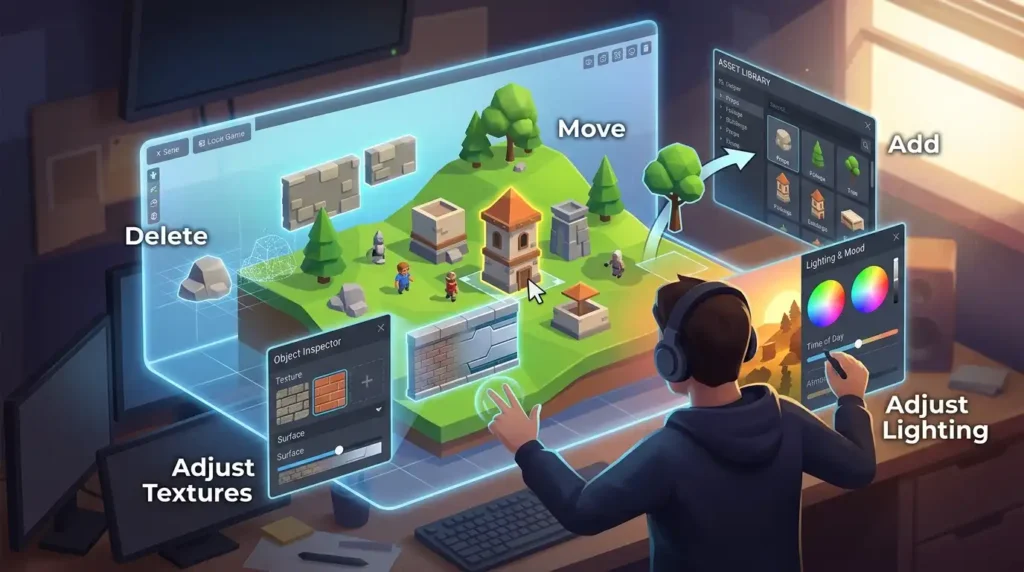
Editable: The world consists of individual 3D elements. Developers can move, delete, add new objects, or adjust textures and lighting to their liking.
Q: Can WorldClaw be integrated into existing software?
A: Yes. Tencent has developed interfaces (APIs) and export functions that allow the generated 3D data to be directly imported into common game engines (such as Unreal Engine or Unity) as well as 3D software (such as Blender or Maya).
Q: Who is WorldClaw intended for?
A: The tool is primarily aimed at:
Game developers: For rapid prototyping and world-building.
Filmmakers & VFX artists: For virtual sets (Virtual Production) and previs (Pre-Visualization).
Architects & Designers: For the rapid visualization of spatial concepts.
Q: How is WorldClaw changing video game and film production?
A: Creating huge 3D worlds used to require months of work from entire teams. WorldClaw drastically shortens this process. Developers can test ideas within minutes and focus more on storytelling, fine-tuning, and gameplay.
Q: Is WorldClaw accessible to everyone and how much does it cost?
A: Tencent makes the tool available to the public and the industry. Depending on the target group, there are different access models (e.g., free trials for indie developers and commercial licenses for major studios). Details on the exact pricing structure can be found on the official Tencent developer platform.
Q: Will WorldClaw make 3D artists and environment designers unemployed?
A: No. WorldClaw is seen by experts more as a powerful assistance tool. It takes over time-consuming routine tasks (the "rough construction" of a world). The artistic fine-tuning, adherence to a specific graphic style, and optimization for performance still require the expertise of human artists.