Physical Address
17033 Neubrandenburg
Germany
Physical Address
17033 Neubrandenburg
Germany

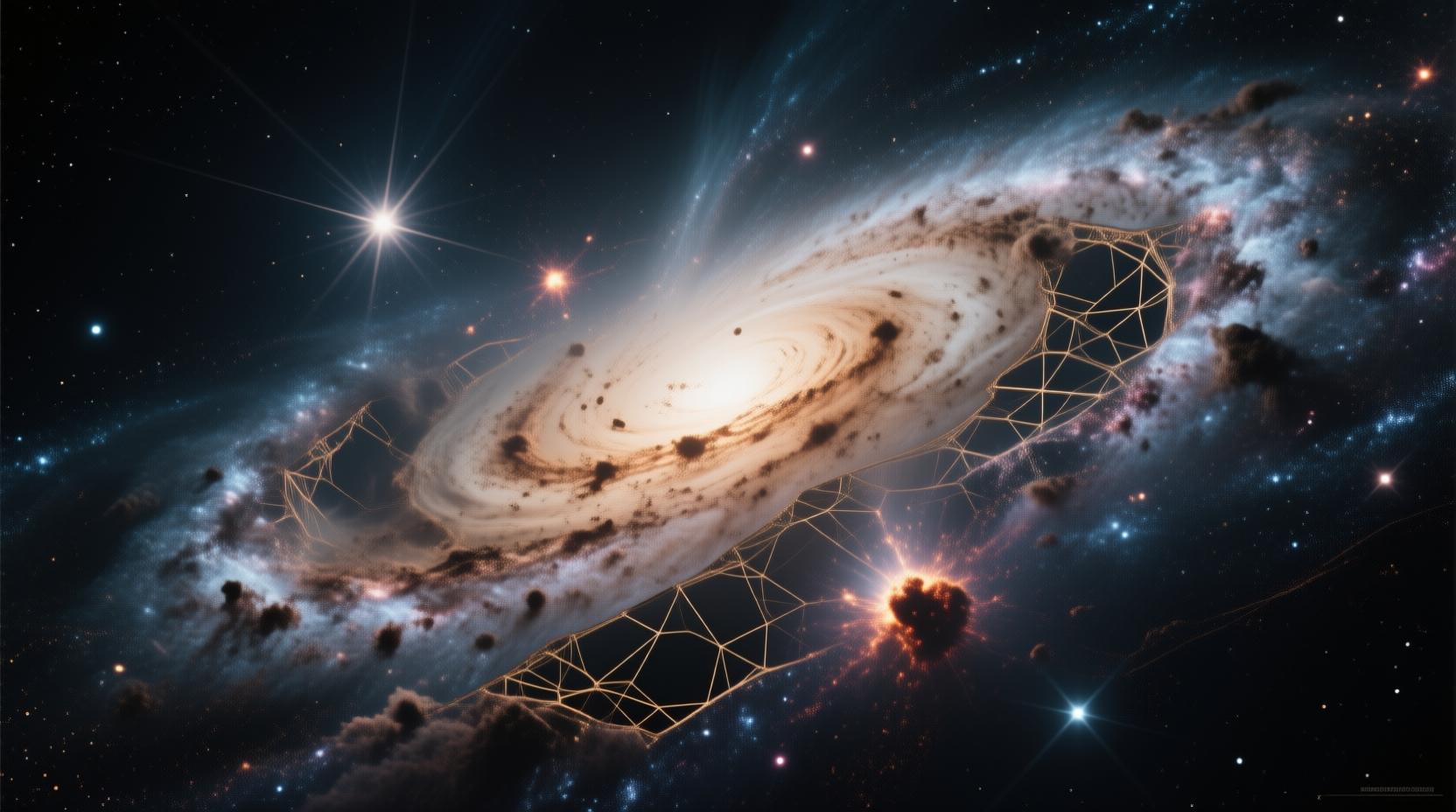
Eighteen months of observation with the Murchison Widefield Array in Australia provided the most detailed radio image of our galaxy and revolutionized our understanding of the cosmos.
PERTH/AUSTRALIA. An international team of astronomers has achieved a milestone in the exploration of the universe after 18 months of intensive observation. Using the powerful Murchison Widefield Array (MWA) radio telescope in Western Australia, the researchers created a coherent, high-resolution radio image of the Milky Way, surpassing all previous images of our home galaxy in its level of detail.
The observations, which spanned a year and a half, enabled scientists to create a "radio map" of unprecedented clarity. The images reveal complex structures in the interstellar medium that remain hidden with optical telescopes.
Previous radio-frequency images of the Milky Way were often marred by signal noise and limited resolution. However, the team leveraged the MWA's unique ability to capture extremely low frequencies, combined with sophisticated data processing, to efficiently filter out interference.
„It’s as if humanity has been given glasses for the first time to view our own galaxy,“ explains Dr. Elena Schmidt, one of the project leaders. „We can now see phenomena that were previously only blurred or not visible at all. These include the fine filaments of gas nebulae, the remnants of ancient supernova explosions, and complex magnetic field structures along the spiral arms of the Milky Way.“
The Murchison Widefield Array is not a single dish, but a network of over 4,000 individual dipole antennas spread across a wide area at the remote Murchison Radio-Astronomy Observatory (MRO). This configuration allows extremely large sections of the sky to be imaged simultaneously with high sensitivity.
The 18-month observation period was crucial for collecting the enormous amount of data and generating the necessary depth images. The resulting images offer unprecedented insight into the distribution of cool gas, the main component for the formation of new stars.
The detailed radio mapping is expected to have profound implications for several areas of astronomy. Researchers hope that the new data will help answer important questions about the formation and evolution of our galaxy, in particular:
The published data are now accessible to the global scientific community and are expected to inspire thousands of new studies in the coming years. The success of the MWA project underscores the growing importance of radio astronomy in exploring the most fundamental questions about the cosmos.