Physical Address
17033 Neubrandenburg
Germany
Physical Address
17033 Neubrandenburg
Germany

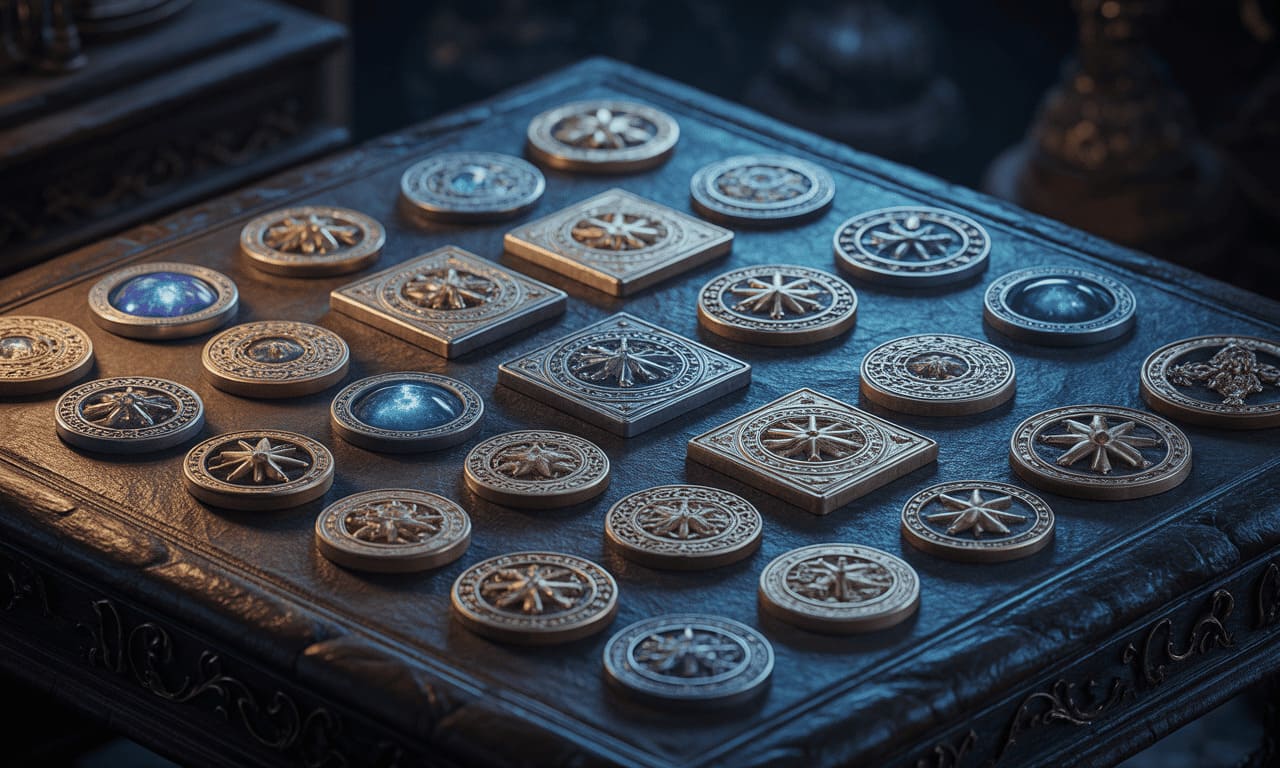
We all know the feeling: the need to protect ourselves from misfortune or to actively attract good luck. Whether it's the worn lucky penny in our wallet, the beloved keychain that helped us through exams, or our grandmother's heirloom – we all carry small, often inconspicuous objects with us to which we attribute a special power.
These objects are more than just jewelry. They are Talismans and Amulets, timeless companions throughout human history, bridging the gap between rational everyday life and the deep-rooted longing for magic.
But what exactly makes a talisman magical? And why do these objects still exert such a powerful fascination in our modern, enlightened world?
Although the terms are often used synonymously, traditional folklore makes a subtle but important distinction that relates to the intention of the object refers to:
Amulets primarily serve to ward off negative energies, misfortune, or evil spirits. They are a protective shield meant to keep evil at bay.
Talismans are meant to attract positive forces, luck, wealth, or success. They are active magnets for the desired outcome. The word itself derives from Arabic. tilsam ab, which means „magical image“ or „spell“.
What they have in common is that their strength does not depend on their material value, but on the Meaning and intention, which the carrier assigns to them.
The idea that certain objects possess power is not a cultural peculiarity, but a global, timeless phenomenon.
In ancient Egypt, talismans were essential. scarab The dung beetle was considered a powerful talisman, symbolizing rebirth and new beginnings, as it was associated with the sun god Ra. Ankh The Nile Cross was the symbol of eternal life and was worn as a powerful amulet both in life and in death.
The Vikings wore small pendants in the form of Mjölnir (Thor's Hammer). This talisman was not only a declaration of faith, but also protected the wearer from enemies and was meant to bring strength and fertility.
Objects also function as protection in a Christian context. Relics or wearing a Crucifixes These are forms of amulet that are meant to attract divine grace and protect the wearer from temptation or harm.
In a world built on science and logic, the question arises: Do talismans really work?
Whether you believe in hidden cosmic energies or not, the fact is that talismans have a profound psychological effect, which often gives their charms their true power:
The talisman is a physical anchor for a wish or a goal. When we touch or see the object, it consciously reminds us of our intention (e.g., "I will pass this exam" or "I will remain calm"). This focuses our energy and directs the subconscious mind in the desired direction.
A talisman can act like a powerful placebo. Those who are firmly convinced they are protected or favored act more confidently, are more relaxed, and take risks more consciously. The object provides the necessary mental security, thus increasing the likelihood of a positive outcome.
Life is unpredictable. Talismans give us a sense of control over chaotic events. They are tangible proof that we can actively do something for our luck – even if it's just wearing a small stone.
You don't need to find a centuries-old magical object to benefit from the power of a talisman. Often, the most powerful talismans are those that hold a deep personal history or meaning for us.
Important: The talisman must speak to you. It should feel right and reflect your deepest intention.
Whether as lucky charms or as powerful protective shields – talismans and amulets are the material expression of a deeply human need: the desire for security.
They remind us that we possess the power to shape our reality through intention and positive expectations. The talisman is merely the visible signpost that tells us: You are prepared, you are protected. Now go and create your own happiness.