Physical Address
17033 Neubrandenburg
Germany
Physical Address
17033 Neubrandenburg
Germany

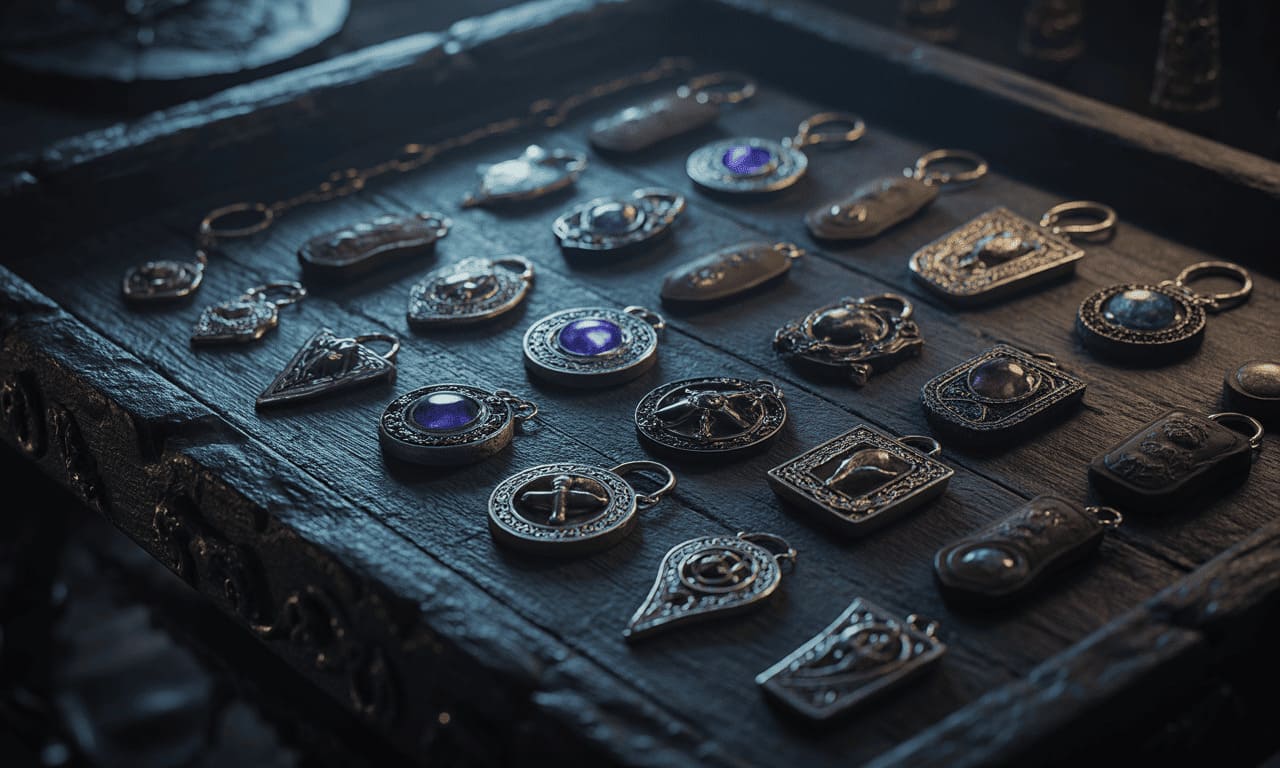
In a time when the world was unpredictable, diseases struck suddenly, and the boundary between nature and the supernatural seemed fluid, people desperately sought protection. In the Middle Ages, the amulet was far more than just a piece of jewelry; it was a lifeline, a silent companion, and a tangible connection to higher powers.
Immerse yourself in the mysterious world of mythical and medieval amulets – those small things to which the power was attributed to change fate, drive away demons and save lives.
The term amulet comes from Latin. amulet An amulet is an object whose nature, origin, or consecration is intended to ward off misfortune. Unlike a talisman, which is meant to actively attract good luck or specific qualities, an amulet primarily serves to... passive defense Dangers include: illness, the evil eye, evil spirits, or hell.
For medieval people, who were constantly exposed to the whims of epidemics, wars and natural disasters, the amulet offered much-needed psychological and spiritual support.
What is fascinating about medieval amulets is the seamless fusion of Christian belief and ancient pagan traditions. Although the Church officially condemned magical practices, amulets that combined both ecclesiastical and folk magical elements were widespread – often even with tacit approval.
In the Christian Middle Ages, the most popular objects of protection were those that established a direct connection to God, saints, or biblical history:
Besides religious objects, materials from nature or the animal world also had immense symbolic significance, often based on mythological traditions:
Interesting facts: A common mythical practice was the wearing of crossed herrings or small iron objects to ward off witches and demons. Iron was considered impure and repulsive to supernatural beings.
What exactly were these amulets worn for? The reasons reflect the greatest fears and hopes of medieval society:
| Danger | Protected object |
|---|---|
| Plague and disease | Relics, Agnus Dei, Coral (against lightning strikes and bleeding), snake stones. |
| The evil eye | Jet, mirror (to send back evil), hand gesture symbols. |
| Danger in the fight | Crystals (for clarity), certain runes (in the later Middle Ages), metal crosses. |
| Love and fertility | Mandrake roots (alraune) or amulets in the form of phallic symbols (despite church condemnation). |
| Demons and witches | Metal, consecrated crosses, texts bearing the name of the Three Wise Men. |
Even though we now have medical explanations for many epidemics and our world seems more rationalized, the fascination with the amulet has not diminished.
Modern jewelry pieces featuring a rock crystal, a horseshoe, or a cross are silent successors to those medieval objects. They remind us that the desire for protection—the search for a tangible security In an uncertain world – it is a deeply human constant.
The mythical and medieval amulets are silent witnesses to an era in which faith and magic were inextricably intertwined, and every person tried to make fate a little more gracious to themselves with a small, consecrated or mysterious object.
Do you wear an amulet or talisman? Tell us in the comments what these small protective objects mean to you!