Physical Address
17033 Neubrandenburg
Germany
Physical Address
17033 Neubrandenburg
Germany

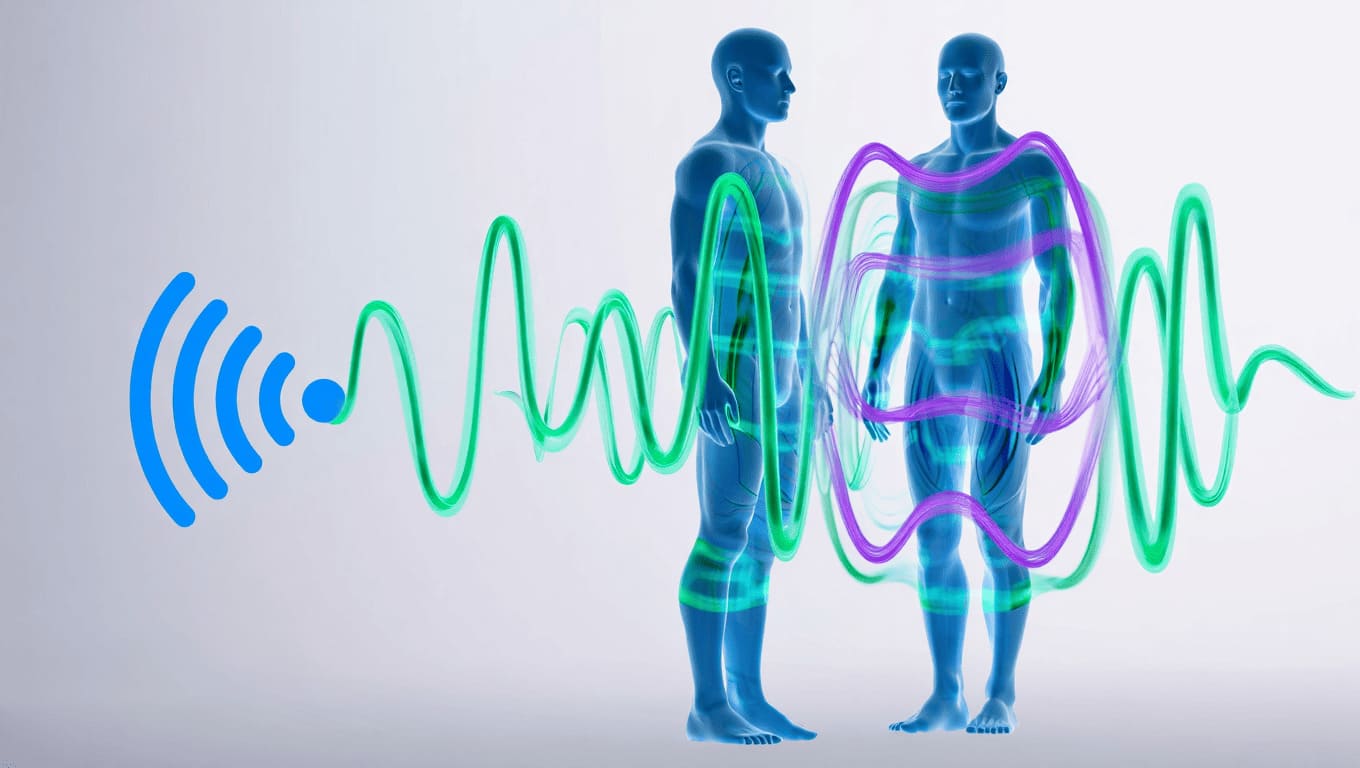
What sounds like science fiction has long been the subject of intensive research and development: A standard Wi-Fi router can „see“ people in a room – not in the visual sense of a camera, but with the ability to detect and track presence, movement and even detailed physiological data through walls. This groundbreaking technology promises far-reaching implications for security, care, smart homes and data protection.
Research teams worldwide are working on systems that use subtle changes in radio signals to create a detailed picture of the environment and the people in it. Instead of relying on cameras or infrared sensors, these systems analyze how the ubiquitous Wi-Fi waves are reflected, absorbed, and diffracted by the human body.
Every Wi-Fi router continuously emits radio signals. When these waves encounter an object or person, they change minimally in amplitude (strength), phase (wave position), and arrival time. A person who moves, breathes, or even just sits still in a room creates tiny but measurable disturbances in this radio field.
Highly sensitive algorithms can analyze these minute changes in the received signals—the so-called "Channel State Information" (CSI). By evaluating this data, the systems are able to locate multiple people simultaneously, track their movements, and even identify more complex patterns such as walking, standing, sitting, or breathing. Some advanced applications can even detect heart rate or sleep stages.
The potential of this technology is enormous and ranges from improving quality of life to new security solutions:
The euphoria surrounding these technological possibilities is, however, accompanied by serious concerns regarding data protection and privacy. If a "normal" Wi-Fi router can already collect such sensitive data, critical questions arise:
It's a balancing act between societal benefit and the protection of individual privacy. Experts are already calling for an intensive public debate and the development of clear ethical guidelines and legal regulations before this technology is deployed on a widespread basis.
Although the technology is still in its infancy, the first applications are already leaving the research labs. The ability to "see" our surroundings with the invisible waves of Wi-Fi promises a new era of sensing and interaction. But with this power comes a great responsibility to ensure that the advances serve society without undermining citizens' fundamental rights. The Wi-Fi vision is no longer a thing of the future—it's already here, and we must learn how to handle it.