Physical Address
17033 Neubrandenburg
Germany
Physical Address
17033 Neubrandenburg
Germany

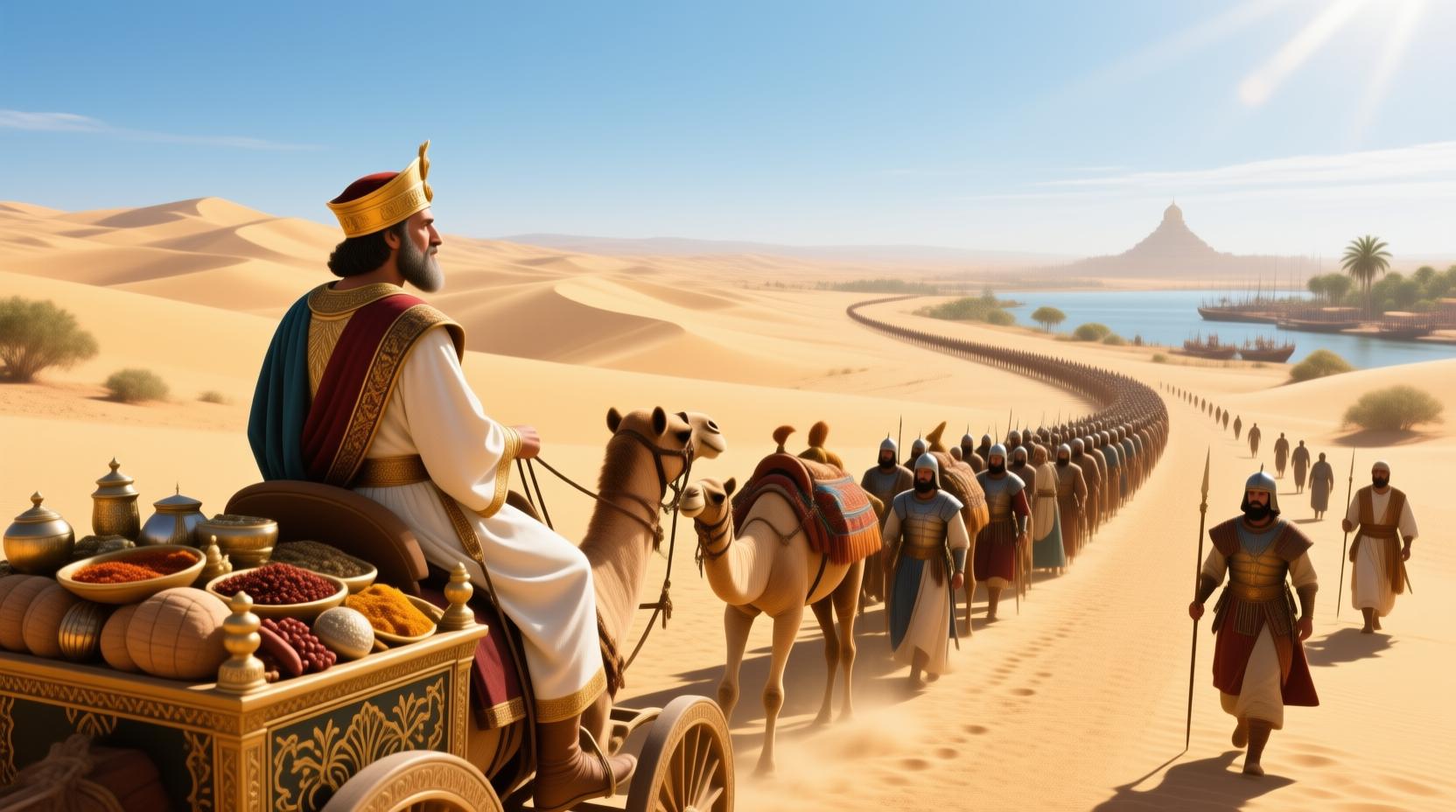
„"And King Solomon had a ship built that sailed to Ophir to fetch gold."“ – 1 Kings 10:22
The story of King Solomon, his magnificent palace, and the mysterious land of Ophir has captivated the imaginations of historians, theologians, and adventurers for millennia. Why would a king who ruled an empire of nearly four million people spend three years of his reign sending a ship to a little-known place in the Far East? What lay hidden behind the legendary gold of Ophir? In this article, we delve deep into biblical sources, archaeological findings, and modern theories—and attempt to solve the riddle of Solomon's golden expedition.

| feature | Description |
|---|---|
| Reign | ca. 970 – 931 BC (according to biblical chronology) |
| headquarters | Jerusalem, construction of the "First Temple" (also called "Solomon's Temple") |
| Celebrities | Wisdom (Proverbs, Ecclesiastes, Song of Songs), wealth, diplomatic skill |
| Political situation | Peaceful relations with neighbors; trade alliances with Egypt, Tyre and other Mediterranean states |
Solomon is portrayed in the Bible almost exclusively as a symbol of wisdom and prosperity. His court was a magnet for merchants, and his name has always been synonymous with "luxuries." But how much of this is historically verifiable, and how much is mythological embellishment?
Most historians today assume that Solomon was a real king, but his kingdom did not reflect the biblical splendor. The "gold rush" after Ophir is one of the most debated points in this context.
„And King Solomon had a ship built that sailed to Ophir, and he had a great deal of gold from the land of Ophir.“
– 1 Kings 10:22
The word Ophir It appears only a few times in the Bible, always in direct connection with gold, fragrant resins and valuable woods (e.g. balm).
➡️The divine origin of the Bible
Some theologians see Ophir not as a geographical destination, but as a mythical ideal: the golden land as a metaphor for the search for divine wisdom.
Although we do not possess the sailors' diaries, ancient shipping accounts and modern analyses allow us to reconstruct a picture.
| stage | Presumed route | Duration (approximately) |
|---|---|---|
| 1. Departure from Jerusalem (via the port of Jaffa) | Jaffa → Red Sea → Suez Canal (not built) → Gulf of Aden | 1–2 months |
| 2. Across the Indian Ocean | Coast of Africa → Southwest coast of Arabia → Oman → Fortune-telling of Ophir (possible port city) | 9–12 months |
| 3. Return via a roundabout route (to avoid pirates & storms) | Oman → Persian Gulf → Tyre (for trade) → Egypt → Jaffa | 9–12 months |
NoticeThe three years include not only the actual travel time, but also the collection, processing and transport of the gold, the negotiation of trade agreements and the waiting for favorable weather conditions.
Ancient texts describe the gold from Ophir as „"pure, unpoured gold"“ („zahav be'kav”). Modern analyses of gold artifacts found in the Middle East (e.g., the gold plates from Tel Dover) show exceptionally high purity levels (≥ 95 % fine gold).
A single valley (approximately 20 kg according to biblical units) Gold from Ophir was used, according to 1 Kings 10:23, with 60 Valley (1.2 t) gold from Egypt was equated. This means the Ophir gold was approximately sixty times more valuable – an indication of its rarity and cultural significance.
In ancient Israel, gold was a sign of divine presence. Gold objects (e.g., the...) were used in the Temple. Menorah, the Ark of the Covenant). The gold from Ophir was therefore seen not only as a financial treasure, but also as a spiritual resource.
To this day, there is no definitive archaeological discovery that can definitively identify the biblical Ophir. Candidates range from Africa to Asia.
| candidate | region | Arguments for | Arguments against |
|---|---|---|---|
| Arabian Hajj Gold | Saudi Arabia (Wadi Al-Maqbū') | Historic gold mines, proximity to trade routes, Arab traditions | Lack of written evidence from biblical times |
| South Africa (Southwest Coast) | KwaZulu-Natal, 1 Central of Paarl | Oldest gold deposits on Earth, Portuguese sources from the 16th century | too far away for a 3-year journey in the 10th century BC. |
| India (Mithila, Gujarat) | West coast of India | Rich gold deposits, historical trade with the Middle East, gold from "Sagar" (sea) in the Mahabharata | Culturally less connected to Israeli tradition |
| Somalia/Ethiopia (Kush) – „Ophir“ as a kingdom | Horn of Africa | Gold from the ancient Kush kingdoms, close ties to King Solomon (according to the Bible) | Lack of direct evidence for shipping routes from Jaffa there |
The consensus among archaeologists is: Ophir was probably a collective term for several gold sources in southern Arabia., which were managed by Phoenician merchants.
| aspect | legend | Historical Reality | Modern relevance |
|---|---|---|---|
| Time period | Three-year expedition as an epic adventure | Probably several trading voyages over the years | Long-term investments require patience |
| Secret | „Magic gold“ with divine power | High-purity gold, rare alloys | Quality remains an important factor in investments |
| diplomacy | King Solomon as a jack-of-all-trades | Close partnerships with Tyre & Egypt | Networks are key to economic success |
| myth | Gold as a symbol of divine grace | Gold as an economic means of financing temple construction | Symbolism influences consumer behavior (e.g., luxury goods) |
The legend of Ophir teaches us that Wealth never arises without risky ventures. – and that the real secret is not the gold itself, but the vision and the network behind the expedition.
King Solomon's three-year journey to Ophir remains one of the most fascinating chapters of ancient world history. Whether as a historical trading expedition or as a mythical motif, the story still captivates us today. Power, wisdom, and the value of resources ponder.
If we look at today in E-commerce, commodity markets or sustainable investments When we invest, we stand – consciously or unconsciously – on the shoulders of pioneers like Solomon, who combined risk and vision.
„"Sometimes the greatest gold is not what lies on the ship, but what we learn on the journey."“ – A modern interpretation of an old saying
Do you have any questions about the historical aspects or the modern significance of gold? Share your thoughts in the comments – I look forward to the discussion!
Author: [Artur&Lara], historian & blogger – passionate about ancient economic history and biblical culture