Physical Address
17033 Neubrandenburg
Germany
Physical Address
17033 Neubrandenburg
Germany

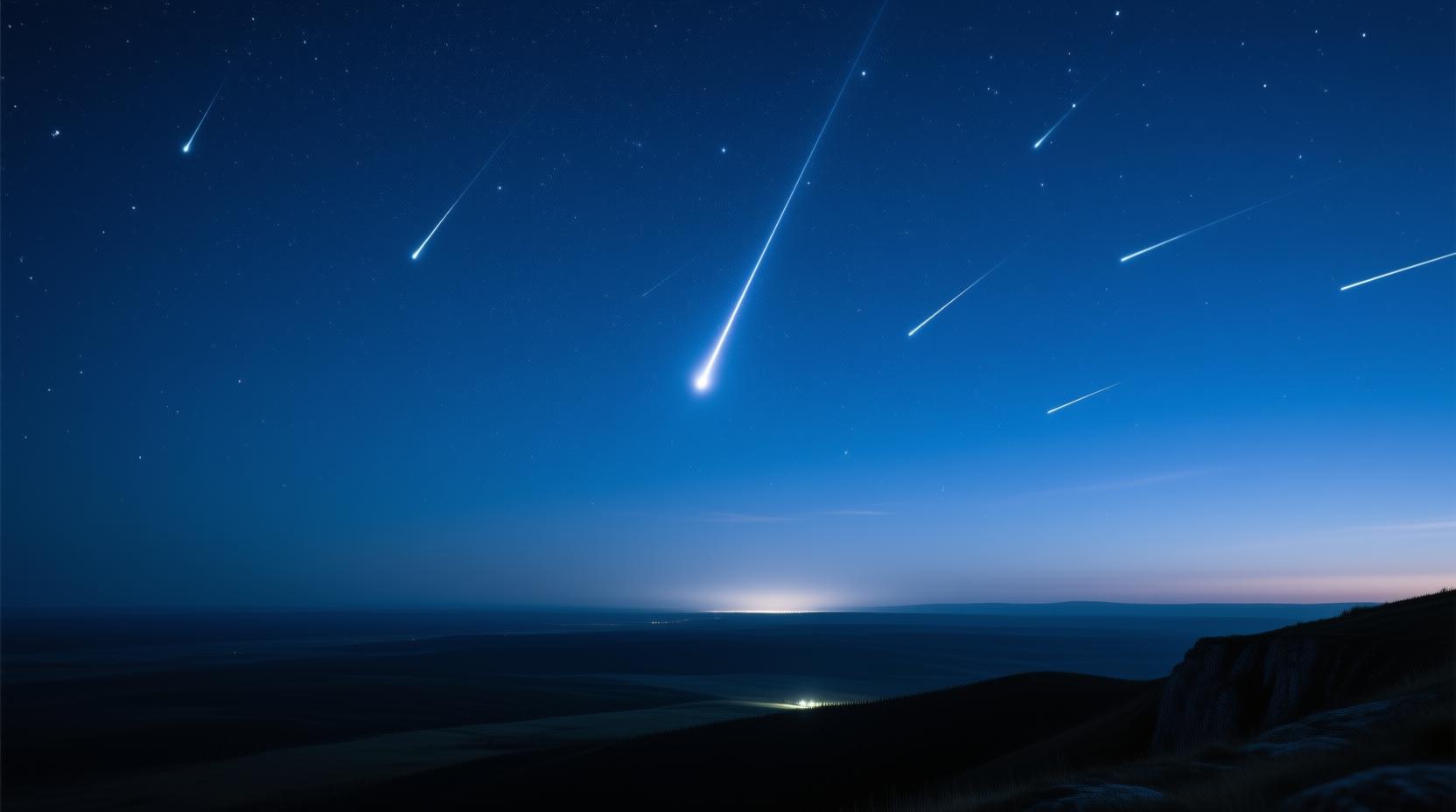
Who has any special plans tonight? If not, we have the perfect tip for you: Look up! The famous Leonid meteor shower will reach its peak tonight. [Current date – e.g. November 17/18] its annual highlight. A breathtaking natural spectacle awaits us when the Earth races through a cloud of comet dust, treating us to numerous "shooting stars".
The name "Leonids" comes from the fact that the meteor shower appears to originate from the constellation Leo – the so-called radiant. In reality, these are not actual stars falling from the sky. Rather, they are tiny particles of dust and rock left behind by Comet 55P/Tempel-Tuttle in its orbit around the sun. When Earth crosses this path around this time each year, these particles enter our atmosphere at high speed. Friction heats them up, they burn up, and create the bright streaks of light we admire as shooting stars. The Leonids are known for their high speed – they are among the fastest meteor showers in the world!
The highlight will be in the early morning hours of [Current Date], i.e., after midnight, expected. This is the best time to observe the magical light trails.
You don't need a telescope or binoculars – the Leonids are wonderfully visible to the naked eye! Here's what you should keep in mind to make the most of the experience:
The Leonids are famous for their spectacular outbursts throughout history. While this year we can expect a "normal" number of about 10-15 meteors per hour under ideal conditions, there have been true "meteor storms" in the past (e.g., 1833, 1966, or 2001), in which thousands of shooting stars per hour lit up the sky. This occurs when the Earth crosses particularly dense dust clouds from the comet.
Watching shooting stars in the night sky is more than just an astronomical observation. It's a moment of stillness, wonder, and connection with the universe. It reminds us how dynamic and full of wonder our cosmos is.
So, pack your warm clothes, maybe a thermos of tea and a good blanket. Find a cozy spot under the starry sky tonight and let the Leonids meteor shower enchant you. And don't forget: you can make a wish on every shooting star!
→Humanity sees the Milky Way with unprecedented clarity
We wish you a starry and unforgettable night!