Physical Address
17033 Neubrandenburg
Germany
Physical Address
17033 Neubrandenburg
Germany

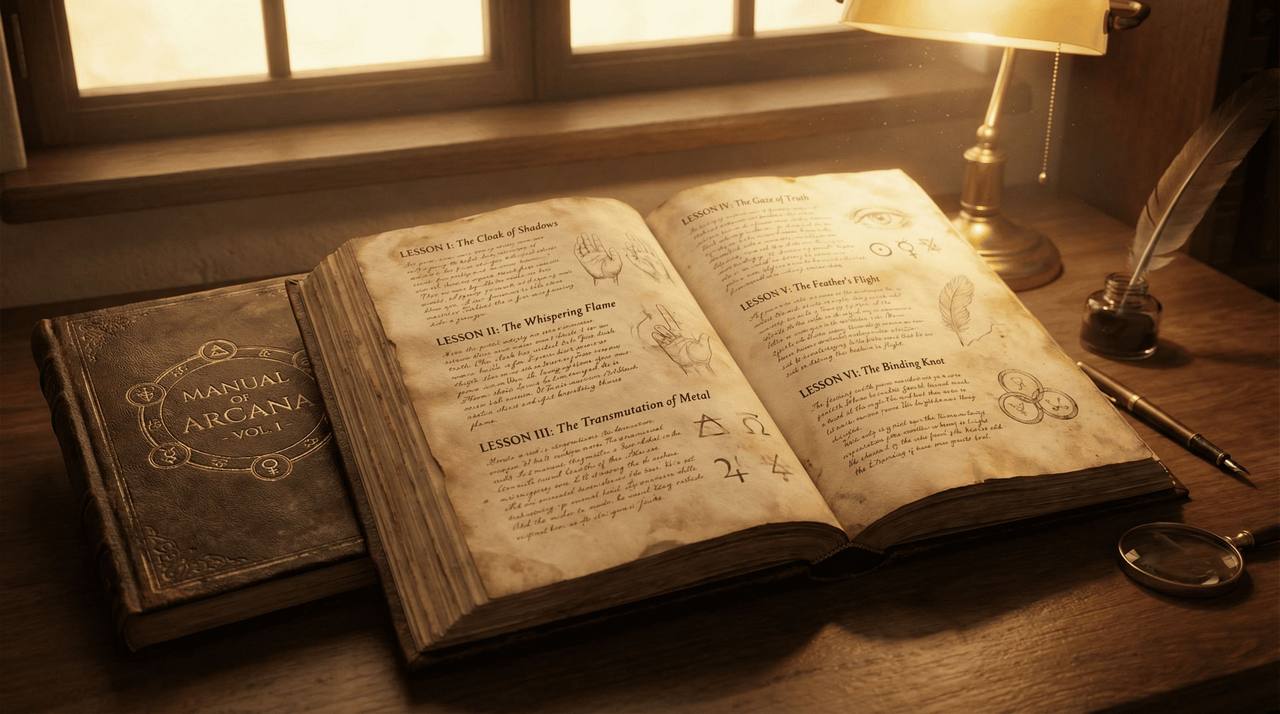
When we hear the word "magic," our imagination conjures vivid images: flashes of light, instantaneous spells, wizards in pointed hats commanding the elements. Modern culture has conditioned us to believe that magic is a supernatural power, a gift that allows us to circumvent the laws of physics and achieve our desires with a flick of a wand. This is a world of fantasy, convenient and appealing in its simplicity. Ancient treatises, however, paint a completely different, much harsher picture, revealing that the magician's path is not one of seeking miracles, but of monumental work.
According to ancient treatises, true magic is neither a gift nor a trick. It is the result of incredible self-discipline, a profound understanding of the laws of nature, and, most importantly, absolute mastery of the human will. This article is not a collection of spells, but an analysis of the most unexpected and astonishingly relevant lessons from this ancient manual. These ideas may turn our modern understanding not only of magic, but also of willpower, self-control, and the hidden potential of the human mind on its head.
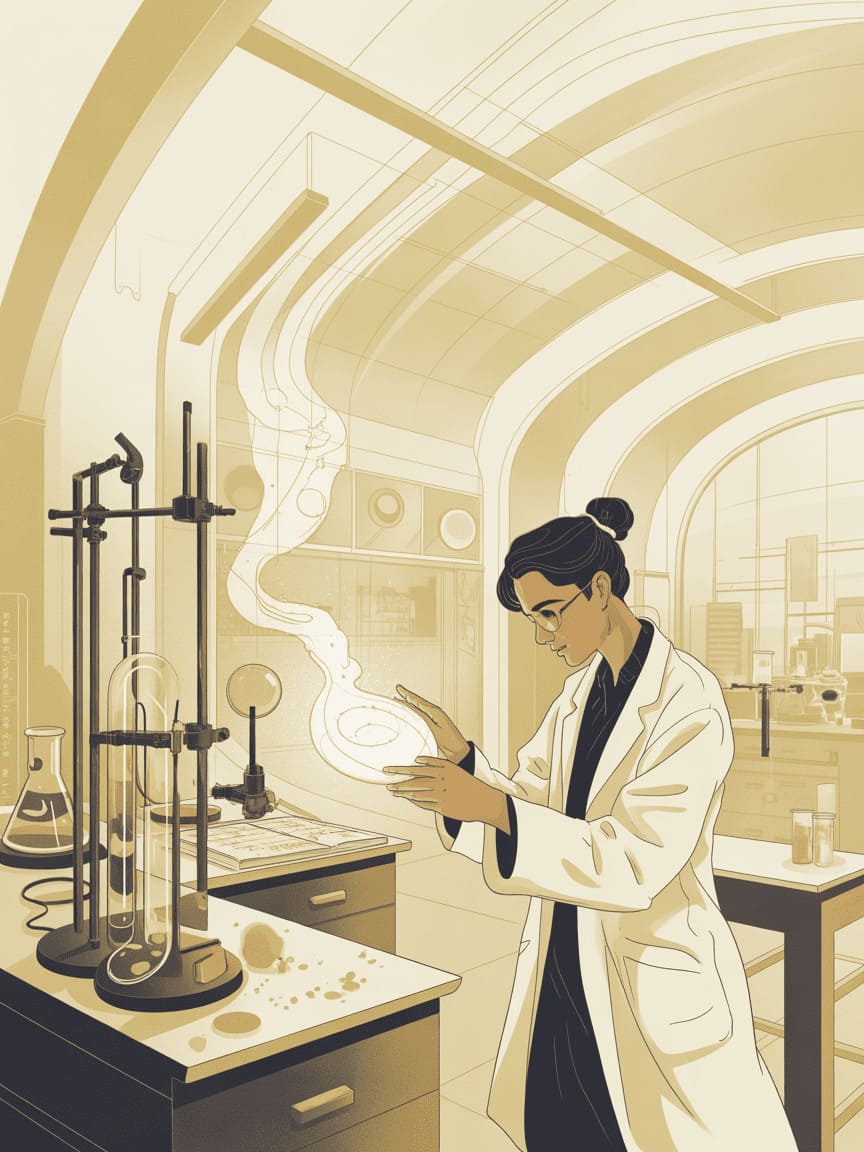
The path of the magician, as it is described, is one of the strictest discipline, not the search for magical formulas. Before a magician can influence the world, he must prove that he can completely control himself. This requires months, if not years, of relentless preparation. The magician must be dispassionate, sober, chaste, uninterested in personal gain, "impenetrable and impervious to any kind of prejudice or fear." He must not even have any physical defects.
Waking up at the same early hour every day, bathing in a spring before sunrise in every season, never wearing dirty clothes and "washing them yourself as needed," voluntarily living in poverty. At first glance, this seems like a set of strange rules. But their purpose lies not in a mystical effect, but in training the magician's main instrument – his will.
The person undertaking the Great Work must be absolute ruler over himself; he must know how to suppress the temptations of pleasure, food, and sleep.
Each of these actions requires overcoming laziness, discomfort, and desires. It is precisely in this daily struggle that the indomitable strength is forged which, according to the treatise, can perform "miracles.".
A lazy person will never become a magician. Magic must be practiced constantly – every minute.
The more a person strives for wealth, power, or the satisfaction of their passions, the more surely they block their own access to true power.
The pursuit of personal gain distorts the will, weakening it and making it dependent on external circumstances. Only detachment grants practical power.
One of the most astonishing paradoxes is that magical power is inversely proportional to material interests. Here is a prime example: „"The more the alchemist renounces goods and the more he honors poverty, the more gold he creates."“. This is not just a beautiful aphorism, but a fundamental law.
Only the initiate, whose heart is dispassionate, will be able to command the love and hate of those whom he makes the instrument of his science.
This principle explains why true power requires liberation. When the will is freed from the shackles of selfish desires, it ceases to be an instrument for satisfying whims and becomes a pure, focused force capable of acting on a higher plane. Those who seek in magic a way to enrich themselves or subjugate others are doomed to failure.
So you who seek in science a means to satisfy your passions, stop before this fateful path: you will find nothing but madness and death.
The supernatural is not a violation of the laws of nature, but a manifestation of those same laws, albeit on a higher, extraordinary level. A miracle is not defined by the event itself, but by the psychology of the observer. It is "a phenomenon that, because of its unexpectedness, makes an impression on the crowd" and "effects that astonish those unfamiliar with their nature.".
The main idea is simple: For the wise, there are no miracles.. There are only phenomena that appear supernatural due to ignorance. What is magic to a savage is everyday physics or chemistry to us. It is claimed that as long as humanity lacks an absolute, all-encompassing science, there will always be phenomena that lie beyond the scope of generally accepted understanding.

Miracles exist only for the ignorant, but since humanity hardly possesses an absolute science, the supernatural can still be achieved, and thus undoubtedly throughout the world.
This idea aligns with the development of modern science. Electricity, radio waves, quantum physics – all of these might once have seemed like impossible magic. The old rules suggest viewing so-called miracles not as divine intervention, but as the result of natural laws not yet understood, which can be mastered by those who have dedicated themselves to their study.
Complex rituals, with their strange attributes, timing, and intricate actions, have always been an integral part of the image of magic. Rituals do not work because they are performed by higher powers. Their primary and sole purpose is the education and training of the practitioner's own will.
A farmer who rose every morning at two or three o'clock and walked a great distance to gather certain herbs before sunrise. According to the text, it was not the plant itself that gave him strength, but the will and discipline he displayed.
„"The more we deny ourselves in the name of an idea, the more power we gain within the framework of that idea." The act of self-overcoming "magnetized" his intention and made it effective.
The more self-denial, effort, and concentration a ritual demands, the stronger the will becomes, focused on achieving the goal. Complex and seemingly meaningless rituals are nothing more than a training system for the magician's primary "muscle.".
On the contrary, rituals that appear most insignificant and alien to the intended outcome lead to this outcome through education and training of the will.
Active principle
expansion

Passive principle
contraction
All life and every movement in the universe is the result of the alternating predominance of opposing forces. Light and shadow, inhalation and exhalation, active and passive principles—their constant interaction creates the dynamics of being. The magician's mastery lies in understanding this law and learning to control it.
Movement is the result of alternative dominance.
„"Constant displays of affection lead to oversaturation, displeasure, and antipathy, just as constant coldness and severity over a prolonged period weaken and chill their perception." Always acting the same way means disrupting the balance and losing strength.
This principle even applies to the hypnotist, who must alternate between "hypnotic inhalation and hypnotic exhalation" with flawless precision to control their subject. In psychology, management, or personal relationships—flexibility and the ability to alternate between opposing approaches are essential everywhere.
Gentleness must be replaced by strictness, and tranquility by strenuous work. Only in this way can one maintain constant movement, avoid stagnation, and preserve one's influence and power.
True magic is not about controlling the external world, but about absolute self-mastery.
After analyzing these lessons, we arrive at a central idea: True magic is not about controlling the external world, but about absolute self-mastery. All rituals, asceticism, and mysterious practices aim at achieving a single goal—the subjugation and strengthening of one's own will. The magician's great work is not about transmuting lead into gold, but about painstakingly cultivating one's own mind, character, and spirit.
These principles remain remarkably relevant. They speak to us about the power of discipline and the importance of self-control.
They warn us of the danger of uncontrolled desires and show us the way to true mastery.
They reveal the hidden potential of the human mind, which can be unleashed through iron willpower.
And this leaves us with a very important question: If the main instrument of magic is the disciplined and concentrated will, what „miracles“ could we perform in our lives if we learned to master this instrument with the same persistence as the ancient adepts?
Celtic Magic – Where nature, ancestors and the Otherworld merge